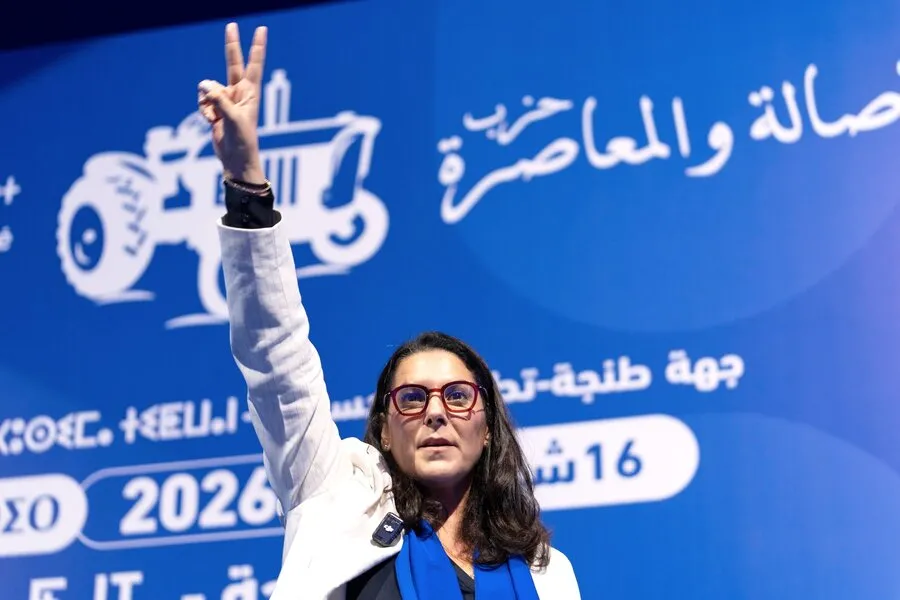

Morocco Appoints Its First Female Prime Minister
In a landmark decision that has caught the attention of the global community, Morocco has appointed its first female prime minister, Fatima Ezzahra El Mansouri. This significant event marks a pivotal moment not only for Morocco but also for the broader Middle East and North Africa (MENA) region, where changing dynamics regarding the role of women in leadership are increasingly evident. El Mansouri, a lawyer with education from both France and the United States, assumes her position at a time when many Arab nations are grappling with evolving perceptions of women's contributions to society, a shift supported by various Islamic scholars.
Emerging Opportunities and Challenges for Women
The appointment of El Mansouri comes against a backdrop of social unrest and economic challenges in Morocco, where a significant portion of the youth population has expressed dissatisfaction with the status quo. Recently, around 70,000 Moroccans made headlines by entering the Spanish enclave of Ceuta, driven by frustrations over economic stagnation and encouraged by social media activism. El Mansouri has recognized the gravity of these issues, particularly the expectations of young citizens, and has pledged to deliver "realistic and concrete solutions" to address their concerns.
Moreover, there is a growing recognition across the MENA region that women's inclusion in governance is pivotal for achieving sustainable solutions to societal challenges. With Morocco leading in parliamentary representation of women at 27%, and neighboring Tunisia having already appointed two women as prime ministers, the landscape is shifting. A recent survey by the Arab Barometer highlights a dramatic increase in public support for women in political leadership roles across the MENA countries over the past decade. This change is not merely a matter of political representation but is also intertwined with the reinterpretation of Islamic teachings regarding women's rights and societal roles.
Scholars and religious leaders are increasingly engaging in discussions that challenge traditional views and advocate for women's rights. For instance, Asma Lamrabet, a Moroccan scholar, emphasizes that the interpretation of religious texts should evolve, affirming that many laws derived from the Quran are human constructs that can be revised. This sentiment echoes the statements made by the grand imam of Egypt's Al-Azhar Mosque, who has recognized women's rights to education, inheritance, and professional opportunities. Such affirmations signal a potential transformation in societal norms that could uplift not only women but also contribute to the overall progress of nations.
As reported by csmonitor.com.