
In a groundbreaking achievement at the 2026 World Cup, Morocco made history during its Group C match against Brazil by fielding a starting lineup comprised entirely of foreign-born players. This remarkable feat not only highlights Morocco's unique position in the global football landscape but also underscores the increasing trend of national teams leveraging international player diversity. The Atlas Lions showcased their talent with a commendable 1–1 draw, featuring players whose birth certificates hail from countries such as Spain, France, the Netherlands, and Canada.
Morocco's milestone is indicative of a broader phenomenon observed at the World Cup, as nearly a quarter of the players participating were born outside the nations they represented—a record high according to the Oxford Migration Observatory. Additionally, many players possess the opportunity to represent multiple countries through heritage or citizenship, making the selection process for national teams increasingly complex and diverse.
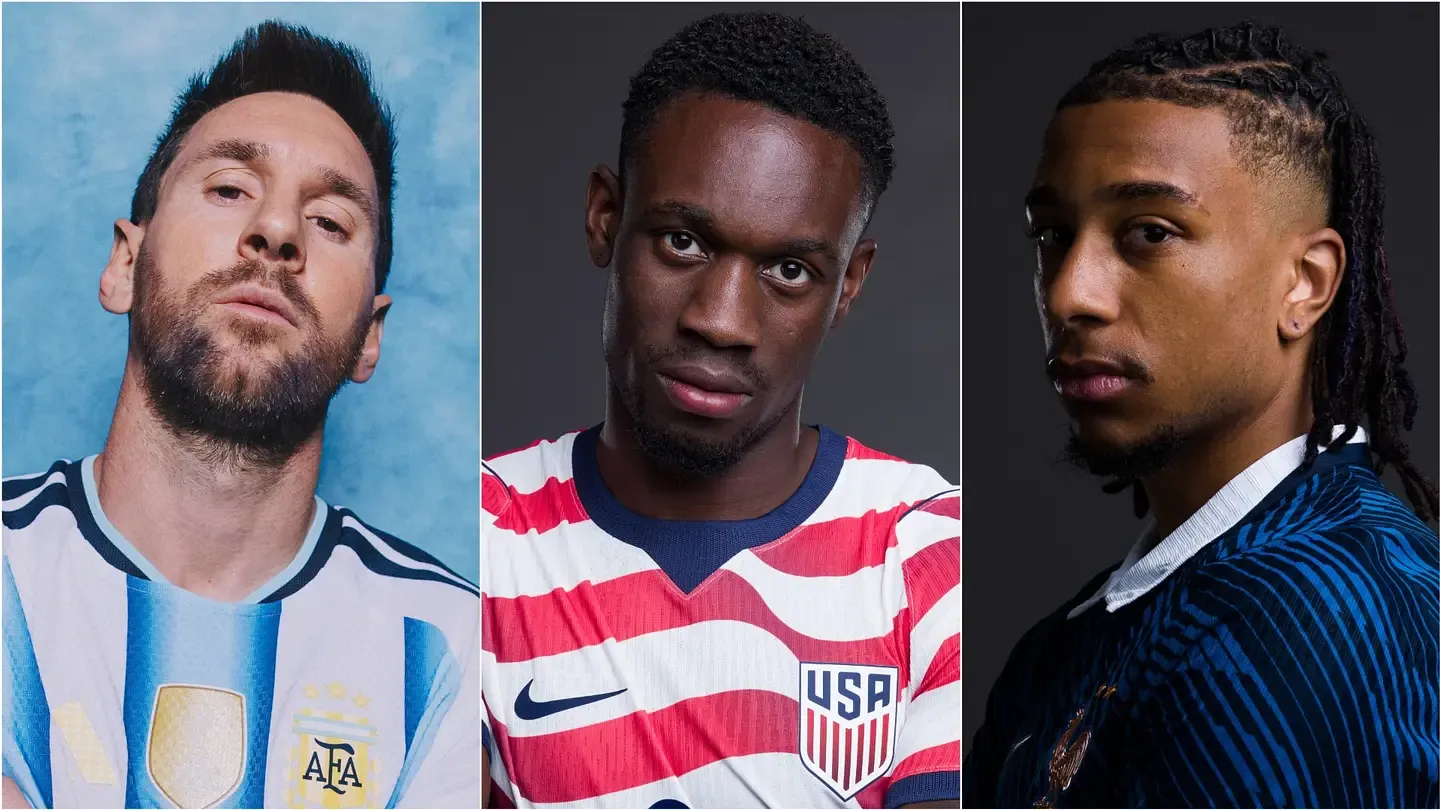
Among the notable players who could have donned different national jerseys is Sweden's midfielder Ayari, who scored a stunning goal against Tunisia in the Group F opener. His celebration, marked by hands raised in a non-celebratory gesture, stems from his mixed heritage—his father is Tunisian and his mother Moroccan, allowing him the choice of representing three different nations. Another player of significant interest is Michael Olise, whose dazzling performances in Europe have made him a strong contender for this year’s Ballon d’Or. The Brighton star, born in Hammersmith, could have chosen to represent France, Algeria, Nigeria, or England but ultimately set his sights on playing for Les Bleus.
The tale of Erling Haaland is equally intriguing; born in Leeds, he had the option to play for England but remained committed to Norway, having moved there at the age of three. In contrast, Jamal Musiala had a more fluid affiliation, toggling between England and Germany before ultimately embracing the national team of his birth, bolstered by an aggressive recruitment campaign from the German Football Association. Musiala also had the option to represent Nigeria, showcasing the multi-layered identities of today’s footballers.
Imagining an England squad with Haaland, Olise, Musiala, and Semenyo is a tantalizing thought. Semenyo, born in London and raised by Ghanaian parents, was first called up for the Ghana national team in 2022, but by then, he had already become a standout performer in the Premier League. On the other hand, players like Marc Guéhi, who chose to represent England despite being born in Côte d’Ivoire, and Ezri Konsa, eligible for Portugal, Angola, or DR Congo, further illustrate the complex landscape of international football.
Even the Spanish national team has seen its share of players with rich multicultural backgrounds, such as Yamal, who could have represented Morocco instead of Spain, and Nico Williams, who opted for La Roja despite having the option to play for Ghana. The narrative of Lionel Messi’s path to Argentina’s Under-20 World Cup squad in 2004 also serves as a reminder of how quickly fortunes can change in international football.
Another significant player, Achraf Hakimi, could have bolstered Spain's defense had he chosen to represent the nation of his birth. However, he opted for Morocco, reflecting his personal comfort and connection to his family's roots. Similarly, the first goal scorer of the 2026 World Cup, born in Colombia, made headlines by switching allegiance to Mexico after naturalization.
The story of Gio Reyna is particularly noteworthy, as he navigated decisions between multiple national teams, ultimately committing to the United States, the country he identifies with the most. The unique circumstances of Folarin Balogun’s birth in Brooklyn, combined with his upbringing in England, led him on a winding path to representing the USMNT, where he is now celebrated as a national hero after scoring twice in his opening match.
Lastly, Morocco’s legendary goalkeeper, Bounou, was born in Montreal but chose to represent the Atlas Lions over Canada, revealing a personal connection to his heritage. Meanwhile, Scott McTominay's journey from a Manchester United player to an international star for Scotland illustrates the evolving nature of player nationalities in football.
This World Cup has brought to the forefront the stories of players with diverse backgrounds, emphasizing the increasingly global nature of the sport and the importance of cultural identity in shaping national teams.
As reported by si.com.