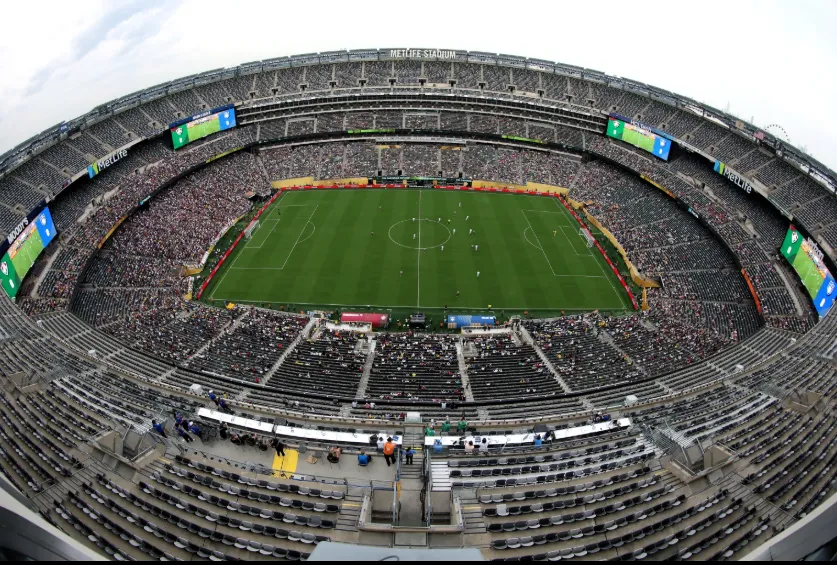

Morocco's World Cup Journey Begins Against Brazil
The Moroccan national football team is set to embark on its World Cup journey in 2026 with a highly anticipated match against Brazil on June 13, 2026, at the MetLife Stadium in New Jersey, USA. This prestigious venue has been chosen by FIFA to host the final match of the tournament on July 19, 2026. The decision to host Morocco's inaugural game at this iconic stadium is a testament to the team's growing stature following their historic performance at the Qatar World Cup. For the Moroccan players, this match presents an opportunity to face off in one of the most renowned and symbolic stadiums of the tournament.
MetLife Stadium: A Premier Venue for the World Cup
Located in East Rutherford, New Jersey, just 16 kilometers from New York City, MetLife Stadium boasts a seating capacity of over 82,000, making it one of the largest venues participating in the 2026 World Cup. Opened in 2010 at an estimated cost of $1.6 billion, the stadium serves as the home ground for the NFL's New York Giants and New York Jets. It has previously hosted significant events, including the 2016 Copa America final and the 2025 FIFA Club World Cup final, before being honored with the responsibility of hosting the 2026 World Cup final.
During the tournament, MetLife Stadium will host a total of eight matches, including the Morocco versus Brazil clash, as well as several knockout stage matches, culminating in the final showdown. The official tournament schedule also features matches involving national teams from France, Senegal, Ecuador, Germany, England, and Panama, in addition to the Round of 32 and Round of 16 matches.
In recent weeks, MetLife Stadium has become a focal point of attention in both American and international sports media, not only for its role in the final but also due to the extensive preparations currently underway. Recent reports indicate that the organizing authorities have completely renovated the stadium's playing surface by replacing the artificial turf with natural grass that meets FIFA's standards. Additionally, adjustments have been made to the seating angles to expand the playing area in accordance with international match requirements.
While sports fans have praised the modern infrastructure of the stadium and its proximity to the economic and media capital of the United States, various reports have highlighted the logistical challenges associated with the venue, particularly concerning transportation and access. The transportation plans for the World Cup sparked considerable debate following the announcement of high prices for transportation options designated for fans; however, local authorities have since reduced prices in response to widespread criticism. Media reports have also cautioned that the influx of tens of thousands of fans to the area may pose one of the most significant organizational tests during the tournament.
Moreover, security preparations have dominated recent media coverage, as U.S. authorities are gearing up for what is being described as the largest sporting security operation in the nation’s history, involving hundreds of security agencies and federal and local entities. MetLife Stadium is at the center of these preparations, with plans to enhance surveillance systems, counter-drone measures, and secure the surrounding areas and transport networks related to the venue.
American officials estimate that the anticipated World Cup final at MetLife Stadium could attract over three billion viewers worldwide, shedding light on the growing international interest in the stadium and its surrounding area. Local authorities also expect that the tournament will stimulate economic and tourism activity and create additional job opportunities in the service and hospitality sectors.
Another noteworthy aspect highlighted by sports journalists is that the stadium is completely open and does not have a retractable roof, meaning matches will be played under open weather conditions that could be affected by high temperatures and humidity during the American summer. This factor may have a direct impact on the physical performance of participating teams.
For Morocco, facing Brazil in the stadium that will host the World Cup final adds an extra symbolic dimension to the match, as it serves as an early test in one of the tournament's most captivating venues. It also allows the Moroccan team to familiarize itself with the atmosphere of the stadium, which many Moroccans hope to return to after more than a month to compete for one of the World Cup's biggest surprises.
As reported by lakome2.com.