
Morocco's Allegations Against Spain Amidst the Ceuta Migration Crisis
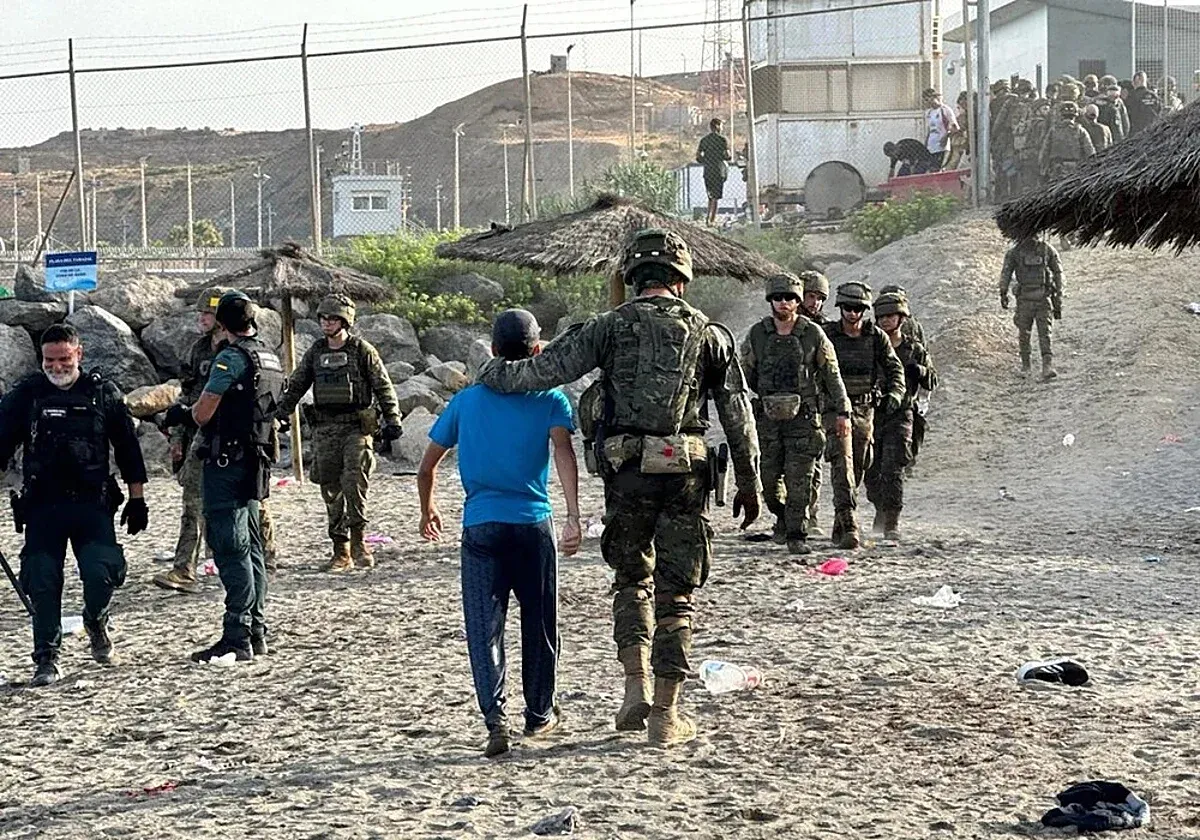
The ongoing tension between Morocco and Spain has escalated into a complex hybrid warfare strategy, particularly evident in the battle for the narrative surrounding the recent migration crisis in Ceuta. The Moroccan National Human Rights Council (CNDH), an organization that is purportedly independent but is closely monitored by the Moroccan regime, has released a preliminary report accusing Spanish police, civil guards, and military personnel of mistreatment and physical aggression against migrants who entered the autonomous city on July 30. This report is based on testimonies collected in Morocco, yet it notably lacks any photographic evidence of Spanish agents physically assaulting the migrants.
Originally drafted in Arabic, the report claims that several returnees reported instances of aggression by Spanish forces, particularly in areas that are not monitored by cameras. The CNDH asserts that it has observed bruises and marks on the bodies of some young individuals upon their return. However, the report also concedes that these injuries could have been caused by exhaustion, physical overexertion, or the perilous circumstances of a swim that resulted in over 80 fatalities on the Spanish side of the border.
As of Tuesday, no video evidence has emerged in Spain showing national police, civil guards, or military personnel mistreating migrants. Furthermore, the CNDH does not identify the agents allegedly involved, nor does it specify the locations of the alleged assaults or provide accompanying medical reports to substantiate the claims regarding the origins of the injuries.
The CNDH's Strong Accusations and Lack of Evidence
The report's conclusions are particularly alarming, as the CNDH accuses Spanish authorities of “violations of physical integrity” and claims that Ceuta left thousands of individuals without access to water and food for two days due to the closure of local restaurants, cafes, and shops. It also highlights barriers to asylum access, unlawful returns, and a lack of protection against radical groups that allegedly chased and assaulted young people in the streets.
One of the most serious accusations appears at the end of the document, where the CNDH cites “multiple and consistent allegations of mistreatment and aggression by Spanish public forces.” Although it claims that both Moroccan and Spanish authorities have harmed the physical integrity of migrants, it fails to quantify the cases attributed to Spain or identify the responsible agencies, and it does not provide individualized testimonies or medical reports.
The CNDH further criticizes the authorities in Ceuta for the events that transpired in the first 48 hours, asserting that thousands of migrants were subjected to hunger and thirst as they were prevented from purchasing food and water. The council alleges that Spanish agents forcibly removed young individuals from restaurants where they were receiving assistance, yet it does not offer images, identify the establishments, or clarify when and where these incidents occurred.
While there are videos depicting altercations involving civilians and extremist activists, these are distinct from the alleged police assaults. Notably, the report acknowledges that a viral image related to one incident was altered using artificial intelligence, and another photograph used to illustrate the injuries of the same individual was taken out of context. Throughout the report, Ceuta is repeatedly referred to as “occupied Ceuta,” indicating a strong political stance.
Moreover, the humanitarian facade of the CNDH raises questions. It does not function as a non-governmental organization; rather, it is a constitutional institution of Morocco with public legal status. Its operational independence is formally recognized, yet its organic ties to the monarchy are outlined in Law 76-15, which governs its operations. King Mohammed VI appoints the council's president through a royal decree and directly nominates nine of its 27 members. Other members are selected by the Prime Minister and the two chambers of Parliament, and the council's annual reports are submitted to the king for review.
The current president, Amina Bouayach, was appointed by Mohammed VI on December 6, 2018. Before this, she served as the king's ambassador in Sweden and Latvia and has held various responsibilities in civil human rights organizations. Bouayach’s background includes her presidency of the Global Alliance of National Human Rights Institutions since March 2025, reflecting her significant diplomatic ties and the official nature of the CNDH.
The council began monitoring the crisis the day before the influx of migrants, with Bouayach establishing a special mechanism comprising three regional committees, the Protection Directorate, and the Communication and Digital Space Directorate. Their teams were dispatched to Beni Ansar, Castillejos, and areas near Ceuta and Melilla, which provided critical insights into the situation.
One of the most significant findings in the report indicates that the CNDH identified 23 digital groups with over 1.08 million members and a staggering activity rate of more than 1,400 daily posts. Five of these primary communities were shut down on July 30, as they were involved in selling vests, fins, and swimming gear, disseminating routes, schedules, and meeting points, and coordinating movements via platforms like WhatsApp and Telegram.
The council also detected the presence of “foreign accounts” aimed at spreading false news and facilitating crossings. One group deleted all phone numbers with a country prefix that the report avoids identifying, while another community featured at least 18 numbers from the same unidentified foreign state. However, the report does not clarify who managed these groups, who funded their activities, or how these digital campaigns correlated with the apparent lack of control during the initial hours of the influx.
The death toll continues to reflect the ongoing narrative battle initiated by Rabat. Initially, the Moroccan Interior Ministry acknowledged 11 deaths, which the CNDH later increased to 14 fatalities on Moroccan soil, including two foreigners, with data finalized on August 6. They also conceded that there were still bodies awaiting identification in forensic storage. Meanwhile, Spain has reported over 80 deaths on its side, and the Moroccan count remains open, providing partial figures from the surge that saw over 72,000 individuals enter Ceuta between July 29 and 30.
As reported by elcorreo.com.