Exploring the Essence of Craftsmanship in Asǝṭṭa
In a groundbreaking presentation at the Arsenale for its first national pavilion, the Kingdom of Morocco unveils Asǝṭṭa during the International Art Exhibition of La Biennale di Venezia. This monumental installation is the brainchild of multidisciplinary artist Amina Agueznay, who has designed the exhibit to be an immersive experience exploring the intricate transmission of traditional craftsmanship and the collective memory of the Moroccan culture. As Agueznay elaborates, the installation unfolds as a ‘membrane, or second skin,’ inviting visitors to engage deeply with the narratives embedded within it. Curator Meriem Berrada emphasizes the pavilion's role as a ‘porous, liminal space’ that facilitates the circulation of ancestral stories, posing critical questions about how diverse languages and techniques can harmoniously coexist. Aligning with the Biennale’s theme ‘In Minor Keys,’ curated by Koyo Kouoh, the project accentuates what Berrada describes as ‘discreet, humble, yet rich and structuring practices’ that contribute significantly to collective life beyond mainstream narratives.
A Journey Through the Threshold of Asǝṭṭa
Asǝṭṭa is structured around a sequence of spatial passages, rooted in the concept of the âatba, which represents both an architectural and symbolic threshold. Agueznay articulates that the âatba serves as an ‘in-between’ space that informs how individuals organize their lives and practices. This notion transcends mere architectural design; it embodies a unique environment that bridges the sacred and the profane, the private and the public. Berrada further elaborates on this idea, stating that the threshold is not simply a doorway, but an independent entity imbued with ancestral significance. Within the confines of the Arsenale’s Artiglierie, this concept manifests tangibly, allowing visitors to traverse a landscape characterized by transitions rather than static boundaries. This ‘transformative threshold’ invites participants to experience moments of reflection and perspective, akin to the rhythmic pauses present in Arabic poetry or the silences that amplify musical depth.
Asǝṭṭa seeks to redefine craftsmanship, positioning it not merely as a heritage to be preserved but as a dynamic form of knowledge production. Agueznay asserts that this knowledge transcends preservation, evolving into innovation that stems from a profound understanding of materials and the gestures involved in their manipulation. Berrada contextualizes this within a broader cultural narrative, pointing out that craftsmanship is inherently a living form of expression, one that is often overshadowed by persistent hierarchies between art and craft. The pavilion serves as a critical platform to elevate these subtle yet impactful practices, aligning seamlessly with the Biennale's thematic focus.
Bringing together 166 Moroccan artisans alongside two Venetian collaborators, the project emphasizes collaboration over mere execution. Berrada highlights that each artisan contributes a renewed, deconstructed approach to their craft, showcasing how contemporary dimensions of Asǝṭṭa evolve from within these traditional practices. This collaborative spirit reflects Berrada’s curatorial vision to explore the intersections between art and craftsmanship as contemporary storytelling methods within African contexts. Agueznay likens her role to that of a conductor, orchestrating distinct voices into a harmonious chorus, resulting in a polyphonic experience that resonates throughout the installation.
The collective nature of this endeavor extends beyond the exhibition itself, aiming to establish a long-term cultural infrastructure that amplifies diverse voices and gestures that define Moroccan identity. Berrada emphasizes the importance of presenting a collective narrative that captures the rich tapestry of Moroccan craftsmanship. The artisans involved, predominantly women, draw upon traditions often passed down through generations, embedding the installation with a profound sense of care and shared knowledge.
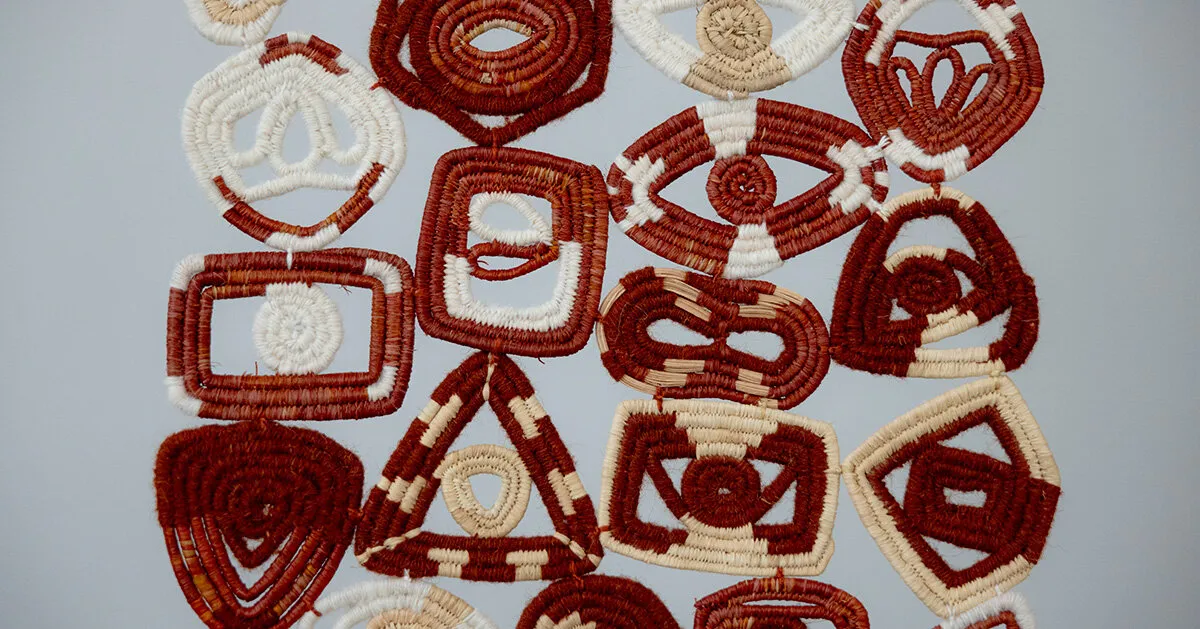
Throughout the pavilion, gestures such as weaving, braiding, and stitching serve as powerful carriers of meaning. Agueznay articulates that these needlework forms encapsulate visual languages that narrate stories, extending beyond mere aesthetics. The rituals surrounding the life of an object are multisensory, inviting visitors to engage with the textures and silences that accompany each piece. Berrada echoes this sentiment, noting that materials are treated as living alphabets, with manual techniques functioning as narrative phrases that weave together a poetic language transcending cultural boundaries.
Asǝṭṭa operates as an open structure, a vessel for intersecting stories that encompass personal narratives, collective histories, and reflections on materiality and authorship. Rather than offering a singular interpretation, the installation encourages visitors to navigate its layers, inviting engagement, questioning, and exploration. By adopting a deliberately understated approach in response to the ‘In Minor Keys’ theme, Agueznay connects the exhibit to themes of passage, sound, and shared experience, creating a space where each voice contributes to the overarching harmony without seeking prominence. Thus, Morocco’s inaugural pavilion at the Arsenale proposes an alternative model of exhibition-making, emphasizing relationships, transmission, and the enduring significance of gestures that traverse time.
As reported by designboom.com.