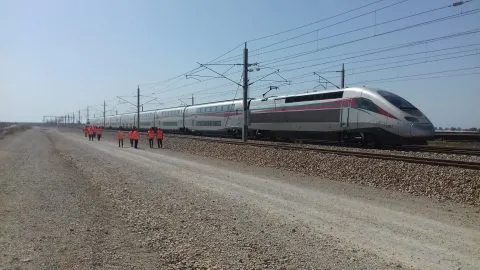

Morocco is making significant strides in the development of its Kenitra-Marrakech LGV project as part of its preparations for the 2030 FIFA World Cup. This ambitious initiative represents the country's inaugural foray into high-speed rail transportation, aiming to connect major urban centers across the nation while facilitating the acquisition of 168 state-of-the-art trains. The urgency of this project was emphasized by Morocco’s Minister of Transport and Logistics, Abdul Samad Qayuh, during a recent parliamentary session where he highlighted the project's current status and future implications for national transportation.
As part of a broader $10.5 billion investment strategy aimed at enhancing transport infrastructure in anticipation of the World Cup, Qayuh noted that nearly 30 percent of the high-speed rail project has already been completed, with assurances that it will reach completion on schedule. This initiative is embedded within a three-year investment program approved by the Moroccan government, which allocates a total of MAD96 billion—of which MAD53 billion is specifically earmarked for the high-speed rail endeavor. This project, being the most substantial investment in the transportation sector in over a decade, underscores Morocco's commitment to modernizing its infrastructure.
In late 2024, Morocco is set to announce contracts valued at approximately $1.86 billion for the LGV project. Additionally, another notable rail initiative, the Morocco-Spain rail tunnel, is gaining momentum despite facing challenges, further emphasizing the critical role of alternative transport routes, especially in light of geopolitical developments affecting maritime passages.
Implementation Scope of the Kenitra-Marrakech LGV Project
The Kenitra-Marrakech LGV project entails the construction of a comprehensive 430-kilometer railway corridor connecting major cities, starting from the bustling city of Marrakech in the west and traversing through Casablanca before reaching Kenitra in the northwest. A significant portion of the contracts for this project has been awarded to Chinese companies, showcasing international collaboration in infrastructure development. Minister Qayuh expressed confidence that this project will revolutionize transportation within Morocco by effectively halving travel durations between key cities. For instance, the travel time from Tangier to Marrakech is projected to decrease from approximately six and a half hours to just three and a half hours, while the journey from Rabat to Tangier will be streamlined to a mere hour.
In an effort to secure funding for the high-speed rail initiative, Qayuh indicated that the Ministry of Transport, alongside the National Railway Office (ONCF), is actively engaging global financial markets. As Morocco prepares to co-host the World Cup with Spain and Portugal, the development of robust infrastructure and logistics systems becomes increasingly vital.
Project Overview and Strategic Objectives
The Kenitra-Marrakech LGV project encompasses not only the construction of a dedicated high-speed rail line but also the procurement of 168 high-speed trains to enhance the nation's rail capabilities. This essential infrastructure aims to link key economic and tourism hubs, thereby fostering regional connectivity and economic integration. The overarching goals of the project include significantly reducing travel times between major cities, ensuring readiness for the FIFA World Cup in 2030, and modernizing Morocco's transport and logistics frameworks. Currently, with approximately 30 percent of the construction completed and contracts valued at $1.86 billion already awarded, the project remains on track for timely completion ahead of the World Cup preparations.
As reported by constructionreviewonline.com.