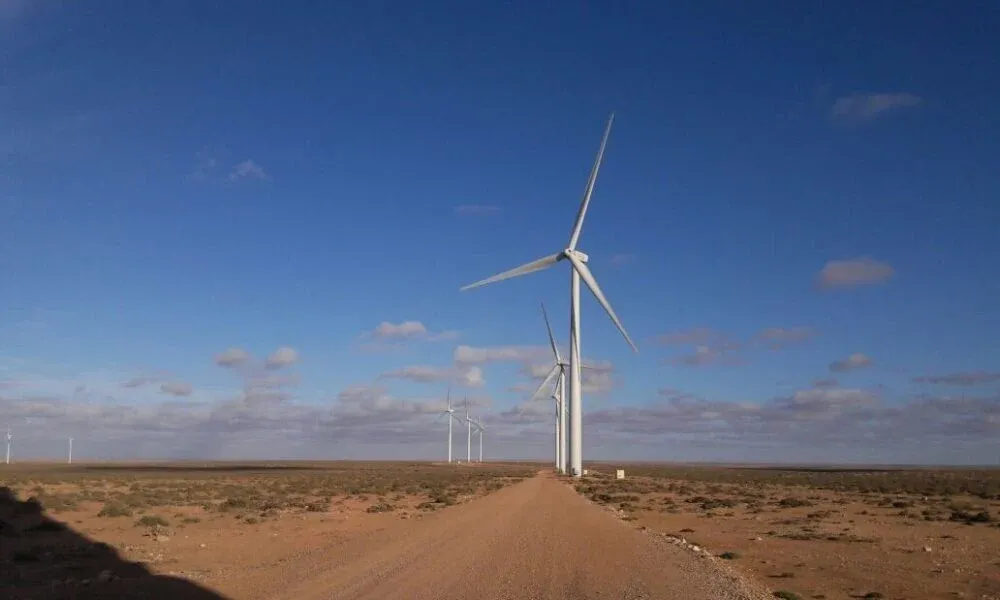

The largest wind power station in Morocco, known as the Aftissat Wind Power Station, is solidifying its position in the renewable energy sector, especially with an expansion expected to come online before the end of 2026. Recent data obtained by the specialized energy platform based in Washington highlights that the Aftissat project has now taken the lead, surpassing the previously dominant Tarfaya Station.
Aftissat boasts a total capacity of 550 megawatts, with 500 megawatts already in operational service, generating nearly 2,500 gigawatt-hours of clean electricity annually. The expansion of Morocco's largest wind power station underscores the rapid implementation of Rabat's strategy to increase reliance on renewable energy sources, particularly given the high wind speeds in the southern regions, facilitating the development of large-scale projects capable of supporting the national electrical grid.
This expansion coincides with the country’s ongoing efforts to enhance the contribution of renewable energy within its electricity mix through substantial projects encompassing both solar and wind energy, along with the development of infrastructure for transmission lines and electrical connectivity in the southern regions.
Aftissat Wind Power Station
The Aftissat Wind Power Station, recognized as Morocco's largest wind facility, represents a significant strategic project executed by the Moroccan Wind Energy Company, which is fully owned by the Nareva Group, a leader in developing renewable energy projects both within the kingdom and abroad. The Aftissat project is situated approximately 50 kilometers south of Boujdour, within the Laayoune-Sakia El Hamra region, an area noted for its strong and stable winds throughout the year, offering the project a high operational capacity compared to numerous global stations.
Aftissat is divided into four main facilities, detailed as follows:
- Aftissat 1: Production capacity of 200 megawatts.
- Aftissat 2: Production capacity of 200 megawatts.
- Aftissat 3: Production capacity of 100 megawatts.
- Aftissat 4: Production capacity of 50 megawatts (currently under construction).
The first phase commenced commercial operations in 2019, featuring the installation of 57 turbines manufactured by Siemens, each with a capacity of 3.6 megawatts, marking the introduction of direct drive technology into the Moroccan wind sector.
Subsequently, the second phase officially entered commercial service in 2023 with the installation of 40 new turbines produced by General Electric, each capable of generating 5 megawatts, significantly enhancing the project's efficiency and output. The third phase, known as Aftissat 3, officially began operations at the start of 2026, raising the effective production capacity from 400 megawatts to 500 megawatts, according to the specialized energy platform's reports.
The largest wind power station in Morocco produces approximately 2,500 gigawatt-hours annually, a substantial amount sufficient to supply clean electricity to millions of homes, while progressively reducing dependence on imported fossil fuels within the kingdom. Furthermore, the project has contributed to the enhancement of electrical infrastructure in the southern regions by establishing a 400-kilovolt power line extending 250 kilometers, connecting the city of Laayoune to the Aftissat site and bolstering the stability of the national grid.
Tarfaya Station: The Previous Pioneer of Wind Energy
For many years, the Tarfaya Wind Power Station held the title of the largest wind power facility in Morocco since its full commercial operation began in 2014, until it was surpassed by the Aftissat project due to successive expansions in recent years. Located on the southern Atlantic coast of Morocco, approximately 20 kilometers southeast of Tarfaya, the project resides in a coastal desert area characterized by strong and stable winds year-round, according to data reviewed by the specialized energy platform.
Key details about this significant facility include:
- Production capacity: 301 megawatts.
- Turbine count: 131 wind turbines manufactured by Siemens.
- Individual turbine capacity: Approximately 2.3 megawatts.
- Annual output: Nearly 1,100 gigawatt-hours.
- Coverage: Sufficient to meet the needs of about 1.5 million people.
The Tarfaya project was developed through the Tarfaya Energy Company, a partnership between Nareva Group and Engie, in collaboration with the National Office of Electricity and Drinking Water, under a build, own, operate, and transfer model. The investment cost for the project reached approximately 5.6 billion dirhams (around 560 million USD), with a 20-year electricity sale contract signed with the National Office of Electricity, as per the latest data released by the office.
The station has also contributed to reducing carbon emissions by nearly 900,000 tons annually, with turbines designed to withstand harsh climatic conditions, including salt-laden winds, sandstorms, and elevated temperatures in the southern coastal areas.
As the largest wind power station in Morocco continues its expansion, it signifies the government’s commitment to developing the renewable energy sector, particularly in light of the rising local electricity demand and increased costs associated with fossil fuel imports in recent years. Morocco aims to elevate its wind energy capacity to record levels in the coming years, targeting a renewable energy contribution to the national electricity mix of over 52% by 2030.
Simultaneously, the largest wind power station benefits from the advantageous geographical location of the southern regions, recognized as one of the best areas globally for wind stability and speed, providing Moroccan projects with a competitive edge on the global stage. Rabat is concurrently enhancing electricity transmission networks and connecting southern regions to the national grid, aiming to accommodate the increasing production from solar and wind energy projects and direct it toward major industrial and consumer centers.
These initiatives are also instrumental in attracting new foreign investments into the clean energy sector, particularly from European companies seeking production sites near the European continent with high natural potential. Additionally, the largest wind power station in Morocco plays a crucial role in reducing carbon emissions and supporting the country’s climate commitments while creating new employment opportunities in manufacturing, maintenance, and services associated with renewable energy.
It is anticipated that Morocco will continue to expand both offshore and onshore wind projects in the coming years, leveraging accumulated expertise in developing large-scale stations and the modern infrastructure established to support the national energy transition.
As reported by attaqa.net.