
Legal Measures to Combat Electoral Corruption in Morocco
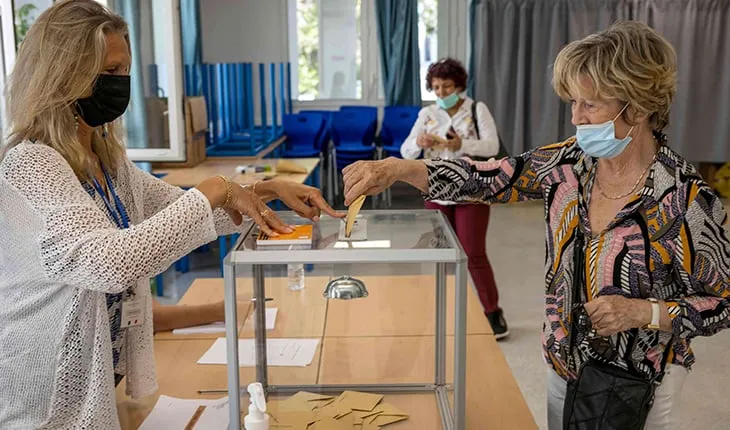
As Morocco approaches its upcoming electoral milestones, judicial and regulatory bodies are intensifying efforts to combat electoral fraud and establish legal boundaries for political agendas. In this context, the Public Prosecutor's Office has issued a circular memorandum to public prosecutors in appellate and primary courts, urging them to firmly and decisively address any actions that could jeopardize the integrity of the electoral process or undermine its fairness and transparency, while ensuring appropriate legal repercussions for offenders.
The memorandum emphasizes the necessity of expediting investigations related to electoral grievances, ensuring that legislative elections are conducted in an atmosphere characterized by adherence to the law, integrity, transparency, and fair competition. All public prosecutors are called upon to mobilize and effectively support the legislative elections for the House of Representatives, scheduled for September 23, ensuring that they are carried out under legal compliance and ethical standards.
Furthermore, the memorandum instructs public prosecutors to maintain vigilance during the entire electoral period, enhance coordination between regional and local cells established within public prosecutor offices, and maintain ongoing collaboration with the central cell created by the Public Prosecutor's Office to monitor any violations that may arise. This includes strengthening cooperation with security teams tasked with overseeing electoral matters, ensuring that the elections proceed without legal infringements.
Challenges Facing Women's Representation in Local Elections
In a related development, the "Challenge for Equality and Citizenship Association" has highlighted the limited representation of women in local electoral districts, noting that 61 out of 92 local electoral districts lack female candidates at the head of their lists. In a statement reviewed by "Al-Quds Al-Arabi," the association has begun monitoring preliminary data regarding the presence of women leading electoral lists in local districts, indicating that the statistical data released concerns nominations made by the eleven parties represented in the House of Representatives during the eleventh legislative term.
As of the commencement of the nomination process, initial data collected by the association indicates that only 40 women have declared their candidacies at the head of local electoral lists, distributed across 32 electoral districts nationwide. Opposition newspapers continue to criticize the three parties within the ruling coalition, with some editorial pieces reflecting on the ongoing verbal conflicts between the National Rally of Independents and the Authenticity and Modernity Party. The critiques emphasize the need for these majority parties to confront the Moroccan public regarding their performance and defend their record against opposition criticisms, while acknowledging the disillusionment felt by citizens over rising prices, cost of living, and political accountability.
In terms of regulatory oversight concerning the upcoming elections, the National Committee for the Protection of Personal Data has issued an official notice to political parties, reiterating the legal frameworks for processing personal data during the electoral process. These directives mandate prior notification for any data handling operations in accordance with current national legislation and prohibit the exploitation of political opinions or direct targeting of voters without their explicit prior consent. The committee's statement also underscores the need for transparency in any promotional content produced through artificial intelligence technologies, aiming to curb misleading campaigns and ensure compliance with Moroccan criminal law and the organizational laws governing the House of Representatives.
These stringent regulatory and judicial measures come amidst a politically charged atmosphere in Morocco as the date for legislative elections approaches, heightening competition among political factions and parties in both the ruling majority and the opposition, while the digital space and social networks become pivotal platforms for voter engagement and campaign management.
As reported by alquds.co.uk.