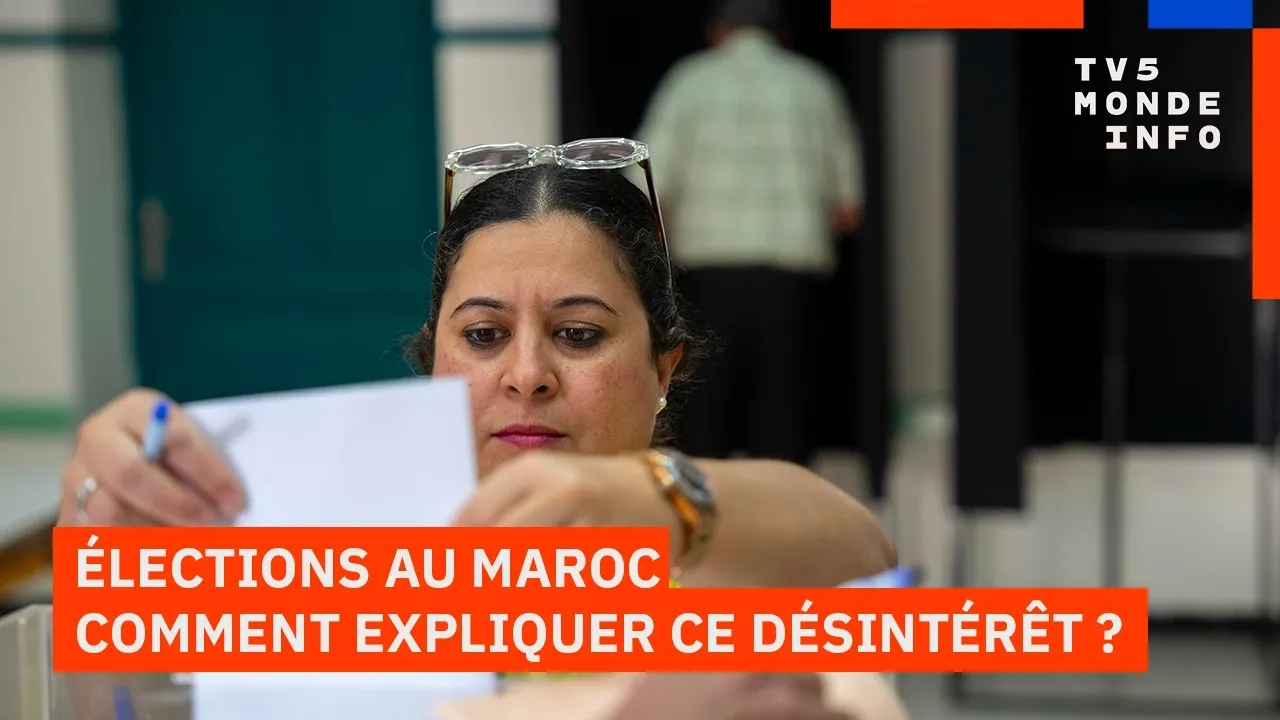
The polling stations for the legislative elections in Morocco closed their doors at 7 PM on Wednesday, marking the end of a day that largely unfolded under normal circumstances. As the country awaits the announcement of voting results from the Ministry of Interior in the coming hours, the counting of votes commenced immediately after the polls closed across various regions of the kingdom. This process is being conducted in the presence of observers and candidates' representatives to ensure maximum integrity and transparency.
Approximately 15.8 million voters were called to cast their ballots at polling centers that opened at 8 AM local time. The elections witnessed intense competition between the outgoing majority parties and the opposition, alongside significant political and media scrutiny regarding one of the most critical electoral milestones in Moroccan political life.
The Moroccan House of Representatives consists of 395 seats, filled through proportional representation based on a two-tiered system. Of these, 305 seats are elected from 92 multi-member local constituencies, where the number of seats ranges from two to six. The remaining ninety seats are elected from 12 constituencies distributed across Morocco's regions, with the number of seats varying between three and twelve, primarily designated for women.
According to data from the Moroccan Ministry of Interior, about 57% of the current parliamentarians, totaling 227 members—204 deputies, 20 female deputies, and three parliamentary advisors—are aiming to retain their seats in the elections scheduled for September 23.
In this election, 28 political parties are competing, presenting 1,850 lists nationwide that include 7,288 candidates, averaging over 18 candidates per parliamentary seat. These lists comprise 1,615 in local electoral constituencies with 5,505 candidates and 235 lists in regional constituencies allocated for women, with 1,783 female candidates.
The elections come at a crucial time as the country faces various challenges and future obligations, particularly concerning the implementation of the autonomy project in the Sahara, the joint organization of the 2030 World Cup with Spain and Portugal, the establishment of a social state, addressing unemployment, and the necessity of nurturing new leadership while regaining the confidence of the Moroccan populace.
Voter turnout in the legislative elections reached 28.05% by 5 PM, just two hours before the polling stations closed, according to the latest figures released by the Ministry of Interior. Sources from political parties following the September 23 elections predict that the turnout may not exceed 40%.
While the Ministry of Interior reported that voter turnout was conducted in an orderly manner across the kingdom, the voting process did experience some incidents. In the Tangier-Assilah electoral district, allegations of fraud involving candidates from the "Authenticity and Modernity Party" were noted, prompting the public prosecutor's office to intervene. The public prosecutor at the Tangier Court of Appeal announced the initiation of a judicial inquiry concerning reports of a transparent ballot box containing several white envelopes.
In response, the collective leadership of the Authenticity and Modernity Party firmly rejected what they termed a conspiracy, characterizing it as a "scripted scenario" and a "clear attempt to disturb and target the party." They expressed their complete and unequivocal support for the judicial investigation under the supervision of the appropriate public prosecutor to uncover all circumstances surrounding the incident and identify those behind the alleged campaign to spread false and malicious claims.
Organizational Stability
Commenting on the electoral day, Rashid Lazreq, the head of the North Africa Center for Studies and Research in Morocco, stated to "Al-Araby Al-Jadeed" that the electoral process appeared well-organized from a procedural standpoint, characterized by the smooth conduct of voting and the presence of national and international observers. However, he emphasized that a professional assessment of the elections' integrity cannot solely rely on the calmness of the polling day. It must also encompass the neutrality of the administration, the freedom of voters' choices, the respect for the confidentiality of voting, and ensuring party representatives and observers can monitor the counting process, along with the integrity of the records and transparency in announcing results and addressing complaints and challenges.
Lazreq pointed out that, politically, the limited voter turnout remains a significant challenge, reflecting a persistent trust gap between segments of the citizenry and party and electoral institutions, particularly among the youth. He concluded that the elections, at this stage, can be described as organizationally stable but facing a genuine test in terms of representation and political legitimacy. A conclusive evaluation will only be feasible after the completion of voting, the monitoring of counting, the announcement of detailed results, and the resolution of any violations and challenges.
The Moroccan Ministry of Interior is expected to disclose the final results in the coming hours, though these results will not be deemed definitive until the constitutional court addresses any challenges. Once the results are published and the leading party is identified, the process shifts from electoral law to the constitution, with King Mohammed VI appointing the head of government from the party that wins the elections. Traditionally, the monarch selects the leader of that party for the position.
Upon his appointment, the prime minister will negotiate with other political parties in the country to form a governmental coalition that ensures a parliamentary majority. After reaching an agreement on the government’s structure, the appointed prime minister will propose the names of its members to the king for appointment in accordance with Article 47 of the constitution, while the government will not be considered installed unless its program secures the confidence of an absolute majority of the members of the House of Representatives, which requires at least 198 votes.
As reported by alaraby.co.uk.