
The Political Landscape of Morocco's Upcoming Elections
Morocco is set to hold its legislative elections on September 23, yet the political power dynamics in the kingdom are unlikely to undergo significant change. This is largely due to the fact that critical decisions in Morocco are not made in the Parliament or the Council of Government; rather, they are dictated by the Royal Palace. The electoral process is not inclusive for all citizens, as demonstrated in the 2021 elections where just over a third of eligible voters participated. Furthermore, only political parties that do not challenge the monarchy, the territorial integrity of the kingdom, or Islam are permitted to compete. The government that emerges from the elections will not have the authority to appoint heads of the so-called sovereignty ministries—_wizarat as-siyada_ in Arabic and _ministères de souveraineté_ in French—which remain under the king's control.
This is not merely a subjective interpretation but a reflection of the legal framework established by the Moroccan Constitution that confines elections to a competition involving a handful of parties lacking the real capacity to influence pivotal policies affecting the nation. Article 7 of the Moroccan Constitution underscores that political parties cannot be founded on religious, linguistic, ethnic, or regional bases, which effectively bars the emergence of parties representing Riffian or Sahrawi interests. Additionally, this article explicitly prohibits any political agenda that seeks to undermine the Muslim religion, the monarchical system, constitutional principles, democratic foundations, or national unity and territorial integrity. Consequently, this framework excludes any republican forces, such as Moroccan Marxist leftists or regionalist and nationalist groups, which spearheaded protests in 2016 and 2017.
The list of exclusions includes specific political entities. For instance, in 2007, the **Moroccan Amazigh Democratic Party** was banned by the Interior Ministry, and a Rabat court dissolved it the following year for being founded on an ethnic basis. Similarly, in 2008, the government dissolved the Islamist party **Al Badil al Hadari** after its leaders were arrested during a terrorism investigation, which they consistently denied. Furthermore, any form of Islamism that challenges the king’s dual role as the Commander of the Faithful and the supreme religious authority is also outlawed.
Voter Participation and Electoral Competition
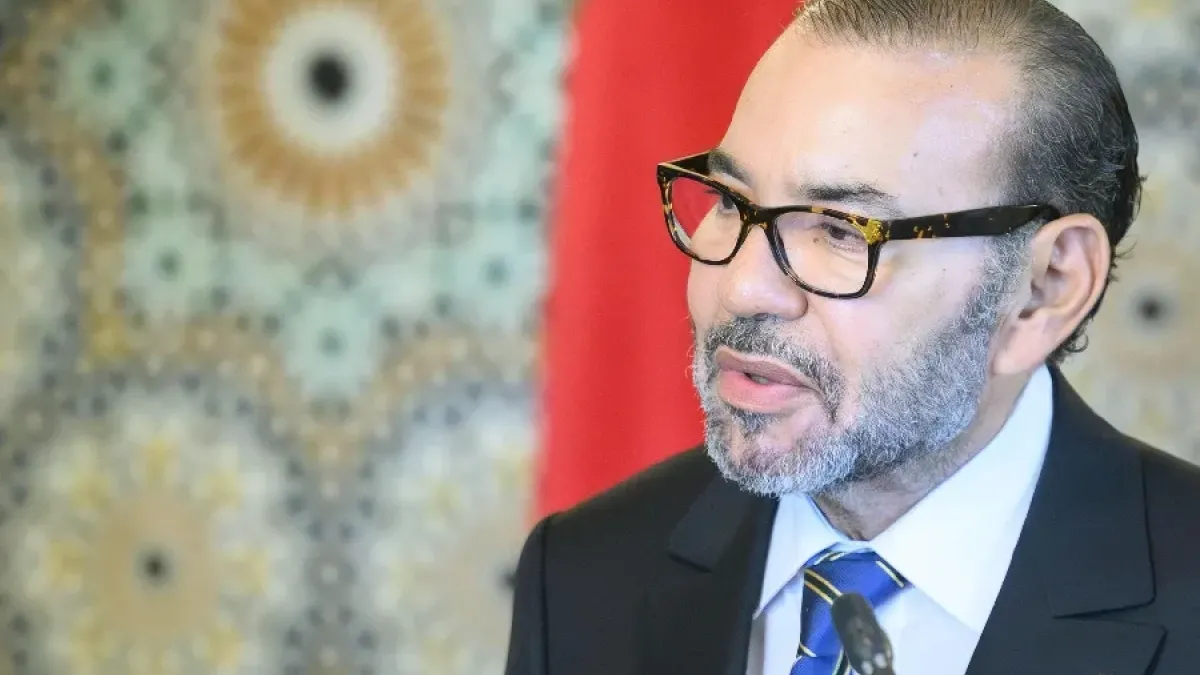
In practice, the political landscape presented to voters is devoid of any real choice, as no party can realistically challenge the authority of King Mohammed VI, the religious character of the state, or Morocco's sovereignty over Western Sahara. Those who refuse to play by these rules are excluded from the electoral process and often call for a boycott. This includes **Al Adl wal Ihsan**, the country’s main Islamist movement, which, despite being banned, is tolerated. Similarly, the leftist **Democratic Path**, which advocates for the self-determination of Western Sahara, has opted out of participation in these elections.
The upcoming elections will feature **28 political parties presenting 1,850 candidates for 395 seats** in the House of Representatives. To secure representation, voters must mark both their local and regional choices on the ballot. Although the distribution of seats will determine the next head of government, the real power over critical national issues—such as foreign policy, security, and strategic state orientations—remains firmly in the hands of the Royal Palace, as stipulated in the Constitution.
According to the Moroccan Constitution, the monarch is recognized as the highest religious authority, the President of the Superior Council of Ulemas, and the head of state, serving as the supreme arbiter among institutions and the guarantor of territorial integrity. Additionally, the king commands the Royal Armed Forces and presides over the Council of Ministers, appointing ambassadors, governors, and other key officials while also having the authority to dissolve Parliament and declare a state of emergency.
Despite the formation of a government led by the winning party, the new head of government will face limitations in cabinet formation, as the sovereignty ministries—Interior, Foreign Affairs, and Religious Affairs—are reserved for the Royal Palace. These strategic ministries are often headed by influential figures who remain in position irrespective of changes in the political landscape.
As Morocco approaches these elections, it is essential to recognize the limited power of the governing party and the overarching influence of the monarchy in shaping the kingdom's political future. The elections may serve as a façade of democracy, yet they are firmly rooted in a system where real power and decision-making are centralized within the monarchy.
As reported by publico.es.