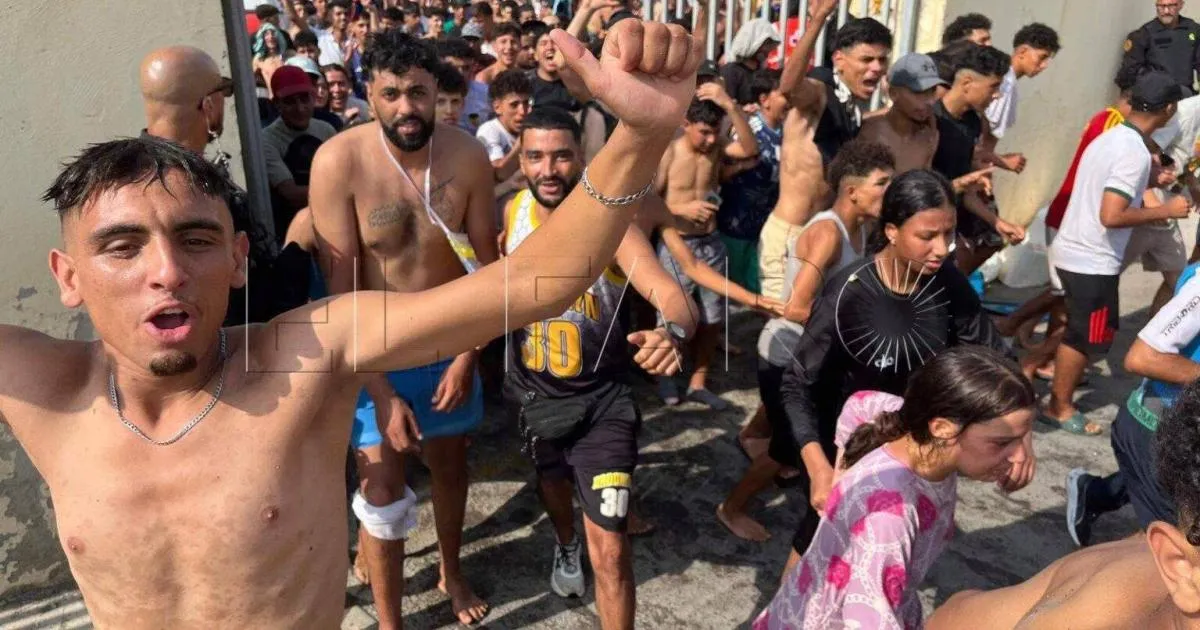

Mass Migration Highlights Discontent in Morocco
On the morning of July 30, 2026, the Kingdom of Morocco witnessed an extraordinary event that would mark a pivotal chapter in its history. Just hours after King Mohammed VI delivered his annual Throne Day address, an unprecedented wave of migration surged toward the shores of the Spanish enclave of Ceuta. Tens of thousands of Moroccans—including the elderly, young adults, and infants—made their way to the sea, seemingly casting an implicit ballot on the King's speech in a manner that caught everyone off guard. While government officials touted narratives of stability and progress, a stark question resonated among the masses: If life in Morocco is genuinely thriving, why are so many people attempting to flee?
This mass migration transcended a mere border incident or a temporary security issue that could be remedied by reinforcing police presence or convening emergency meetings among European Union ministers. It represented a defining political moment that shattered the long-held official narratives of Morocco as an "oasis of stability" and a "model of development" for Europe. The events that unfolded on the shores of Ceuta within a day of the Throne Speech were not just a significant influx of migrants; they were a silent yet powerful referendum on the state of the nation. Rather than casting votes with paper, these individuals made a life-altering choice to leave their homeland, demonstrating a profound loss of faith in their future.
The Underlying Causes of Desperation
As reported by Spanish and international media, Ceuta experienced one of the largest waves of irregular crossings in modern history, with estimates of over 70,000 to 80,000 arrivals in a matter of days. The rapid influx overwhelmed reception facilities, presenting Spanish authorities with an unprecedented humanitarian and security challenge. While media coverage focused on the immediate pressures faced by Ceuta, including the plight of unaccompanied minors, the more pressing inquiry remains: why did so many choose to leave Morocco in the first place?
In addition to this fundamental question, troubling footage surfaced allegedly showing Moroccan security personnel directing migrants toward crossing points, raising serious scrutiny regarding Morocco's management of the crisis. The migration issue, once framed as a humanitarian or security concern, has evolved into a political bargaining chip for successive Moroccan governments, strategically utilized to extract concessions from European partners in negotiations. Although Rabat has presented itself as North Africa's rising economic power, boasting mega-projects and foreign investments, the grim reality of high unemployment rates, especially among the youth, paints a stark contrast. Reports indicate that youth unemployment exceeds 37 percent, while unemployment among university graduates hovers around 25 percent, revealing a significant disconnect between official narratives and the lived experiences of the populace.
The socioeconomic landscape is further marred by rising living costs, declining purchasing power, and widespread poverty, which has fueled a desperate pursuit of opportunities abroad. For many young Moroccans, the dream of a better life has been reduced to a perilous journey across the Mediterranean, underscoring a profound crisis of trust between the state and its citizens. The images of individuals swimming toward Ceuta and the heartbreaking loss of life during these treacherous crossings have dismantled the carefully crafted narrative of Morocco as a stable and prosperous nation, revealing the underlying turmoil that has long been obscured.
In conclusion, the recent migration crisis has not only exposed the deep-rooted issues plaguing Moroccan society but has also raised critical questions about the effectiveness of European policies that prioritize security over human rights and development. The ongoing debate in Spain highlights the need for a reevaluation of its relationship with Morocco, as the very notion of stability is called into question. As Europe grapples with the implications of this crisis, it becomes clear that the issues at hand extend far beyond mere border control and migration management.
As reported by spsrasd.info.