
Military Advancements and Regional Dynamics
In recent years, Morocco has significantly modernized its military capabilities, incorporating advanced technology, including equipment from Israel and Turkey, which has notably enhanced its operational reach concerning the Canary Islands. The ongoing rearmament efforts by Rabat not only bolster its strategic position against regional players like Algeria but also extend its surveillance systems and military capabilities beyond the easternmost islands of the archipelago. As defense expert Guillermo Pulido notes, Morocco's development of coordinated warfare capabilities—such as the use of drones, guided missiles, and short- and long-range rockets—enables it to target considerable portions of the Canary Islands, including major locations like Gran Canaria and Tenerife, rather than limiting its focus to Fuerteventura and Lanzarote.
Historically, Morocco lacked a realistic military capacity to project power onto the Canary Islands due to its inferior air superiority and naval forces compared to Spain. However, in a remarkably short period, the Alawite kingdom has adopted new technologies that have disrupted this balance. Pulido emphasizes that while the current analysis does not suggest an imminent threat or expectation of an attack, Morocco's military capabilities have evolved in a manner that could present risks that were previously absent.
Shifting Strategic Perspectives
The speed of this transformation is particularly noteworthy. What once seemed like a distant possibility is now part of a new strategic landscape that has quickly altered military dynamics in the region. The introduction of Israeli and Turkish origin systems, especially in terms of drones and precision attack technologies, has substantially enhanced the operational abilities of the Moroccan Armed Forces. As Pulido explains, the implications of this development mean that Morocco could potentially engage in military actions against the Canary Islands with minimal effort, bypassing the need for complex aerial operations, and extending even to the southern parts of the Iberian Peninsula.
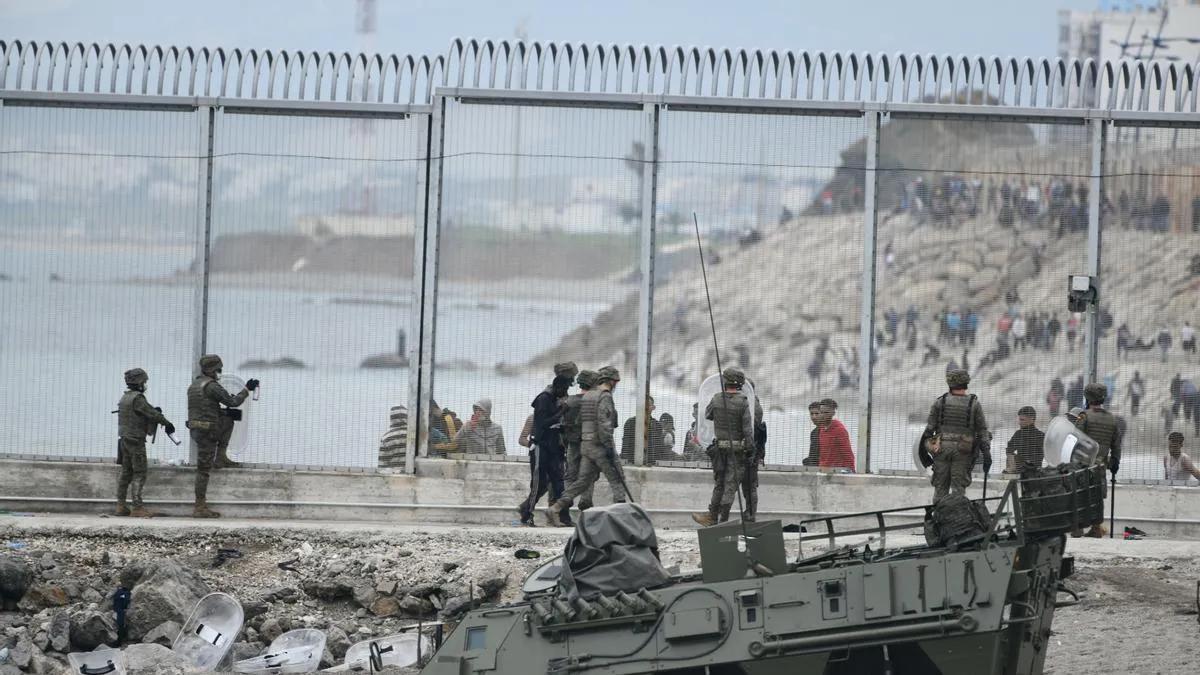
While Morocco's military expenditure continues to rise, Spain, particularly the Canary Islands, interprets the situation differently. International relations expert Frédéric Mertens suggests that there is no immediate cause for alarm regarding Morocco's armament, as the threats and possible attacks are increasingly hybrid in nature. He argues that migration pressure serves as an equally effective—if less costly—instrument than investing in drones capable of striking or destroying parts of Ceuta. Furthermore, Spain's foreign policy has increasingly demonstrated active involvement in defending human rights globally, as seen in conflicts like those in Palestine and Ukraine. However, this commitment has not been as strongly reflected in the case of Western Sahara, particularly since a notable shift occurred in 2022 when the Spanish government under Pedro Sánchez endorsed Morocco's autonomy plan, marking a significant departure from Spain's traditional stance aligned with United Nations resolutions advocating for the self-determination of the Sahrawi people.
In conclusion, as Spain navigates its geopolitical landscape, the complexities of its positions could lead to questions not only from Moroccan, Israeli, and American perspectives but also from Palestinians regarding Spain's true geopolitical intentions in this part of Africa.
As reported by eldia.es.