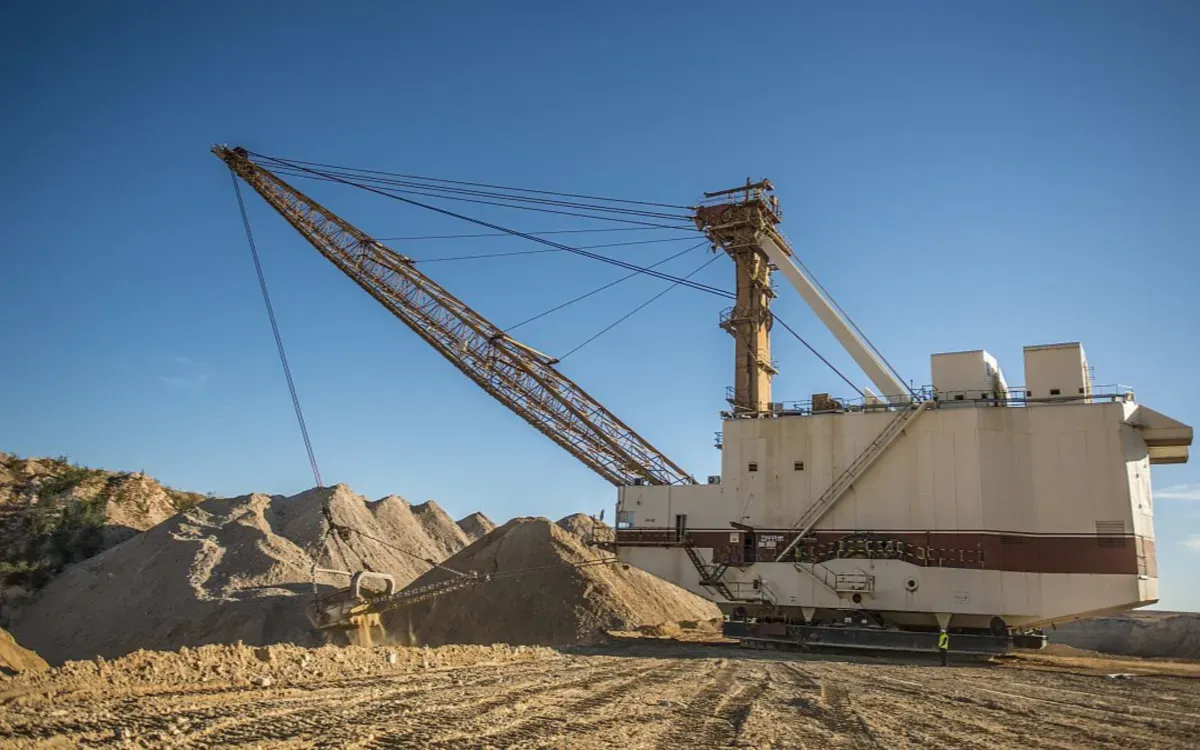

The Moroccan mining and chemical industries experienced a substantial downturn in the second quarter of 2026, primarily driven by the ongoing conflict in the Gulf region. According to Oxford Economics, this geopolitical instability has significantly impacted mining activities in the country. Morocco's reliance on imported raw materials for fertilizer production has led to further disruptions in supply chains, compounding the sector's challenges.
As highlighted by El Economista, the mining sector has endured a particularly challenging quarter due to the Gulf conflict. The Spanish daily reflects on the slowdown of the Moroccan economy, referencing national accounts published on September 30. The value added from extractive industries plummeted by 28.6% year-on-year, while the production index in the chemical sector fell by 29.5%. These two indicators, although measuring different aspects, clearly signify the adverse conditions faced by these industrial branches.
This decline has broader implications for the national economy, with growth rates falling to 4%, down from 5.8% in the second quarter of 2025. While agriculture has shown robust growth at 21.2%, non-agricultural activities have only increased by 1.5%, according to the Haut-Commissariat au Plan.
Challenges in Fertilizer Production and Supply Dependencies
The difficulties primarily stem from the processing of phosphate. Morocco has vast reserves of phosphate rock; however, its fertilizer industry also requires sulfur and, for certain products, ammonia. A portion of these supplies is contingent on the Gulf region and its maritime routes, which are now under strain due to the geopolitical situation.
Sulfur is essential for producing sulfuric acid, which is used to convert phosphate rock into phosphoric acid. Ammonia is then a key ingredient in the formulation of various fertilizers. Consequently, tensions surrounding the Strait of Hormuz are impacting critical stages of Moroccan production, even when the mineral resources are available locally.
El Economista reports that the costs of raw materials have surged, and supply flows have been disrupted due to the ongoing conflict. These challenges are exacerbated by declines in several other sectors, including apparel and computer equipment. Although industries such as automotive and agribusiness continue to grow, they do not sufficiently offset the contractions in the overall secondary sector.
OCP, Morocco's leading phosphate producer, has already adjusted its production strategies to address these constraints. The company has stockpiled sulfur and is increasingly focusing on triple superphosphate (TSP), which requires less sulfur per ton produced and does not necessitate ammonia.
Future Strategies to Mitigate Import Dependency
To sustainably reduce its reliance on imports, OCP is also exploring projects aimed at recovering pyrite and pyrrhotite, with plans for implementation starting in 2027. These initiatives signify a proactive approach to enhance the resilience of Morocco's fertilizer production in the face of ongoing global supply chain challenges.
As reported by bladi.net.