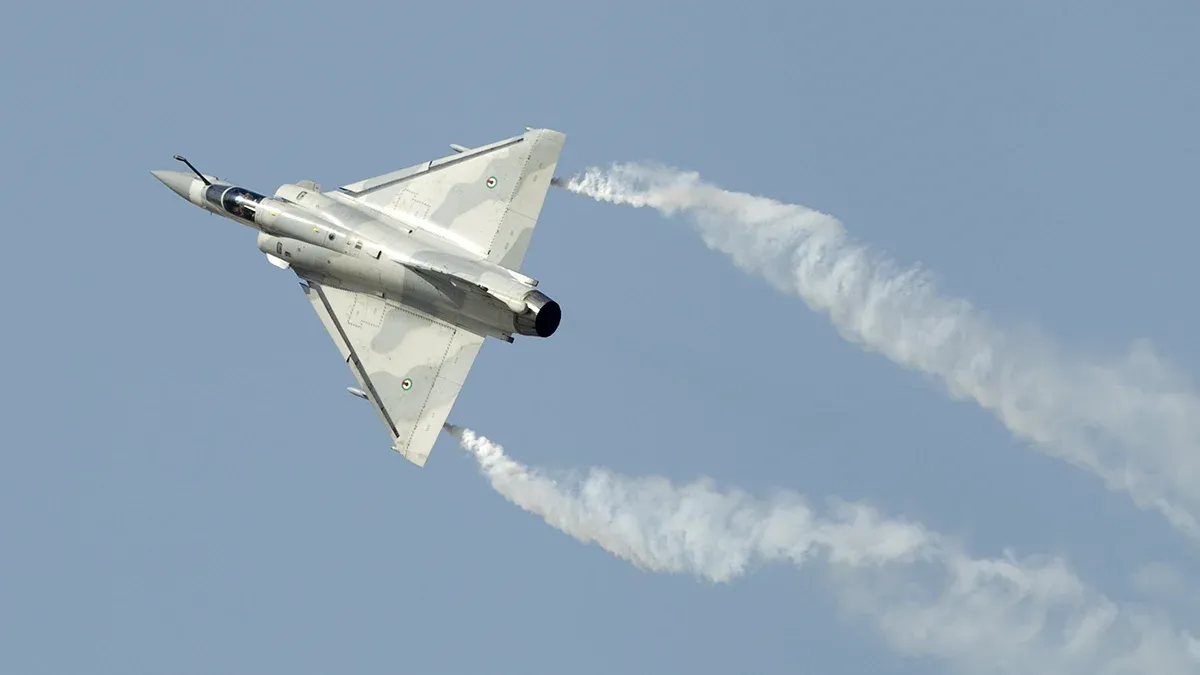

Despite an agreement reached in 2024, Morocco will not be receiving the French-made Mirage 2000-9 fighter jets, which have been mobilized by the United Arab Emirates (UAE) for its air defense in light of the escalating conflict in the Middle East. The intensification of warfare in this region, coupled with its potential repercussions for Gulf countries, has triggered a series of events that are ultimately affecting the Moroccan Air Force.
Before the onset of airstrikes by Israel and the United States on Iran, as well as Iran's responses across multiple Gulf locations, Morocco and the UAE had finalized a deal for the transfer of 30 Mirage 2000-9 fighters manufactured by the French company Dassault Aviation. According to reports from Africa Intelligence, the UAE has placed the Al Dhafra Air Base, located approximately 30 kilometers from Abu Dhabi, on high alert, as these aircraft are stationed there and may be needed to defend Emirati territory.
The transfer of the Emirati Mirage jets to the Moroccan Air Force had received authorization in 2024 from the French Interministerial Committee for Arms Export (CIEEMG), shortly before a state visit by French President Emmanuel Macron to Morocco in October 2024, which served to thaw Franco-Moroccan relations. France, as the manufacturer of the aircraft, held the final say on the transfer of the Mirage 2000-9 jets to Morocco, given that the sales contract between Abu Dhabi and Dassault prohibited the transfer of the aircraft to a third party without France's approval.
The authorization for the delivery of the jets had been delayed until diplomatic relations between the two countries were normalized. In fact, Moroccan Foreign Minister Nasser Bourita addressed this issue during a meeting with his counterpart Stéphane Séjourné, which concluded two years of disagreements stemming from France's reluctance to explicitly recognize Morocco's autonomy plan for Western Sahara.
The outbreak of conflict and Iran's bombings of targets located within Emirati territory compelled Abu Dhabi to urgently review the airframes and engines of the Mirage jets, preparing them in case they needed to be deployed during the ongoing conflict. This trilateral operation has become even more complex due to the requirement for the UAE Air Force to receive 80 Rafale F4 jets under a contract signed with Dassault Aviation in 2021. Reports indicate that Abu Dhabi withdrew from the Rafale F5 combat aircraft development program in early April, which also entails withdrawing funding for the project.
This situation has necessitated negotiations with Dassault to ascertain compliance with the 2021 contract concerning the 80 Rafale F4 jets. Emirati sources have even suggested the possibility that Abu Dhabi may seek an alternative supplier for its air force, which would ultimately impact Morocco as well. There is an expectation in Morocco regarding the resolution of Franco-Emirati negotiations to unlock the delivery of the Mirage 2000-9 jets. The arrival of the first units of the Russian-made Sukhoi Su-57E to the Algerian Air Force is alarming for Morocco, as it witnesses its regional rival begin to acquire fifth-generation fighters.
Moreover, the delay of the Mirage 2000-9, coupled with uncertainty regarding the delivery date of 25 F-16 Block 70/72 jets ordered from American company Lockheed Martin under a contract dating back to 2019, is raising concerns for the Moroccan government, especially within the current geopolitical context in the Middle East. For Mediterranean and Atlantic leaders, there is a desire to act as a bridge for communication, information sharing, and cultural understanding.
As reported by atalayar.com.