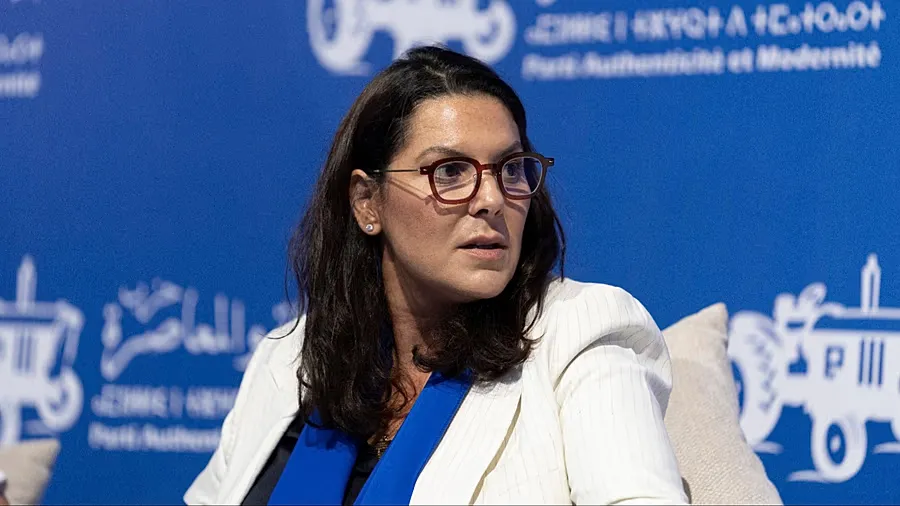
On Monday, the Moroccan Party of Authenticity and Modernity, which emerged victorious in last month’s legislative elections, announced the formation of a coalition government in collaboration with three other parties. This coalition will be led by Fatima Zahra Mansouri, marking a historic moment as she becomes the first woman to assume the role of Prime Minister in the country.
The newly formed coalition comprises the centrist Party of Authenticity and Modernity, along with the moderately socialist parties of the Progress and Socialism Party and the Socialist Union of Popular Forces, as well as the nationalist-oriented Istiqlal Party. Together, these four parties secured a total of 207 seats in the House of Representatives, surpassing the 198-seat threshold needed to achieve a parliamentary majority.
In a joint statement, the coalition parties expressed their commitment to establishing a cohesive political majority that would pave the way for a strong and effective government. They emphasized their shared ideological and political perspectives, which align with a reformist vision aimed at addressing various pressing issues facing the nation.
The coalition has pledged to propose qualified and politically astute candidates for ministerial positions, ensuring the formation of a government capable of implementing its upcoming program swiftly. This initiative follows the appointment of Fatima Zahra Mansouri by King Mohammed VI to lead the government after her party achieved a significant victory in the parliamentary elections held on September 23.
The Party of Authenticity and Modernity won 97 out of 395 seats, outpacing the National Rally of Independents, which led the previous government and secured 66 seats. Notably, the National Rally of Independents has opted not to join the new coalition, indicating a potential shift to the opposition, while the moderate Islamic Justice and Development Party, which won 54 seats, has also chosen to move into opposition.
According to the Moroccan constitution, the king is tasked with selecting the Prime Minister from the party that leads the electoral results. The Party of Authenticity and Modernity was founded in 2008 on the initiative of one of the king's advisors, presenting itself as a political force to counterbalance the Justice and Development Party, with a focus on modernizing society.
Economic and Social Challenges Ahead
The new government will face numerous economic and social challenges, including the urgent need to create job opportunities for youth and enhance education and healthcare services. These issues have been central to the protests led by the 'Generation Z' movement last year. Additionally, the government will need to address the ongoing migration crisis in the city of Ceuta that emerged in July, as well as oversee the final stages of a $20 billion investment plan as Morocco prepares to jointly host the FIFA World Cup in 2030 alongside Spain and Portugal.
Despite the governmental changes, significant shifts in Morocco's main political directions are not anticipated, given the constitutional monarchy that retains extensive powers for the king, particularly in foreign policy, defense, and other critical matters.
As reported by france24.com.