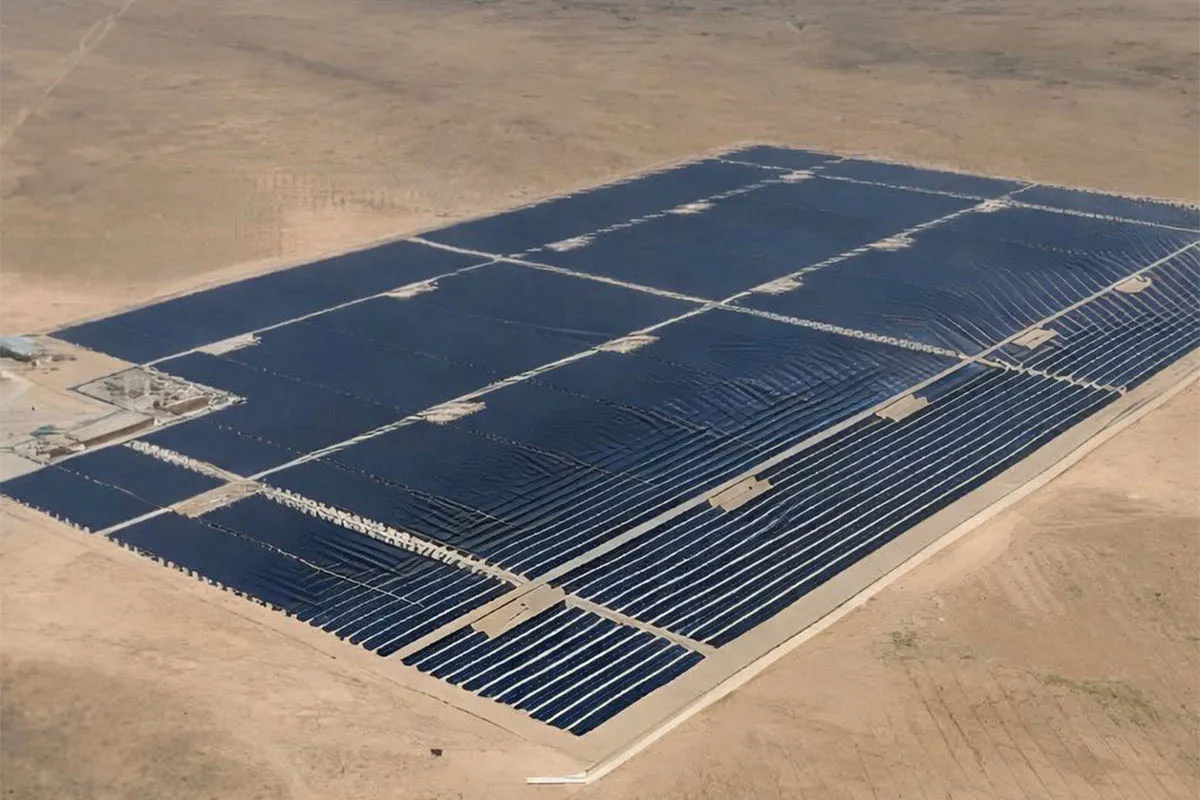

Transforming Renewable Energy Landscape
Morocco has launched what is now regarded as the world's largest solar complex, the Noor Atlas Mega Complex, an extensive energy infrastructure established in the Moroccan Sahara. With an impressive installed capacity of 20,000 megawatts, this monumental project is already exporting electricity to Europe through high-voltage connections and undersea cables. Covering approximately 45,000 hectares, an area comparable to around 63,000 football fields, the Noor Atlas complex stands as a significant symbol of the global energy transition and positions Morocco as a strategic player in supplying renewable energy to the European continent.
The theoretical production from this vast complex can meet the electricity demand of medium-sized countries such as Iceland or Estonia from a single generation point. Unlike conventional solar power plants, the Noor Atlas does not rely solely on one technology; instead, it integrates three different energy technologies across interconnected facilities: photovoltaic panels, solar concentration towers, and molten salt storage systems. This innovative use of molten salts is one of the most groundbreaking features of the complex, allowing it to store heat generated during the day and gradually release it when sunlight diminishes, thereby maintaining electricity production throughout the night.
Economic Impact and Future Prospects
Thanks to this advanced technology, the Noor Atlas complex can provide up to 16 hours of thermal storage, enabling a more stable and continuous energy generation compared to other large solar parks around the world, which typically depend on external batteries or are limited to daylight hours. The combination of solar energy and storage capabilities allows Noor Atlas to operate almost around the clock, which is particularly pertinent during a time when Europe is striving to reduce its dependence on fossil fuels and ensure a reliable energy supply.
One of the project's most critical aspects is its ability to export electricity to Europe. From the solar complex, a high-voltage direct current (HVDC) transmission corridor extends approximately 1,400 kilometers to transport the generated energy to northern Morocco. From there, electricity crosses the Strait of Gibraltar through a new undersea cable directly connected to the Spanish grid. This energy interconnection between Morocco and Spain is not a new concept, as both countries have shared electrical connections since 1997; however, the new corridor significantly enhances Morocco's export capacity and positions the North African nation as a major provider of clean energy in the region.
The significance of this system was further highlighted during a recent blackout that affected parts of Spain, during which Morocco contributed 38% of its available capacity to help restore electricity in southern Spain. The operationalization of the solar complex also holds substantial economic implications for Morocco. Estimates from organizations such as MASEN, the Moroccan Agency for Sustainable Energy, the World Bank, and the African Development Bank suggest that continuous exports to Europe could reach around 4,500 megawatts, generating approximately €2.8 billion annually in renewable energy sales.
This revenue figure is approaching the historical earnings Morocco has garnered from phosphate exports, a cornerstone of the country’s economy for decades. Furthermore, developing this infrastructure significantly reduces Morocco's reliance on foreign energy sources. Until a few years ago, Morocco imported a considerable portion of the gas and coal needed to sustain its electricity system, an energy bill that could now see a considerable decrease thanks to solar production. The project's impact is already prompting movements in other African countries, with at least ten nations in North Africa initiating contacts and requests to explore similar renewable energy projects in desert regions.
The Sahara offers particularly favorable conditions for such infrastructures due to its vast land availability and high levels of solar irradiation for most of the year. Countries like Mauritania and Algeria are already beginning to analyze potential energy developments inspired by the Moroccan model, while China is involved in various green energy projects in the region. The prospect of transforming North Africa into one of the world's major centers for renewable electricity production could profoundly alter the European energy landscape in the coming decades.
Although the Noor Atlas project represents a significant technological advancement, it also presents important technical and strategic challenges. Long-distance electricity transmission via direct current involves energy losses, and undersea cables require substantial investment and constant maintenance. Moreover, integrating these infrastructures into national electricity grids designed under different energy models necessitates the development of new reception and distribution capabilities. Additionally, there are geopolitical implications associated with an increasingly energy-dependent system reliant on large cross-border infrastructures.
Nevertheless, the fact that Noor Atlas is already operational and exporting electricity to Europe changes the international landscape. What has been a theoretical project for harnessing energy from the desert for years is now a reality at a large industrial scale. The Sahara, traditionally associated with extreme conditions and vast uninhabited expanses, is beginning to establish itself as a key territory in the new global race for renewable energy.
As reported by elfarodeceuta.es.