
Record Surge in Oil Product Imports
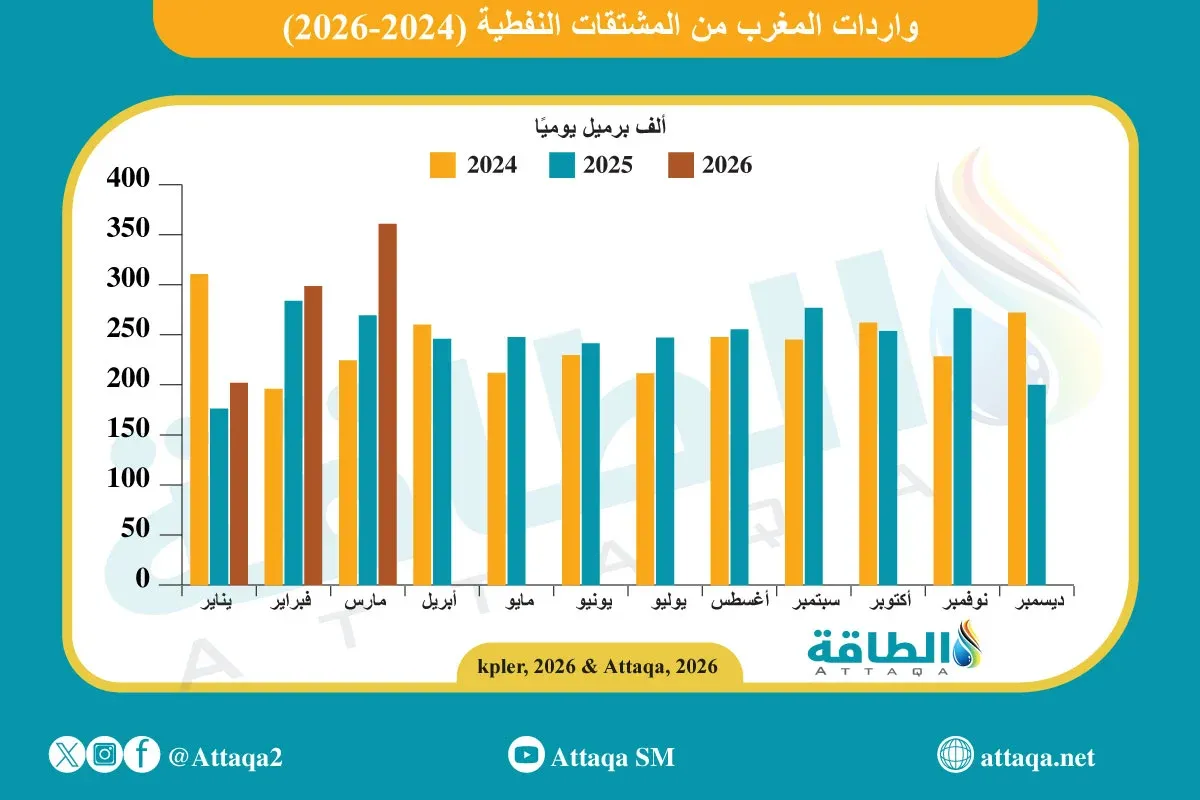
In March 2026, Morocco witnessed a significant increase in its imports of oil derivatives, marking a historic high as the nation navigated the complexities of the ongoing Iranian war. According to data from the Energy Research Unit based in Washington, Morocco's imports of seaborne petroleum products soared by 34% year-on-year, reaching an unprecedented level of 361,000 barrels per day in March 2026, compared to approximately 269,000 barrels per day during the same month in 2025. Additionally, the month-on-month comparison indicated a 21% rise from February's imports, which stood at 299,000 barrels per day.
This unprecedented spike in oil product imports can be attributed primarily to the country's increasing reliance on fuel oil and diesel, alongside the utilization of coal to meet the rising electricity demand amid instability in gas supplies from Spain, a situation exacerbated by the Iranian conflict. Reports indicate that gas supplies from Spain experienced severe disruptions during the last ten days of March, with a complete halt in shipments starting in April 2026.
Key Suppliers and Market Dynamics
During the initial phase of the Iranian war, five countries accounted for approximately 71% of Morocco's total oil product imports, translating to about 258,000 barrels per day. The leading suppliers included Russia, the United States, Spain, Turkey, and the Netherlands, with Russia supplying 81,000 barrels per day, followed by the United States with 63,000 barrels per day. Spain contributed 61,000 barrels, while Turkey and the Netherlands supplied 27,000 and 26,000 barrels per day, respectively.
The Iranian conflict, which lasted for 40 days, was temporarily alleviated when the United States announced a ceasefire agreement on April 8, 2026, which involved Iran agreeing to open the Strait of Hormuz to allow the passage of oil and liquefied gas supplies. Morocco's oil imports also traditionally include shipments from Gulf nations like Saudi Arabia, the UAE, and Kuwait, but these sources saw a complete halt in March.
As Morocco continues to adapt to the shifting dynamics of global oil markets, the implications of these developments on the country's energy security and economic stability remain critical. The landscape of oil imports will likely continue to evolve in response to geopolitical tensions and market fluctuations. As reported by attaqa.net.