
Morocco's Strategic Control Over Border Security
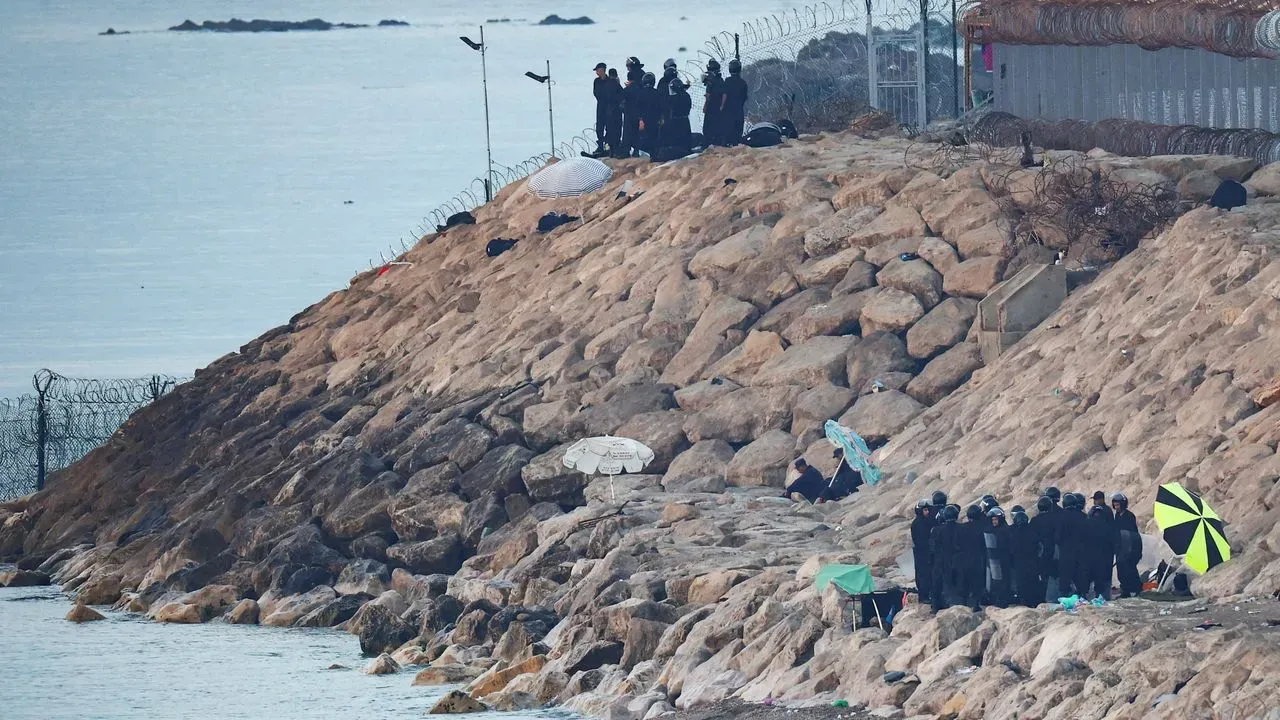
On August 15, 2026, Morocco successfully executed a comprehensive operation that resulted in the detention of 148 individuals and effectively neutralized the potential threat of a mass immigration surge at the borders near Ceuta, a Spanish autonomous city. The operation marked a significant display of Morocco's ability to control its terrestrial and maritime boundaries, demonstrating that when the country is determined, it can maintain a tight grip on the flow of migrants attempting to reach European soil. Following a tense fortnight of diplomatic negotiations with Spain, the Moroccan authorities managed to thwart any attempts by sub-Saharan migrants to approach the border, leading to a sense of relief in Ceuta as the threat of another mass influx was significantly diminished.
On that Saturday, military and police forces were deployed in full force, employing riot control measures, tear gas, helicopters, and drones to disperse and detain hundreds of migrants. By the end of the day, reports indicated that 128 detainees were from sub-Saharan African nations, alongside 20 Moroccan nationals. Additionally, 61 individuals were arrested for inciting illegal immigration. In response to the heightened tensions, the Spanish military stationed armored vehicles at the beach of El Tarajal, the very point where tens of thousands had entered Ceuta just two weeks earlier.
Comparative Analysis of Immigration Responses
The operation's success stands in stark contrast to the events of July 30, when over 80,000 migrants managed to breach Moroccan border controls without substantial resistance. This time, however, Moroccan authorities effectively intercepted groups well before they could gather in significant numbers, particularly near locations such as Castillejos, preventing any organized attempts to breach the border. Spanish diplomatic sources reported that Moroccan forces had intercepted hundreds of migrants in wooded areas close to Fnideq, highlighting the contrast in operational efficacy compared to the previous month.
Following the recent surge in migration, Morocco shifted its approach, easing some diplomatic tensions while simultaneously strengthening its border security measures. The Moroccan regime, under King Mohammed VI, had previously engaged in a diplomatic tug-of-war with Spain, raising issues of sovereignty over Ceuta and Melilla, threatening to suspend extradition agreements, and accusing Spanish security forces of mistreatment towards migrants. However, on this occasion, Morocco intensified patrols and inspections across various transport hubs, ensuring that potential migrants were effectively blocked from reaching the border.
From Tétouan to Fnideq, security measures were reinforced with extensive checks and balances, making it nearly impossible for groups of migrants to embark towards Ceuta. The Moroccan security apparatus, including the Royal Armed Forces, National Security, and the Gendarmerie, deployed thousands of personnel to secure the area. Reports indicated that over 3,000 personnel were present around the border, although an official tally was not provided by Moroccan authorities.
As the situation unfolded, Spain maintained a strong presence at the border, deploying nearly 3,600 security personnel, including national police and civil guards, to ensure that no further breaches occurred. The deployment included riot police, specialized units, drones, and naval vessels, all prepared to respond to any potential crisis. Fortunately, the day passed without any incidents on the Spanish side of the border, signifying a temporary reprieve for a city that has struggled to cope with the aftermath of the previous mass immigration crisis.
Despite the calm, Ceuta remains in a precarious state, grappling with the ramifications of previous influxes, with estimates suggesting that thousands of migrants remain in the area, creating urgent humanitarian needs. The operations on both sides of the border have reaffirmed the delicate balance of power in managing migration flows, underscoring that the stability of Ceuta is closely tied to Morocco's willingness to control its borders.
As reported by lavozdegalicia.es.