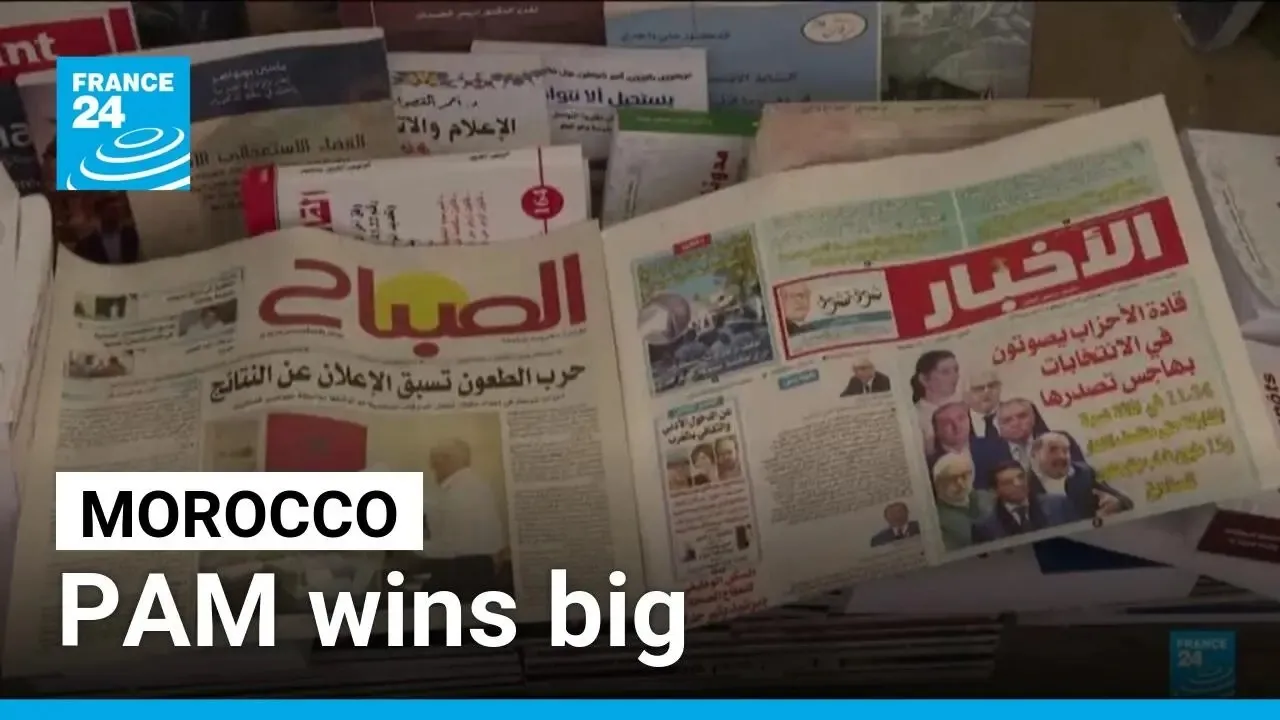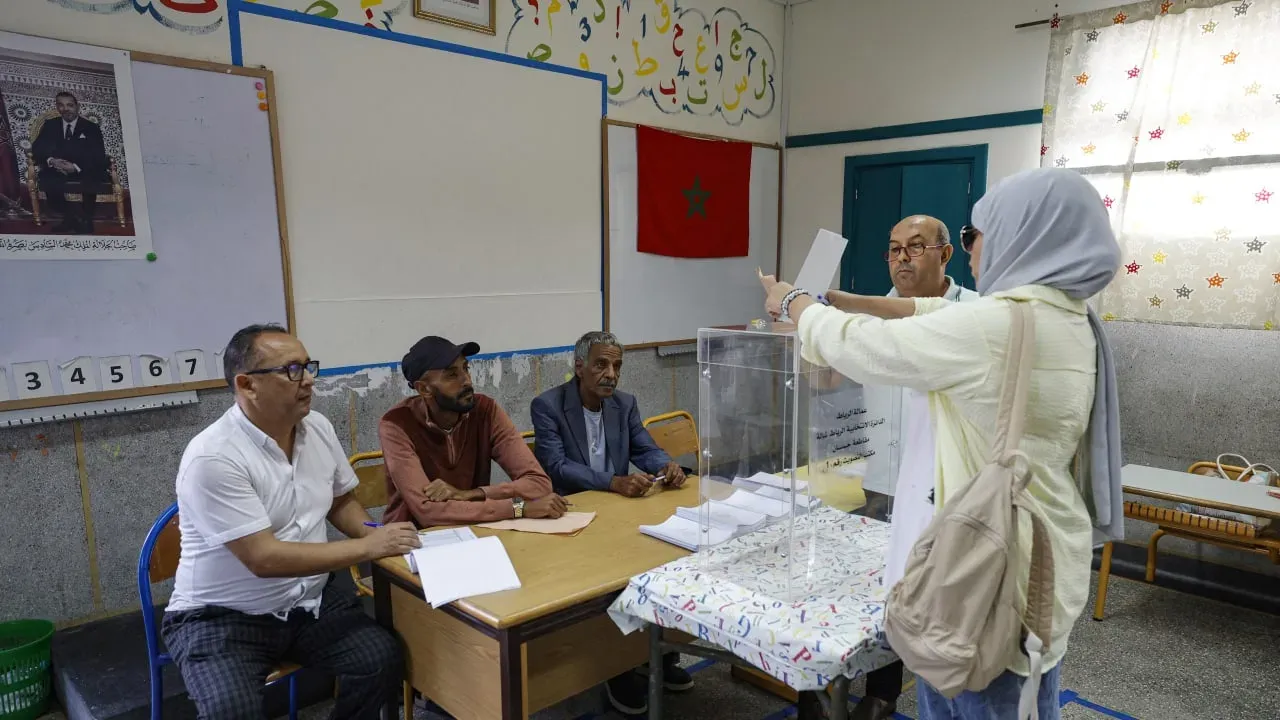

In a significant political shift in Morocco, the Authenticity and Modernity Party (PAM) has claimed victory in the recent parliamentary elections, securing 97 out of the 395 available seats, according to provisional results announced early Thursday. This development marks a substantial change in the political landscape as the Islamist Justice and Development Party (PJD), which PAM had previously displaced from power five years ago, has made a remarkable comeback, winning 54 seats, a notable increase from just 13 seats in the previous election in 2021. The return of Abdelilah Benkirane, who served as prime minister from 2011 to 2017, to lead the PJD has played a crucial role in this resurgence, although voter turnout saw a decline, dropping to 38% from 50% in the last election.
King Mohammed VI holds the reins of foreign and defense policy, while the government and parliament are tasked with addressing domestic matters, including employment, education, healthcare, and economic stability. Given PAM's first-place finish, the king is now positioned to select the next prime minister from the party, which is now tasked with forming a governing coalition. PAM, which was established in 2008 with the backing of the king's advisor Fouad Ali El Himma, is often viewed as the political entity closest to the monarchy.
The recent election results reflect a significant setback for PAM's coalition partners in the outgoing government. The National Rally of Independents (RNI), previously led by former Prime Minister Aziz Akhannouch, saw its seat count drop from 102 to 66, while the historic Istiqlal party, which has its roots in the struggle against French colonial rule, fell from 81 to 65 seats. The PJD's political platform is grounded in conservative Islam, yet it acknowledges the monarchy and participates in electoral processes. After a decade in governance following the Arab Spring protests in 2011, the party faced a dramatic decline in the last election, necessitating a campaign focused on addressing pressing issues like corruption, the cost of living, and the quality of public services.
To achieve a governing majority, 198 seats are required in the Moroccan parliament. The three parties from the previous coalition currently hold a combined total of 228 seats, which theoretically allows them to continue governing together. However, PAM has indicated a reluctance to form a new government with the RNI, prompting a search for coalition partners among Istiqlal and smaller political factions.
Dr. Yasmine Hasnaoui, an expert at the Council for Mediterranean Diplomacy and a member of the National Council of the Popular Movement Party, noted a lack of enthusiasm among voters during the election process, stating that many polling stations were notably quiet. Some voters expressed their intention to submit blank ballots as a form of protest against declining purchasing power, reflecting a dual sentiment of civic engagement coupled with skepticism about the efficacy of political participation in effecting real change.
Additionally, Morocco has witnessed a decline in voter registration, with only 15.8 million out of 26.7 million eligible voters registered, marking a nearly 10% decrease since 2021. Mohammed Masbah, a researcher based in Rabat, pointed out the significant exclusion of younger voters from the electoral process, indicating that about 600,000 registered voters aged 18 to 24 were part of a population of roughly 4 million in that age group.
Despite the PJD's unexpected comeback, Hasnaoui emphasized the importance of addressing the RNI's losses, which indicate a voter reassessment of the party's previous performance, particularly concerning critical issues related to employment and public services. The PJD's campaign was characterized by a disciplined and organized approach, successfully reconnecting with voters across various constituencies. The announcement of national results shortly after 3 a.m. matched general expectations regarding the leading parties, although the PJD's 54 seats caught many by surprise.
In terms of female representation in politics, Morocco reserves 90 seats in parliament for women elected from separate regional lists, with approximately 30% of this year's candidates being female. Fatima-Zahra Mansouri, the national coordinator of PAM and mayor of Marrakesh, is a potential candidate to become Morocco's first female head of government, highlighting the evolving role of women in Moroccan politics. However, deeper systemic challenges remain regarding women's participation in leadership roles within political parties.
Additionally, Morocco's diplomatic relations, particularly with Israel, continue to evolve, with recent agreements to elevate liaison offices to full embassies and engage in mutual investment protection. The PJD's stance against further normalization of relations is noteworthy as Morocco navigates its foreign policy amidst internal political changes.
As Morocco faces pressing issues such as high youth unemployment rates, which stood at 29.2% in early 2023, and a growing demand for better public services, the upcoming coalition negotiations will need to address the trust deficit among citizens. Hasnaoui concluded that while coalition math may align, rebuilding public confidence will require tangible results that address the needs and aspirations of the Moroccan people.
As reported by jpost.com.