
The OCP Group, a prominent producer of phosphate in Morocco, faces a significant challenge in lowering the levels of toxic cadmium in fertilizers intended for European markets. This toxic metal has become a central issue in public health discussions and regulatory scrutiny. According to the OCP Group, which holds a monopoly on phosphate extraction and production in Morocco, they have developed a technology that allows them to reduce cadmium levels in their fertilizer products.
Phosphate, in its natural state, often contains cadmium, a heavy metal that can migrate from fertilizers to agricultural soils and subsequently enter the food chain. This issue is particularly pronounced in phosphate deposits that have been accumulating for millions of years in Morocco, the United States, and Tunisia, as opposed to those found in South Africa or Russia, as reported by French health authorities. Cadmium exposure can lead to kidney damage and an increased risk of cancer, a concern that has only recently gained public attention in Europe. In June, the French Parliament adopted a bill aimed at reducing consumer exposure to this hazardous substance.
Global Phosphate Reserves and Production
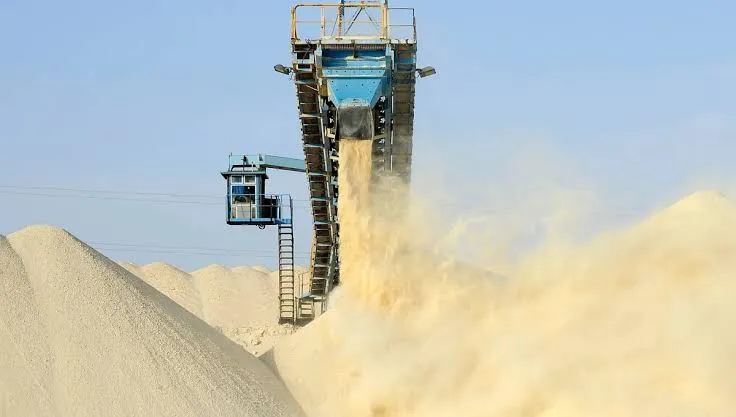
Morocco possesses approximately 70% of the world's phosphate reserves, including mines located in the disputed Western Sahara. It is the second-largest producer of phosphate, following China, with an estimated reserve of about 50 billion tons out of a global total of around 70 billion tons. One of the significant production sites is the Sidi Chennane mine, located near Khouribga, roughly 120 kilometers east of Casablanca, where giant machines remove the overburden covering the phosphate rock, which is then washed after extraction. This phosphate is subsequently exported either in its raw form or converted to phosphoric acid, the primary component in phosphate fertilizers, at an industrial facility in the Jorf Lasfar region south of Casablanca.
Since early 2025, fertilizers exported by the OCP Group to Europe reportedly contain cadmium levels below 20 milligrams per kilogram, which is three times lower than the European Union's maximum standard of 60 milligrams per kilogram. The EU is the third-largest importer of OCP's products, making up 17% of their exports, following the Americas at 31% and Asia at 41%. However, a European official clarified that the EU does not enforce "automatic tracking" of cadmium levels in phosphate fertilizer imports, meaning that verification of producers' claims is not feasible. Nevertheless, a significant Moroccan producer has indicated investments in technology to ensure cadmium levels remain below the 20 milligrams per kilogram threshold.
Environmental and Market Challenges
To achieve this target, the OCP Group claims to have developed a technique that involves the addition of specific materials during the processing of phosphoric acid, followed by the separation and isolation of cadmium from the acid before it is subsequently utilized. However, the company Nutri-Crops, a subsidiary focused on fertilizer production, does not disclose the cadmium levels for fertilizers exported to markets outside the EU. Nonetheless, its CEO, Faris El Draj, mentioned that significant investments have been made to adapt to regulatory approaches that vary from market to market.
Additionally, the phosphate sector faces other environmental challenges, such as managing phosphogypsum waste, which is heavily contaminated with heavy metals and acidic materials produced during fertilizer manufacturing. The OCP Group plans to establish a storage center by 2027 to reduce the volume of waste disposed of in the ocean. Sylvain Belran, director of the French Institute for Research on Agriculture, Food, and Environment, noted that excessive use of phosphate fertilizers could lead to negative environmental impacts, such as water pollution and the emission of nitrous oxide, a greenhouse gas.
Moreover, the group must also navigate the repercussions of the ongoing conflict in the Middle East, which affects its imports of essential raw materials for fertilizer production, while global demand continues to rise. Since the war began in late February, the supply of fertilizers has decreased, and prices have surged in international markets, with the Middle East providing about 30% of the global supply. The Strait of Hormuz, which is closed by Iran, is a strategic passage for sulfur and ammonia, both crucial for fertilizer production. Several factories in the Gulf have halted or reduced their operations, particularly in Qatar, a major producer of ammonia and urea, a highly sought-after fertilizer, as well as in the UAE, Saudi Arabia, Iran, and Jordan.
Faris El Draj acknowledged that this crisis has had "impacts on timelines, costs, and supply flow," without providing specific data. However, he emphasized that the OCP Group has succeeded in maintaining the continuity of its operations, thanks to its "stockpiles" and Morocco's "geographical location."
As reported by mc-doualiya.com.