
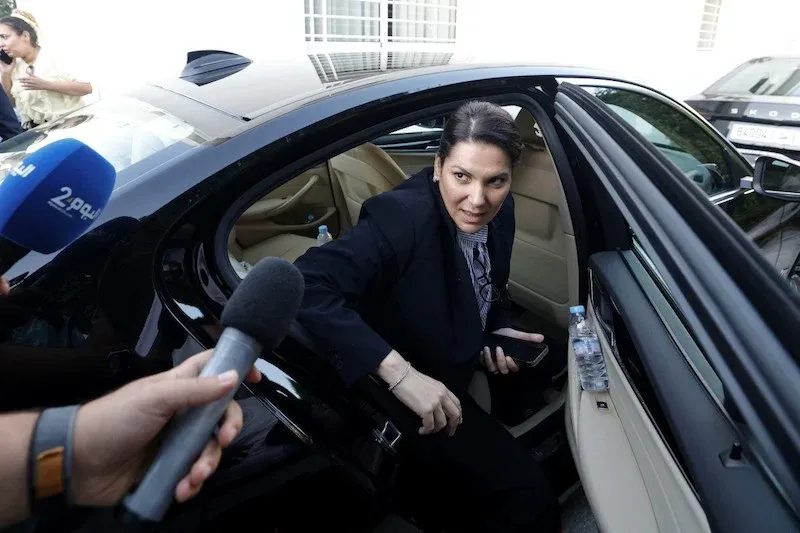

In Morocco, public anticipation is mounting regarding the outcomes of the meetings initiated by Fatima Zohra Mansouri, the newly appointed head of government tasked with forming a new coalition. These discussions are taking place with the leaders of political parties represented in parliament as part of the second round of negotiations aimed at establishing the new government coalition. This development comes eight days after King Mohammed VI received Fatima Zohra Mansouri, who is also the coordinator of the collective leadership of the Authenticity and Modernity Party (PAM), and appointed her as the head of government responsible for its formation.
According to various sources, there is a push for the PAM to form a government that includes the Democratic Bloc parties—namely, the Independence Party, the Progress and Socialism Party, and the Socialist Union of Popular Forces. There is also potential for strengthening the government coalition by including another party to secure a comfortable majority. Even if the committee, which the political bureau of the PAM has entrusted with managing the negotiations, led by Mansouri, reaches a consensus on the party composition of the ”PAM government,” it will still take some time before the PAM and its allies finalize the proposed ministerial candidates. These names will then be submitted by the head of government for royal appointment, as stipulated by Article 47 of the constitution, followed by the completion of the parliamentary approval process.
A Historical Overview of Government Formation in Morocco
Over the past decades, the intervals between the appointment of the Prime Minister or head of government by the monarch and the subsequent appointment of government members, including ministers and state secretaries, have varied significantly. These variations have been influenced by the political circumstances surrounding the coalition formation consultations at each political juncture. For instance, Abderrahmane Youssoufi, the former Secretary-General of the Socialist Union of Popular Forces, was appointed by King Hassan II on February 4, 1998, as Prime Minister with a mandate to form a government. His government was officially appointed on March 14, 1998, resulting in a gap of 38 days between the two events. Youssoufi's consensus government included parties from the Democratic Bloc—namely, the Socialist Union of Popular Forces, the Independence Party, the Progress and Socialism Party, alongside the National Rally of Independents and the Popular Movement.
His successor, the technocrat Idriss Jettou, was appointed by King Mohammed VI on October 9, 2002, and it took 29 days for the remaining members of his government to be appointed on November 7, 2002. Jettou's first government formed a broad coalition that included the Socialist Union of Popular Forces, the Independence Party, the National Rally of Independents, the Popular Movement, and the Progress and Socialism Party.
By 2007, the leadership of the government returned to a political figure as King Mohammed VI appointed Abbas El Fassi, the Secretary-General of the Independence Party, as Prime Minister on September 19 of that year, tasking him with forming the government. His consultations concluded with the formal appointment of government members on October 15, 2007, just 26 days after his appointment. El Fassi formed his government with the Independence Party, the Socialist Union of Popular Forces, the National Rally of Independents, the Progress and Socialism Party, and the Popular Movement following a cabinet reshuffle.
Shifts in Leadership: From Benkirane to Akhannouch
Abbas El Fassi was the last Prime Minister of the pre-2011 era, as the 2011 constitution elevated the second-highest authority in the state to the title of “head of government,” who is chosen from the party that wins the most seats in the House of Representatives. Consequently, King Mohammed VI appointed Abdelilah Benkirane, the Secretary-General of the Justice and Development Party, on November 29, 2011, following his party’s electoral victory that year, as the head of government and tasked him with forming it. Benkirane led extensive consultations that culminated in the appointment of his government on January 3, 2012, just 35 days after the royal mandate. His first government under the new constitution included the Justice and Development Party, the Independence Party, the Popular Movement, and the Progress and Socialism Party.
More than four years later, King Mohammed VI appointed Abdelilah Benkirane again as head of government on October 10, 2016, after the Justice and Development Party topped the legislative elections again. However, his task proved challenging due to a five-month deadlock in government formation. Ultimately, the king terminated Benkirane’s mandate on March 15, 2017, without a government being formed, and assigned the task to Saadeddine El Othmani, who was then the President of the National Council of the Justice and Development Party. The consultations led by El Othmani resulted in the formation of a government within three weeks, with its appointment on April 5, 2017, comprising a broad political coalition that included the Justice and Development Party, the National Rally of Independents, the Popular Movement, the Socialist Union of Popular Forces, the Constitutional Union, and the Progress and Socialism Party.
In the subsequent legislative elections of 2021, the gap between the appointment of the head of government and the official appointment of government members widened again, reaching 27 days. King Mohammed VI appointed Aziz Akhannouch, the head of the National Rally of Independents, as head of government on September 10, 2021, following the party’s electoral success, and Akhannouch successfully formed the government, which was officially appointed on October 7, 2021, comprising, in addition to the National Rally of Independents, the Independence Party and the Authenticity and Modernity Party.
As reported by hespress.com.
