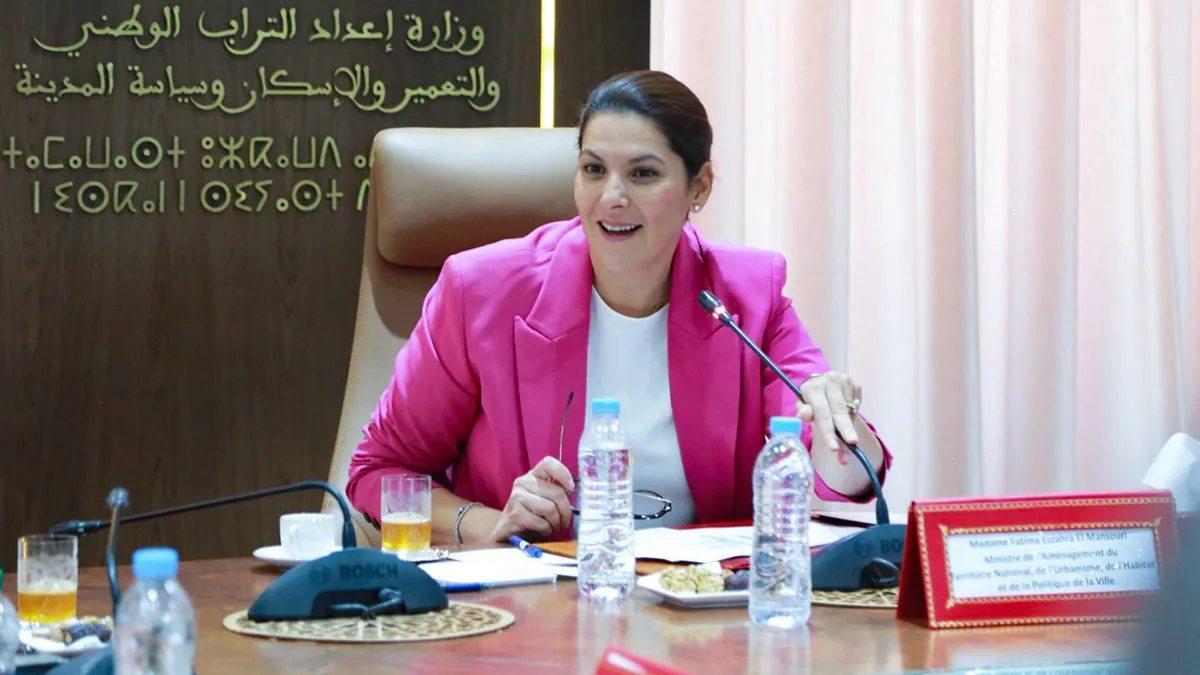

Morocco has witnessed a significant transformation in its political landscape following the recent legislative, regional, and municipal elections. The **Authenticity and Modernity Party (PAM)** has emerged victorious, securing 97 seats and positioning **Fatima Zahra Mansouri** as a leading candidate for the role of head of government, potentially making her the first woman to hold such a position in the Arab world. This electoral outcome not only reflects a shift in power dynamics but also underscores the public's response to the outgoing administration's policies.
The elections were marked by a clear protest against the **National Rally of Independents (RNI)**, which was led by outgoing Prime Minister **Aziz Akhannouch**. Voter turnout plummeted to **38.08%**, with metropolitan areas experiencing an abstention rate of approximately 62%. In stark contrast, the **Moroccan Sahara** saw a remarkable mobilization, with participation rates nearing 75% in pivotal districts. This divergence highlights the varying political engagement across different regions of the country, as noted by geopolitical analyst **Nourdine Mouati**, who emphasizes the implications of these results for Morocco's international relations, particularly with Spain and the **European Union (EU)**.
The Electoral Landscape: Urban Abstention Versus Southern Mobilization
Observers have confirmed that the voting process adhered to democratic norms, yet the staggering abstention rate has captured public attention. Despite the administrative normality of the elections, national turnout dropped significantly from **50.86%** in the previous 2021 elections to the current **38.08%**. This decline is particularly pronounced in urban centers such as Casablanca, Rabat, and Tangier. While urban voters displayed a sense of civic fatigue, rural areas, especially the southern provinces, exhibited strong electoral engagement, with regions like **Laâyoune** and **Dakhla** reporting participation rates that exceeded the national average, reaching up to 77%. This phenomenon of high voter turnout in the southern provinces can be attributed to the active involvement of local communities and particularly women, who played a crucial role in mobilizing families to vote.
Akhannouch's Electoral Reversal and the Future of Governance
The dynamics of the election did not favor the outgoing government's coalition partners, particularly the RNI, which faced a significant loss, dropping from 102 to 66 seats—a net loss of 36 seats. The PAM's victory can be partially attributed to the influence of **Fouzi Lekjaa**, the outgoing Minister Delegate for the Budget, whose administrative credibility and public support for social investment initiatives resonated with the electorate. Voters expressed their dissatisfaction with the previous administration's handling of economic challenges, particularly regarding inflation and the rising cost of living, which disproportionately affected household budgets.
As the new government takes shape, questions arise regarding coalition formation. The moderate Islamist **Justice and Development Party (PJD)** has seen a resurgence, increasing its representation from 13 to 54 seats. However, the party has indicated its intention to remain in opposition rather than join the governing coalition, which is expected to re-establish a partnership with the RNI and other political entities. Should **Fatima Zahra Mansouri** successfully navigate this complex landscape, she will not only lead the government but also make history as the first female prime minister in the Arab world.
Addressing socio-economic inequalities and fostering a cohesive national identity will be paramount for the incoming cabinet, especially in light of King **Mohammed VI's** emphasis on bridging the divide between urban and rural areas. This challenge, coupled with the expectation of increased representation of youth and women in the legislature, positions Morocco at a critical juncture as it prepares for the **2030 FIFA World Cup**, co-hosted with Spain and Portugal. As the nation moves forward, the strategic partnership with Spain will play a crucial role in addressing migration governance and enhancing bilateral relations.
As reported by atalayar.com.