
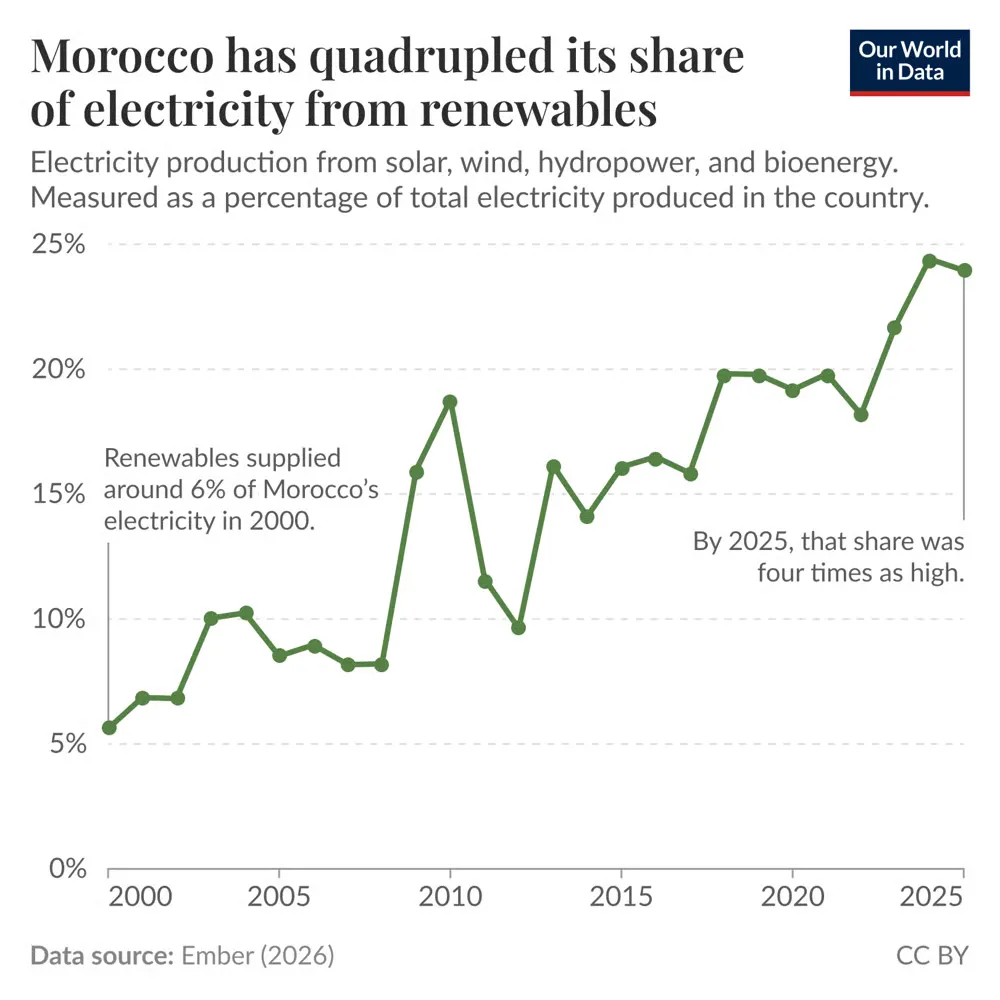

In recent years, Morocco has made significant strides in the realm of renewable energy, with the share of electricity generated from sustainable sources increasing dramatically from approximately 6% in 2000 to an expected 24% by 2025. This impressive growth trajectory is illustrated in a line chart that highlights the rising contribution of renewable energy to the country's electricity production over time. Unlike many of its African counterparts that have primarily relied on hydropower to enhance their renewable energy share, Morocco has diversified its energy portfolio through a strategic focus on wind and solar power. This approach is the result of a dedicated policy initiative aimed at boosting the nation’s renewable energy capacity while meeting the growing energy demands of its population.
As a result of these efforts, Morocco's electricity mix has become noticeably cleaner, showcasing a higher proportion of renewables in each unit of electricity produced. However, it is critical to note that the overall generation from fossil fuels has not diminished; instead, the new installations of solar and wind energy have primarily been utilized to satisfy the increasing demand for electricity rather than replace coal-generated power. In fact, despite the advancements in renewable energy, Morocco continues to consume nearly three times the amount of coal for electricity generation than it did two decades ago, although recent trends suggest that coal production may have reached a plateau.
This dual reliance on both renewable and fossil fuel sources highlights the complexities of Morocco's energy landscape and the challenges faced in transitioning to a more sustainable and less polluting energy system. Morocco's commitment to renewable energy development provides an insightful case study on balancing growth and sustainability in the energy sector, and the nation’s experience can serve as a valuable reference for other countries aspiring to enhance their renewable energy production.
As reported by ourworldindata.org.
