
In the border town of Fnideq, Morocco is deploying an unprecedented display of force to prevent a second wave of migrants attempting to reach Ceuta, signaling its intent both to the international community and its own citizens. As night falls, the wall overlooking the beach promenade in Fnideq becomes packed with onlookers, including families with young children, while television crews broadcast live reports. All eyes are fixed on the horizon where the first lights of Ceuta begin to twinkle, and at the nearby intersection, police use whistles to guide vehicles through the traffic congestion toward the border crossing. This scene sets the stage for the next chapter in the ongoing migration drama at Tarajal Beach.
A local man, laying a small blanket on the wall, remarks, "From up here, you can see better than on TV. They won’t dare to try again." However, his companion expresses skepticism, suggesting that if 80,000 people arrive as they did in July, a single water cannon at the roundabout won’t suffice. The atmosphere in the Moroccan border town is charged with a mix of vacation excitement and anxiety as social media calls for another mass attempt to breach the border arise ahead of August 15th.
Messages in Facebook groups declare, "We will meet there on August 15" and "Brothers, between sunrise and sunset, everyone will come in on the 15th." Yet, on Saturday morning, the beach at the border is eerily calm, with only the gentle lapping of waves and a solitary Moroccan police boat patrolling the waters in the distance. On the Spanish side, the tranquility is even more pronounced as August 15th is a public holiday; a few locals jog along the beach or walk their dogs.
This time, the Moroccan government is determined that nothing will go awry. Following the recent calls to action, the border has been reinforced as a new bastion of Europe. Spain has dispatched an additional 500 police officers and mobilized 2,000 soldiers stationed in the enclave, while Morocco has reportedly deployed at least 6,000 security personnel.
Fnideq is already bustling with visitors, as many Moroccans living abroad have returned home for the holidays. The last available rooms in local hotels have been taken by security forces, who launch a large drone over the hotel pool where children are playing. During this weekend in the tourist town, it appears there are just as many police officers as there are vacationers.
The majority of the promenade is cordoned off with metal barriers, with officers stationed every fifty meters. Only a small stretch of beach beneath the large mosque remains accessible, but it is too far for anyone to swim over to Ceuta. The scars of the chaotic events on July 30th have been meticulously erased; workers have freshly painted walls and curbs, and they are watering the damaged grass to restore its former beauty.
This time, the government in Rabat aims to demonstrate that it has control over both the country and the youth, many of whom are desperate to leave. The message is clear: when Morocco wants to maintain order, the short land border between Africa and Europe can remain quiet. After the tumult of July 30th, security forces faced criticism for their perceived inaction as thousands surged toward Ceuta. Two weeks later, however, this show of strength is meticulously organized. Traveling the last twenty kilometers from Tangier to Fnideq, it seems like the entire police fleet is on the move.
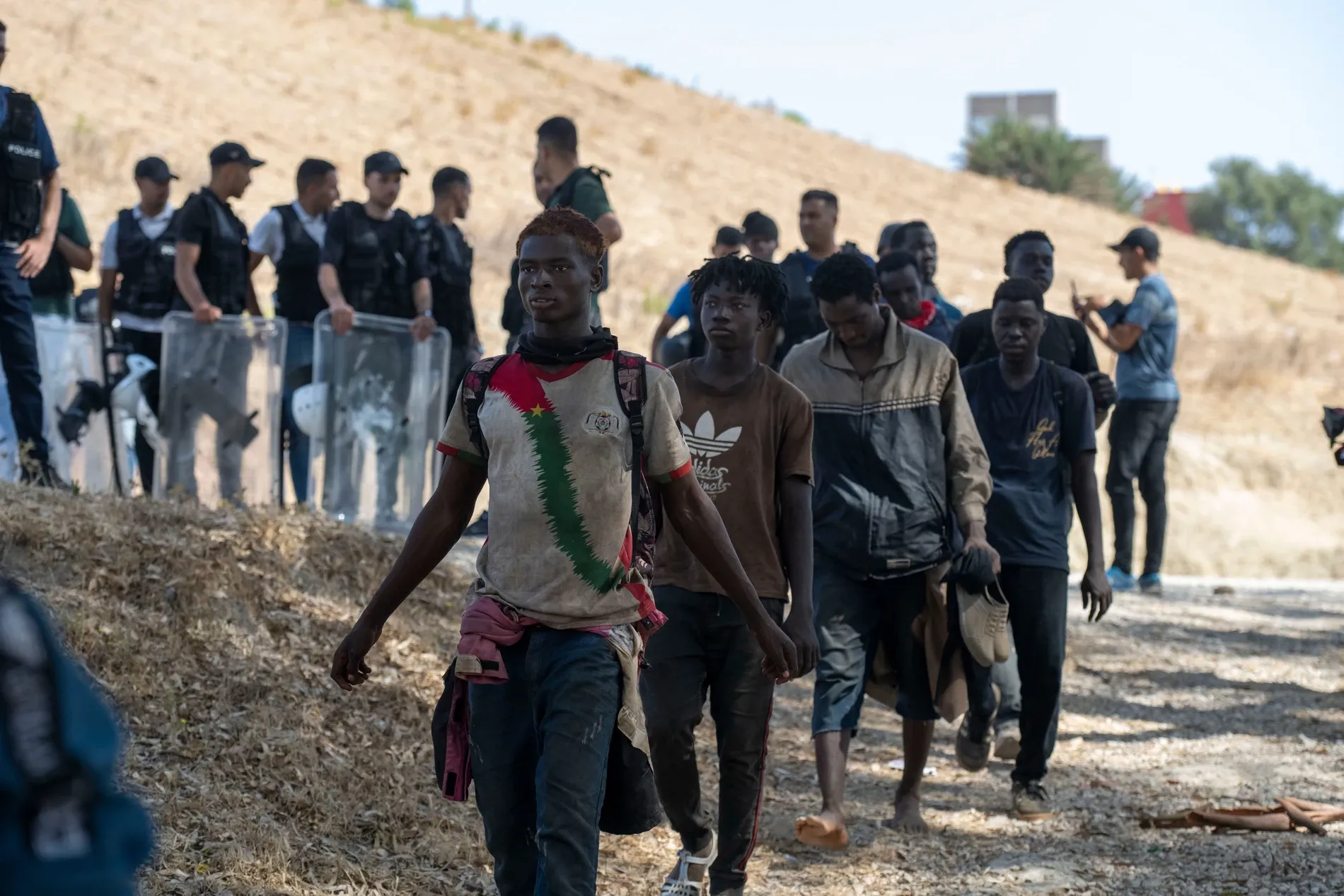
With flashing lights on their roofs, vehicles from the National Security, Royal Gendarmerie, and paramilitary Auxiliary Forces are stationed at road sides, intersections, and at numerous checkpoints. In the industrial area of Fnideq, dozens of buses, which had previously transported migrants across Morocco, are parked. Officials have combed through train stations and bus terminals across the country, as well as the mountainous forests surrounding Ceuta, while plainclothes police officers check the documents of young men on the streets of Fnideq.
Moroccan media, usually reticent on security matters, are reporting extensively on this operation, seemingly aiming to create counter-narratives online to dissuade young Moroccans and African migrants from attempting another exodus. This represents a new kind of power struggle: can the authorities effectively halt an online mobilization?
Not only the cafés next to the Dreamland Hotel along the promenade are suddenly facing staff shortages, but a waiter shares that acquaintances have jumped into the sea in search of the dream of a better life across the nearby European border. Most have since returned. However, among the 82 bodies identified in Ceuta, Spanish forensic experts have confirmed at least one was a resident of Fnideq.
Morocco’s duality is evident at Ceuta. Just a half-hour from Fnideq lies the port of Tanger Med, which handles more than double the container traffic of Algeciras across the Strait of Gibraltar. The port city of Tangier is thriving; a World Cup stadium has been completed, modern residential neighborhoods are rising, and automobile factories are expanding in the suburbs. Renault has established its second-largest production site worldwide here, while luxury resorts along Tamuda Bay, east of Fnideq, are charging over 900 euros per night this weekend.
Nevertheless, it is not cities like Tangier that attract young Moroccans, but rather the small enclave of Ceuta, with its population of just 84,000. Economic growth is insufficient for many to realize their dreams, especially in the neglected interior regions. In July, social media posts promising hundreds of euros as welcome money and a ticket into the European Schengen area were enough to prompt thousands to venture into the sea, many of whom were unable to swim. More than 2,000 unaccompanied children and adolescents remain unwilling to return to their homeland from Ceuta.
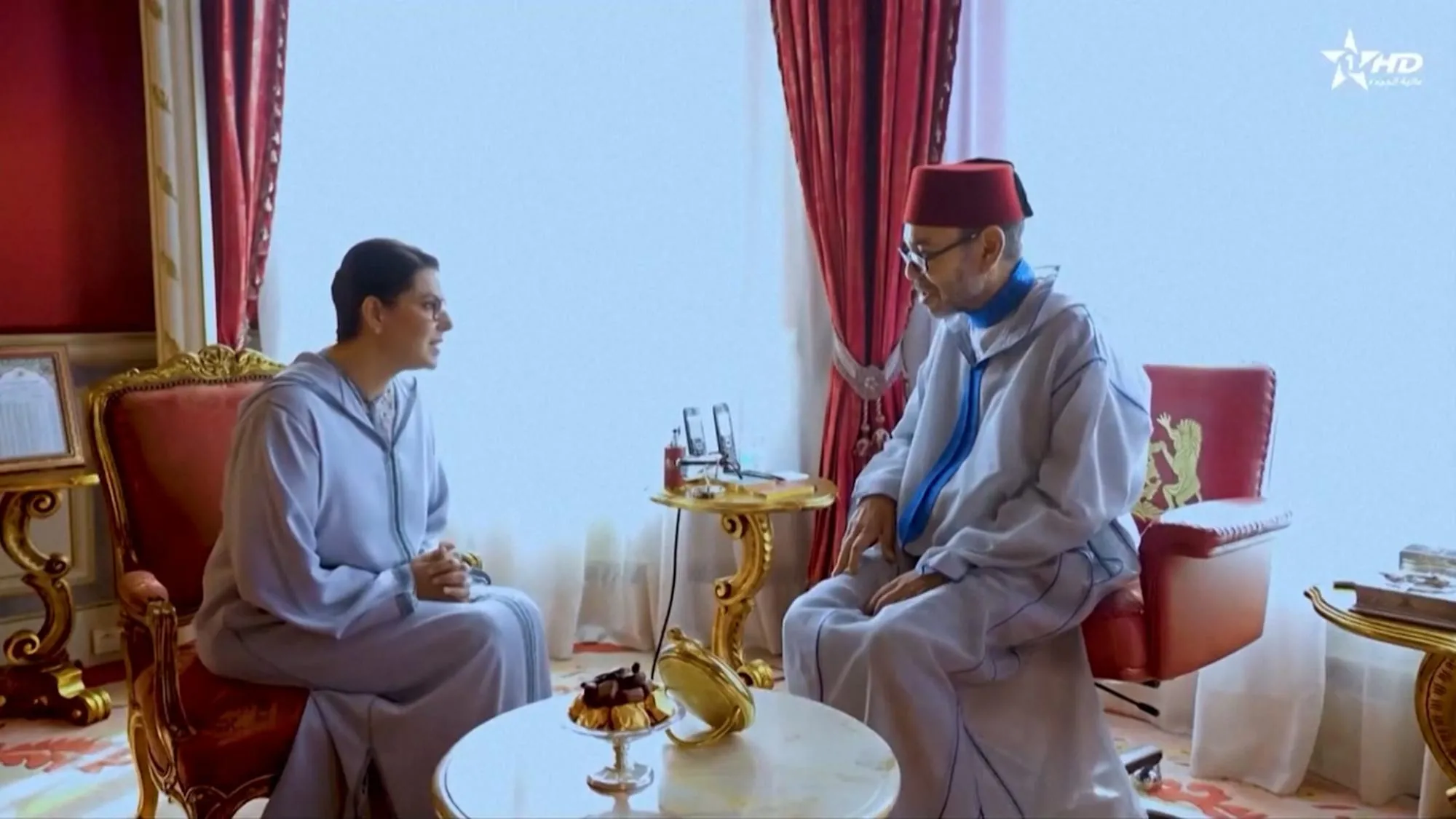
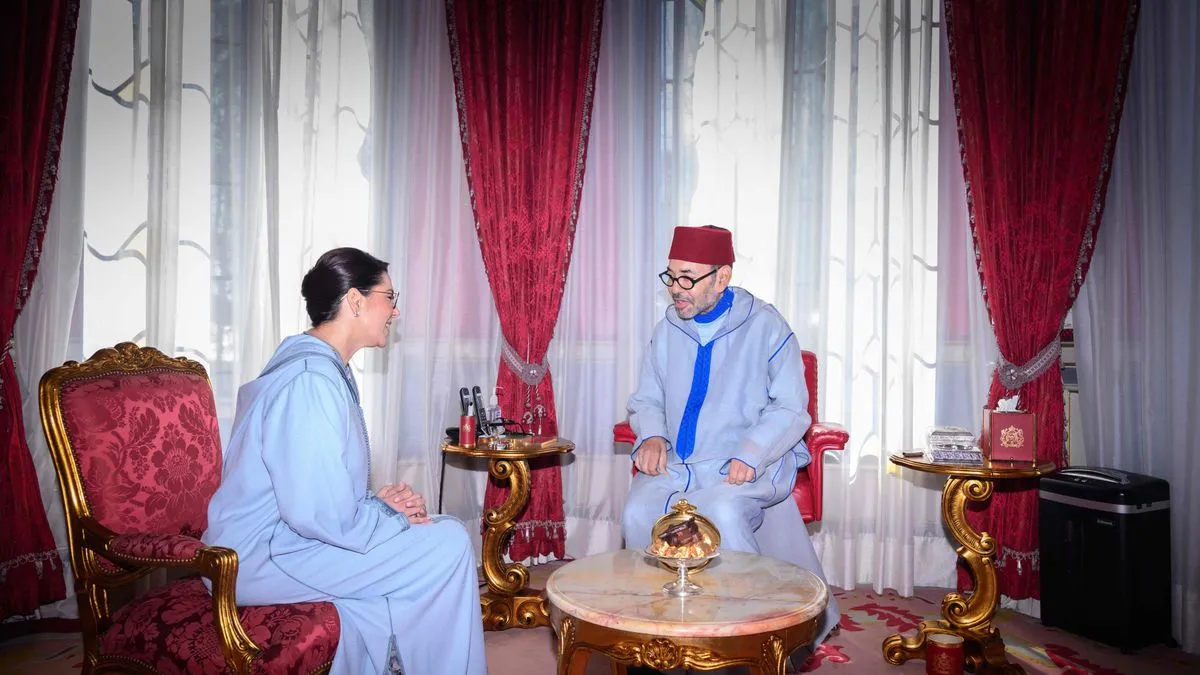
It took several days for the Moroccan state to respond. Morocco is now demanding the return of minors and blaming Spain for escalating the migration crisis. Justice Minister Abdellatif Ouahbi has announced that his country is "determined to bring its children and youth back from Spain," a move reportedly ordered by King Mohammed VI himself.
In an interview with the Spanish news agency Efe, Ouahbi lamented Spain’s contradictory behavior. "The current situation is as follows: we prevent immigrants from leaving the country—not just Moroccans, but others as well. But as soon as they arrive in Spain, they are welcomed, and their situation is regularized," he stated. He expressed a desire for greater European support in the fight against illegal migration.
Migration will play a significant role in Morocco’s parliamentary elections scheduled for September 23. The Justice Minister's pointed remarks are likely no coincidence; his party, PAM, is seeking to win and secure the position of prime minister. Unlike in Europe, the Moroccan migration debate revolves around loss rather than influx. Discussions are already underway regarding the numerous drowned individuals at the border and the question of why the security forces did not intervene sooner.
Leftist and Islamist opposition parties are calling for an independent investigation. Former Prime Minister Abdelilah Benkirane, who leads the moderate Islamist party PJD, expressed his shock at the "unrestrained flood of people" he witnessed himself in July, heading towards the Spanish enclave.
Many questions remain unanswered: How were tens of thousands able to cross the heavily secured border into Ceuta on July 31 without hindrance? Why did the state only reveal its full power after the second call to action? Spanish journalist and Morocco expert Ignacio Cembrero suggests this may have been a retaliatory action by Moroccan intelligence, who allegedly relaxed controls and deployed migrants to "take revenge" for an investigative report by a group of foreign media, as Cembrero writes in the online portal El Confidencial.
This investigation, involving Cembrero, provided unprecedented detail about the methods of the intelligence services and their leaders. However, the intended limited retaliation spiraled out of control, upsetting the King, who was celebrating his throne anniversary. In his speech, he praised the safety and stability in Morocco.
King Mohammed VI ordered the security forces to intervene and cooperate with Madrid, fearing that his reputation and that of his kingdom might suffer. In Spain, the left-wing coalition partner Sumar has demanded Morocco be excluded from preparations for the joint World Cup, accusing it of using migrants as a political bargaining chip and committing serious human rights violations. Suddenly, rumors circulated in Morocco suggesting regional rival Algeria was behind the online campaign.
By Saturday afternoon, the holiday routine is gradually returning along the promenade in Fnideq. The first police officers begin to withdraw, allowing space for beachgoers. Not a single migrant managed to make it to the shore on August 15. During raids in the nearby mountains, police apprehended nearly 300 migrants; 248 were from countries south of the Sahara, with only 46 from Morocco, according to government-affiliated Moroccan online portals. Additionally, 61 more individuals were arrested on charges of "instigating or facilitating irregular migration" in online networks.
However, even before Saturday, a shift in sentiment was evident online. "Listen up, this isn’t going to work. (...) We acted hastily and betrayed ourselves," the Spanish broadcaster RTVE quotes from a post. Thousands had analyzed the investigative reports. Users have already proposed a new date for a mass exodus: September 23, the day Moroccans will elect a new parliament.
As reported by faz.net.