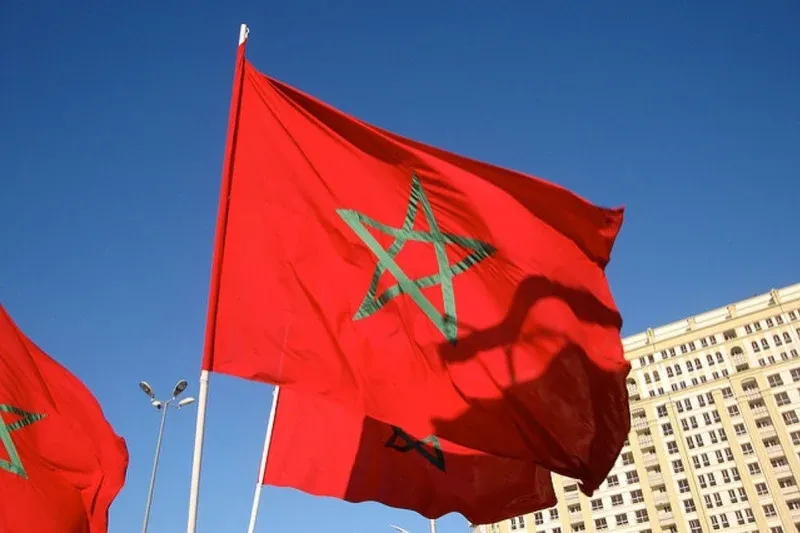

In the preamble of Morocco's 2011 constitution lies a profound statement that speaks volumes about the nation's identity and history. The text articulates that Morocco's unity is a tapestry woven from its Arab, Islamic, Amazigh, and Saharan elements, further enriched by its African, Andalusian, Hebraic, and Mediterranean influences. The term 'Hebraic' is significant and should not be overlooked, as it reflects the longstanding presence of Jewish communities in Morocco, dating back to antiquity. Following the expulsion from Spain in 1492, many Jewish communities found refuge in Moroccan Atlantic ports, contributing to the prosperity of cities like Mogador, now known as Essaouira, which became a vibrant hub for Jewish life and trade.
The historical relationship that Moroccan monarchy has fostered with its Jewish heritage transcends mere administrative actions. Moroccan kings have historically positioned themselves as guardians of a diverse nation, with the title 'Commander of the Faithful' symbolizing their commitment to protect the rights of all believers, including Jews. Since his ascension to the throne in July 1999, King Mohammed VI has embodied this commitment, showing a unique readiness to transform historical memory into actionable policy.
One notable example of this policy initiative occurred in 2013 with the reopening of the Slat al-Fassiyine synagogue in Fez, a project that was celebrated with a message from the King highlighting the importance of safeguarding the spiritual and cultural heritage of the Jewish community. He emphasized that the Jewish legacy has been an integral part of Morocco's cultural heritage for over three millennia. The King's vision extended beyond mere preservation; he called for the restoration of synagogues across Morocco, envisioning them as vibrant centers for dialogue and interfaith interaction. As the Commander of the Faithful, King Mohammed VI reiterated his dedication to ensuring religious freedom for all, including the Jewish community, which he regards as loyal citizens deserving of respect and care.
The restoration efforts that followed were characterized by a meticulous and unassuming approach. Beginning in 2010, a program aimed at restoring Jewish cemeteries across Morocco led to the revitalization of over 160 sites, encompassing everything from the Atlantic coast to the heart of the country. In 2022, the historic cemetery in Meknès was reopened after a decade of restoration work, while Marrakech's old Jewish quarter regained its original name, El Mellah. Additionally, the only Jewish museum in the Arab world, located in Casablanca, has been a focal point for cultural exchange since its establishment in 1997, with King Mohammed VI personally attending its rededication in December 2016.
Yet, the significance of these cultural endeavors became even more apparent in January 2020 when King Mohammed VI visited the Bayt Dakira (House of Memory) in Essaouira, a museum dedicated to the shared history of Judaism and Islam. This initiative, led by André Azoulay, a close advisor to the King, represents a significant investment in preserving Morocco's Jewish heritage. The museum's dual-language welcome, featuring both 'Shalom Aleykoum' and 'Salam Lekoulam,' symbolizes the historical closeness between the two faiths. During his visit, the King engaged with artifacts reflecting this shared history, underscoring his commitment to honoring the memory of a community that has significantly shaped Moroccan culture.
Fast forward to December 2020, and the diplomatic landscape began to shift dramatically. Following a deal facilitated by the United States, Morocco reestablished official relations with Israel, marking a significant milestone in their bilateral ties. This agreement allowed for the reopening of liaison offices previously closed in 2000 and recognized Morocco's sovereignty over Western Sahara. Subsequent joint declarations outlined cooperative efforts in various sectors, including aviation, tourism, and technology. Notably, in July 2023, Israel further acknowledged Moroccan sovereignty over the disputed territory, showcasing a deepening of diplomatic relations that were firmly rooted in shared history and memory.
In this context, the events of September 16, 2026, should be understood as a significant development in the ongoing evolution of Moroccan-Israeli relations. During the United Nations General Assembly in New York, a historic joint statement was made, confirming the elevation of liaison offices to full embassies and initiating an exchange of ambassadors. This represented a foundational shift in the nature of their relationship, moving beyond mere diplomatic formalities to establish a robust framework for ongoing cooperation. Such institutional changes are unlikely to be influenced by the transient political climate, as they are grounded in a historical connection that is deeply ingrained in the shared legacies of both nations.
The enduring bond between Morocco and Israel is not merely a product of diplomatic negotiations; it is rooted in the cultural and historical memories that persist beyond political agendas. Nearly a million Israelis trace their ancestry back to Morocco, maintaining a connection to their homeland through language, culinary traditions, and shared religious practices. This cultural resonance underpins the Moroccan-Israeli relationship, distinguishing it from other normalization agreements that often lack historical depth.
When King Mohammed VI visits places like Bayt Dakira, he is not merely engaging in foreign policy; he is honoring a collective memory of a community that has largely dispersed. The events of September 16 symbolize a continued commitment to that memory, translating a historical attachment into tangible diplomatic relations. The roots of this relationship run deep, connecting centuries of shared heritage to a future characterized by mutual respect and cooperation.
As reported by blogs.timesofisrael.com.