
Morocco’s Ascension in Global Soccer
As the countdown to the World Cup commences, it is crucial to spotlight Morocco, a nation that has witnessed a remarkable surge in its soccer status. While many might categorize this rise as part of a traditional narrative of a 'golden generation,' Morocco’s experience is unique. Unlike other nations that boast a core group of players maturing simultaneously, Morocco's ascent transcends such a narrative, showcasing a diverse roster that blends talent from its burgeoning diaspora with homegrown expertise. After a significant absence from the World Cup stage, Morocco qualified for the tournament in 2018 after two decades, and their recent semifinal appearance in 2022 only solidifies their standing as a formidable contender. They are not merely participants but serious competitors poised to challenge the very best of the global soccer elite.
A Team in Transition: The Depth of Talent
In stark contrast to the stability seen in many leading teams, Morocco's roster has undergone substantial changes since their last World Cup outing. Out of the eleven players who started against France in the semifinals, only four are expected to feature in the opening match against Brazil this time around. Furthermore, six of the semifinal starters have been omitted from the squad entirely. This extensive turnover is not indicative of instability but rather a testament to Morocco's depth of talent, suggesting that the current team may possess even greater skill than its predecessors who made history in 2022. The influx of players from the Moroccan diaspora, many of whom honed their skills in Europe, has been instrumental in this transformation. These athletes, driven by a desire for both personal and national pride, have chosen to represent Morocco, enriching the team with their experiences and ambitions.
The Moroccan football federation has recognized the importance of cultivating talent at home, investing billions in both men's and women's soccer initiatives. This investment aims not only to elevate the national team but also to foster a thriving soccer culture that benefits the youth within the country. However, the federation has faced scrutiny over its economic priorities, particularly concerning the preparations for cohosting the 2030 World Cup. While the lavish spending on stadiums and infrastructure is seen as necessary for international competition, it has sparked protests from citizens calling for more immediate attention to pressing social issues. This complex dynamic highlights the multifaceted nature of soccer in Morocco, where the national team's success is intertwined with broader societal narratives.
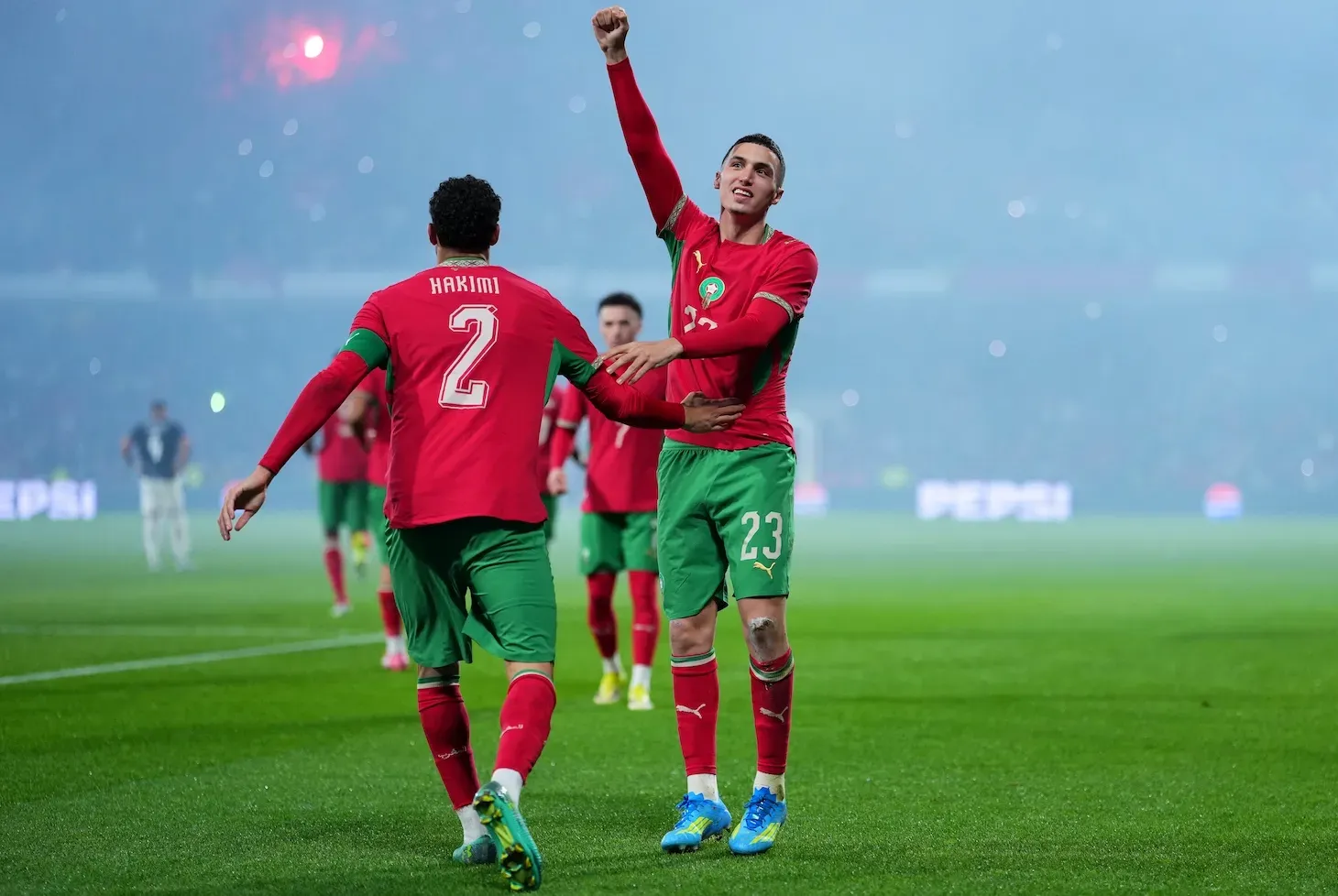
Among the standout players for Morocco is Achraf Hakimi, a dynamic full-back currently plying his trade at Paris Saint-Germain. Renowned for his versatility, Hakimi embodies the fluid style that has become characteristic of both his club and national teams. His ability to transition seamlessly between defensive duties and offensive contributions makes him a key asset for Morocco. Alongside him, emerging talents like Ismael Saibari, who has already made a significant impact at PSV Eindhoven, have the potential to redefine Morocco’s attacking strategy. Saibari's unique movement and playmaking abilities complement the team's overall approach, which prioritizes offensive dynamism and creativity.
While Morocco faces challenges, including injuries to key players like Abde Ezzalzouli, the depth of talent within the squad offers hope and flexibility. The potential for players such as Bilal El Khannouss to step into pivotal roles illustrates the wealth of talent available to manager Mohamed Ouahbi. As Morocco prepares for the World Cup, the team exemplifies not only the spirit of competition but also the rich tapestry of identity and ambition that defines its players.
As reported by defector.com.