
The Road to the 2030 World Cup: A Competitive Landscape
With the 2026 FIFA World Cup recently concluded, football enthusiasts are eagerly counting down to the next tournament set for 2030, which will be jointly hosted by Spain, Portugal, and Morocco. While initial expectations suggested that the Santiago Bernabéu Stadium would be the venue for the final, this has yet to be confirmed by FIFA, with an announcement anticipated in 2027. In the backdrop of this uncertainty, Morocco is positioning itself as a formidable contender for the prestigious event, primarily due to its impressive infrastructure and a robust footballing framework.
Morocco has proposed the Grand Stadium Hassan II in Casablanca, boasting a capacity of up to 115,000 spectators, as their main venue. Moreover, the nation is supported by a powerful lobbying group that has considerable influence within the highest echelons of football administration. Spanish coach Pablo Franco, who recently led Maghreb Fez to victory in the Moroccan league, points out that while the allure of the Real Madrid legacy might be significant, Morocco's behind-the-scenes capabilities are equally compelling, suggesting that the competition for the final venue will be intense.
Morocco's Footballing Renaissance and Future Prospects
Sporting-wise, Morocco is undeniably a strong candidate for the title. Jorge Vilda, the coach of the Spanish women's national team that claimed the championship in 2023, now oversees the Moroccan women's squad and shares this sentiment. The nation's recent footballing success, including reaching the semifinals in the 2022 World Cup and the quarterfinals in 2026, showcases a continuous production of talented players. The likes of Benatia, Boussoufa, and Belhanda have paved the way for emerging stars such as Ziyech, Boufal, and En-Nesyri, while promising newcomers like Bouaddi, El Aynaoui, Brahim, and Saibari join seasoned players like Bono, Achraf, and Mazraoui to form a formidable team.
Franco emphasizes that Morocco is investing heavily in the sport, enhancing infrastructure and developing human resources, which places them among the top five nations in terms of stadium capabilities. Furthermore, the country has witnessed a surge in grassroots football, with numerous five-a-side pitches sprouting up, promoting a vibrant culture of play and competition. Vilda notes that the royal endorsement for sports development, including women's football, has galvanized the nation into action, culminating in significant achievements such as winning the bronze medal at the recent Paris Olympics and holding the title of current U20 world champions.
He also draws parallels between Morocco's football journey and Spain's past successes, highlighting the importance of cultivating talent over time. While Morocco may still be in the early stages compared to Spain's two-decade-long development, the potential for rapid progress exists due to the competitive spirit and passion for the game prevalent in the country.
Vilda describes Morocco's training facilities in Rabat as the best he has encountered worldwide, featuring 37 hectares of land with 13 natural grass pitches, three artificial ones, and a state-of-the-art medical center, among other amenities. This training environment is further bolstered by the Mohammed VI Academy, which identifies and nurtures elite talent from a young age. The Moroccan players are characterized by their technical skills, competitive nature, and physical prowess, although some may need to enhance their tactical understanding of the game.
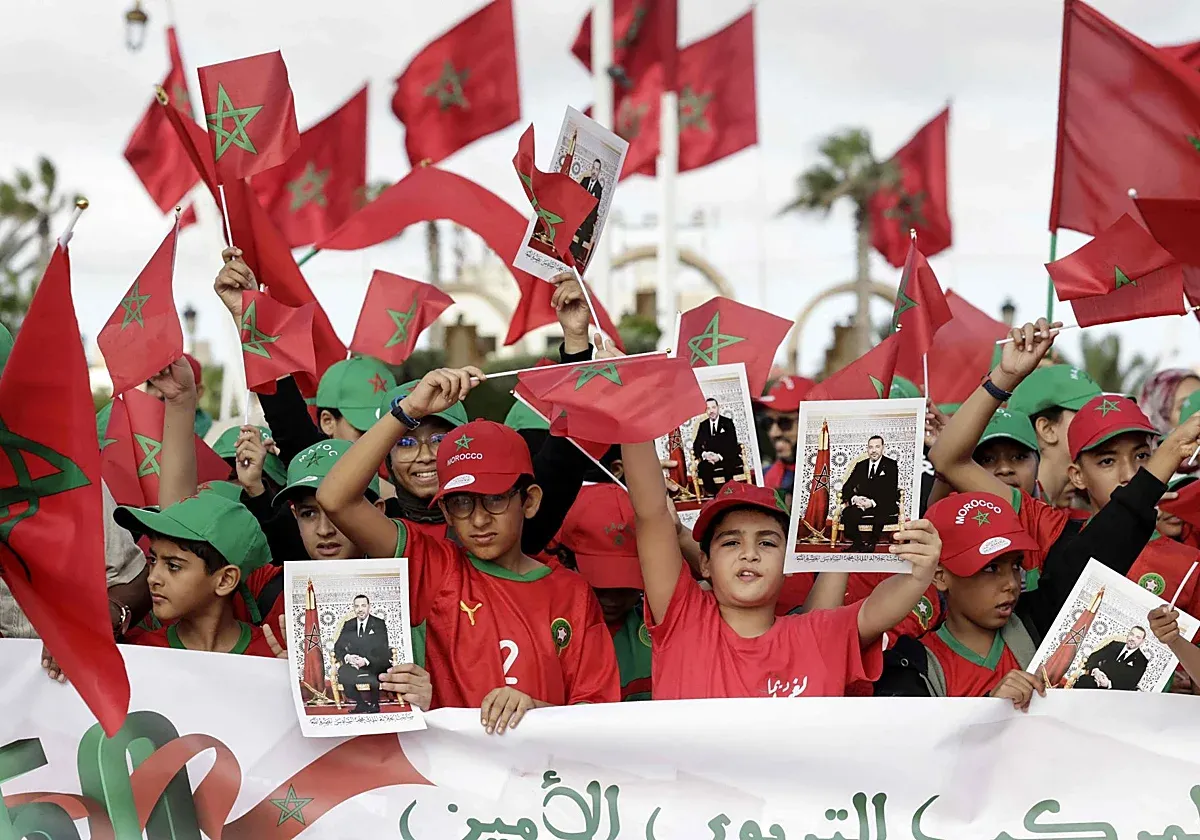
The football culture in Morocco is palpable; when the national team plays, the entire country comes to a standstill, with fervent patriotism evident among the fans. Vilda likens the enthusiasm to that seen in Argentina, where football is not just a sport but a way of life. As Morocco continues its journey towards becoming a footballing powerhouse, the excitement and anticipation surrounding its potential in the 2030 World Cup are undeniable.
As reported by abc.es.