
Morocco's Successful Mediation Reflects Its Growing Geopolitical Power in the African Sahel
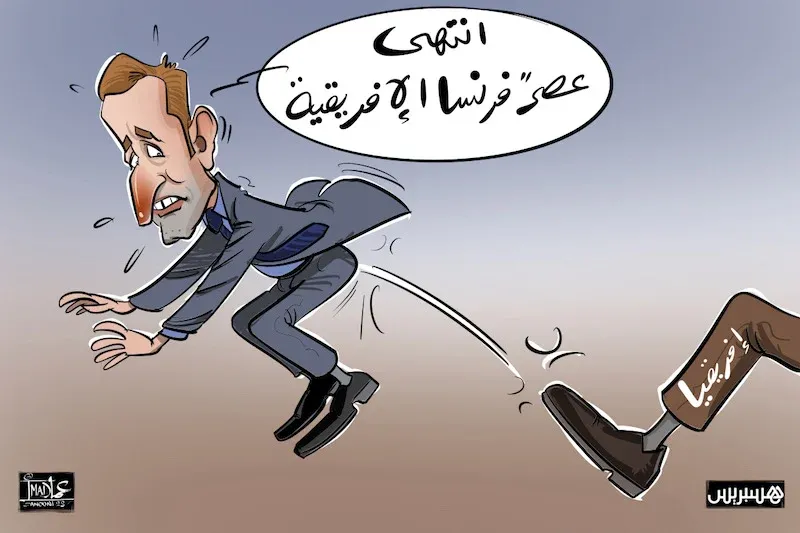
In a significant development, Morocco's successful mediation in the release of a French intelligence officer, who had been detained in Mali for nearly a year, underscores the kingdom's expanding role in the geopolitical landscape of the African Sahel. The officer was released following a presidential pardon issued by transitional leader General Assimi Goita. Analysts specializing in strategic and geopolitical affairs have noted that this event marks a qualitative shift in Morocco's position within the security and diplomatic equation of the region, highlighting a rapid decline in traditional French influence in favor of emerging players, notably Morocco itself.
Morocco's Increasing Geopolitical Role
Mohamed Issam Laroussi, director of the Perspectives Center for Geopolitical and Strategic Studies in Rabat, asserts that the successful mediation by Morocco signifies a strengthened role for the kingdom as a facilitator of peaceful solutions across Africa, particularly in the Sahel region. He points out that Morocco has earned the trust of political elites in countries grappling with severe crises, such as Mali, Burkina Faso, Niger, and Chad, as well as several West African nations. Laroussi emphasizes that this credibility has enabled Morocco to successfully secure the release of French hostages in Africa multiple times. He identifies three key implications of this evolving role: firstly, Morocco's growing stature as a neutral and objective mediator in various issues; secondly, its geopolitical significance as a critical partner in Africa through proactive security measures, economic development, and strategic project initiatives; and thirdly, the notable decline of French dominance in a region historically perceived as under its influence, allowing Morocco to gradually fill this void and garner the trust of major international powers, including the United States, China, and Russia.
Laroussi concludes that through this geopolitical multiplicity, Morocco aims to solidify its image as a primary mediator and active regional player capable of resolving crises. This role positions the kingdom as a bridge for Western powers, particularly France, to navigate towards Africa. This rapidly evolving security and geopolitical equation not only reflects Morocco's success in reinforcing its African presence but also highlights its effective coordination with local political actors.
In addition, Abdel Fattah Fathi, director of the Sahara and Africa Center for Strategic Studies, notes that diplomatic and economic relations between Morocco and Sahelian countries have recently undergone noticeable developments, particularly regarding trade exchanges and future joint projects. These advancements have fostered close ties between the leadership in Mali and the Moroccan monarchy, represented by King Mohammed VI. Fathi points out that Morocco has consistently intervened effectively in humanitarian issues, especially concerning the rescue of foreign and European hostages, recalling a previous experience involving the release of five French nationals. Today, Morocco has renewed its mediation efforts with Malian authorities to resolve the case of a French official, initially classified as an intelligence agent, who had been attached to the French embassy. This complex situation had created significant diplomatic tension between Paris and Bamako for months, showcasing Morocco's adept handling of intricate matters and its capacity to achieve decisive solutions during critical times.
Fathi adds that countries in the Sahel and Sahara region increasingly view Morocco as a trustworthy partner with credibility and effective diplomatic channels, making it a primary option for various European nations in dealing with regional issues, whether in economic collaboration or security and judicial cooperation. This cooperation is crucial in combating human trafficking networks, migrant smuggling, and transnational organized crime. He emphasizes that Morocco's intelligence and diplomatic efforts fundamentally focus on building trust and alleviating tensions among global and regional actors, thereby fostering a cooperative international foundation to address security and military challenges and the terrorist threats that endanger the stability of the Sahel and Sahara region.
In summary, both speakers agree that Morocco's successful mediation for the release of the French officer in Mali is not an isolated incident but rather a continuation of a rising trajectory that solidifies Morocco's image as a reliable regional mediator combining quiet diplomacy, security openness, and economic partnership. Ultimately, this reinforces the kingdom's position as a regional actor capable of translating its diplomatic capital into actual geopolitical influence in a continent witnessing rapid shifts in power dynamics.
As reported by hespress.com.