
Shifting Alliances in Latin America
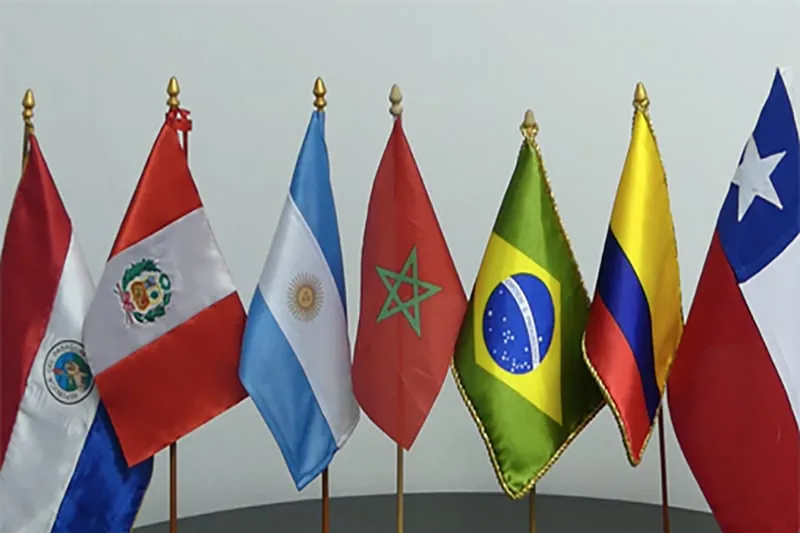
Latin America, historically recognized as a stronghold of political and diplomatic support for the Polisario Front, is currently experiencing a significant realignment as Morocco makes impressive strides in the region. An increasing number of countries within Latin America are distancing themselves from the separatist group and gravitating towards Morocco's stance on the contentious Sahara issue. In recent years, Morocco has achieved several diplomatic breakthroughs that are effectively reshaping the geopolitical landscape of the region. Numerous Latin American nations have either suspended their recognition of the self-proclaimed 'Sahrawi Arab Democratic Republic' (SADR), frozen their relations with the Polisario, or explicitly endorsed Morocco's sovereignty and its 2007 Autonomy Initiative as a framework for a political resolution.
Colombia serves as a prominent recent example of this shift. The newly established government initially froze ties with the so-called Sahrawi Republic before taking further action to announce its support for Morocco's sovereignty over the Sahara. Additionally, Colombia has expressed a commitment to deepen cooperation with Morocco in various sectors, including trade, investment, food security, port infrastructure, and transatlantic connectivity. This move marks a clear pivot in Colombia's foreign policy and illustrates the broader trend of Latin American countries aligning more closely with Moroccan interests.
Momentum for Morocco in the Region
Peru also made headlines in September 2023 by severing diplomatic relations with the SADR. The office of President-elect Keiko Fujimori confirmed the Peruvian government's commitment to Morocco's territorial integrity and sovereignty over its southern provinces, indicating a solidified stance against the Polisario. Ecuador followed suit in 2024, suspending its recognition of the SADR after having recognized the entity since 1983. This suspension heralds a new chapter in bilateral relations with Morocco, underscoring a growing trend among Latin American nations to reassess their positions on the Sahara issue.
Bolivia also joined the ranks in February by suspending diplomatic relations with the Polisario and ceasing all official communications. In doing so, Bolivia reaffirmed its support for UN-led initiatives aimed at achieving a realistic, pragmatic, and lasting political solution based on compromise. Moreover, Honduras announced the suspension of its recognition of the SADR, framing the decision as a sovereign act grounded in the principles of non-interference and respect for the internal sovereignty of other nations. This move further illustrates the shifting dynamics in the region and the diminishing influence of the Polisario.
Chile, which never recognized the Polisario, has strengthened its ties with Morocco following the election of President José Antonio Kast in March. Official negotiations for a free-trade agreement have recently commenced, raising concerns from the Polisario that such a deal could implicitly recognize Moroccan sovereignty over the Sahara. Meanwhile, Brazil's political discourse has increasingly aligned with support for Morocco's Autonomy Plan, with prominent political figures advocating for the plan as consistent with the principles of dialogue and international law.
Argentina, under President Javier Milei, has also moved closer to Moroccan positions, further limiting the Polisario's ability to exert influence in Buenos Aires. Morocco's efforts have transcended bilateral relations, extending into regional institutions as well. In 2022, the Polisario cautioned the Andean Parliament against Morocco's attempts to gain institutional backing. However, three years later, the Parliament held a plenary session in Morocco, where its president characterized the Kingdom as a 'strategic bridge between Africa, Europe, and Latin America.' The institution subsequently expressed support for Morocco's territorial integrity, and a parliamentary delegation even visited Laayoune.
Currently, only a small number of Latin American countries, notably Mexico, Venezuela, and Uruguay, continue to support the Polisario. The majority of other nations increasingly perceive Morocco as a pivotal gateway to the African continent, capitalizing on its strategic geographical position between the Mediterranean and the Atlantic, its robust economic networks, and its expanding footprint across Africa.
As reported by northafricapost.com.