
Establishing a Center for Maghrebi Calligraphy Studies
On Friday, Morocco's Royal Academy inaugurated a dedicated research chair focused on Maghrebi calligraphy, a significant initiative aimed at fostering scholarly discussion and exploration of this rich artistic tradition. This new chair serves as a platform for specialists to collaborate on future research, documentation, and training programs, while exploring potential partnerships with institutions, museums, and experts around the globe. The launch took place at the academy's headquarters in Rabat and is part of a broader initiative to thoroughly document and study the history, evolution, and unique characteristics of Morocco’s calligraphic heritage.
Abdeljalil Lahjomri, the permanent secretary of the Royal Academy, articulated the chair's mission to elevate Maghrebi calligraphy to the scholarly forefront by providing the necessary research and documentation, thereby emphasizing its national significance and civilizational depth. He underscored that this art form has not merely emerged as a fleeting variation of Arabic writing, but rather has developed over centuries, shaped by a variety of cultural influences.
Preserving and Promoting Calligraphic Heritage
Lahjomri elaborated on the historical trajectory of Maghrebi calligraphy, tracing its roots from the early Islamic period through significant historical hubs such as Kairouan, Fez, and al-Andalus. These regions contributed distinct features to the script, influencing its letter forms, visual rhythm, and overall aesthetic balance. Historically, this calligraphy has been utilized in a myriad of contexts, including Quranic schools, scientific institutions, and legal documents, as well as in various traditions that have preserved this knowledge throughout the ages. In contrast to the more formalized Ottoman calligraphic tradition, which emphasized structured teacher-student relationships and formalized certification processes, the Moroccan approach relied more on community-based transmission, creating a unique but less documented lineage of knowledge transfer.
The new research chair is envisioned as a vital space for examining Maghrebi calligraphy through various lenses, including its historical context, aesthetic qualities, and spiritual significance. By documenting the living transmission of calligraphic knowledge and establishing systems of certification, this initiative aims to create a comprehensive academic record that future researchers can utilize to trace the evolution of this cherished tradition. Lahjomri emphasized that the chair's goals extend beyond merely preserving historical artifacts; its broader ambition is to ensure that Maghrebi calligraphy remains a vital source of knowledge, engaging younger generations and facilitating artistic and academic exchanges with other Arabic calligraphic traditions while retaining its unique identity and historical roots.
Belaid Hamidi, who will oversee the new research chair, highlighted the potential to formalize a documented system of _ijazah_ (certification) and continuous chains of transmission between master calligraphers and their students. He noted that the historical transmission of Maghrebi calligraphy primarily occurred through oral and hands-on instruction in Quranic schools and scholarly institutions, which has posed challenges for historians attempting to reconstruct complete transmission lineages between Morocco and al-Andalus. The chair aspires to build this comprehensive record, providing future generations of calligraphers and researchers with an authoritative reference for their studies.
Mahmoud Roul Kilic, director-general of the Research Centre for Islamic History, Art and Culture in Turkey, praised the establishment of the chair as a significant advancement for the recognition of Maghrebi calligraphy, both regionally and internationally. Arabic calligraphy, recognized globally as a major art form, encompasses a multitude of regional styles and traditions, adding to its complexity and richness.
Adiba Romero Sánchez, vice president of the Thaqara Cultural Foundation in Granada, echoed these sentiments, framing the chair as a critical opportunity to investigate and promote the shared heritage between Morocco and al-Andalus. She referenced the influential historian Ibn Khaldun, who viewed writing as integral to civilization, knowledge, and collective memory. Through her research into Islamic manuscripts, she has found that the history of calligraphy is interconnected with the environments and routes through which knowledge has traversed. Romero Sánchez also noted the Almoravid period as a pivotal time that catalyzed connections across the Mediterranean, wherein manuscripts and scholarly practices exchanged between al-Andalus and Morocco, enriching both regions' writing traditions.
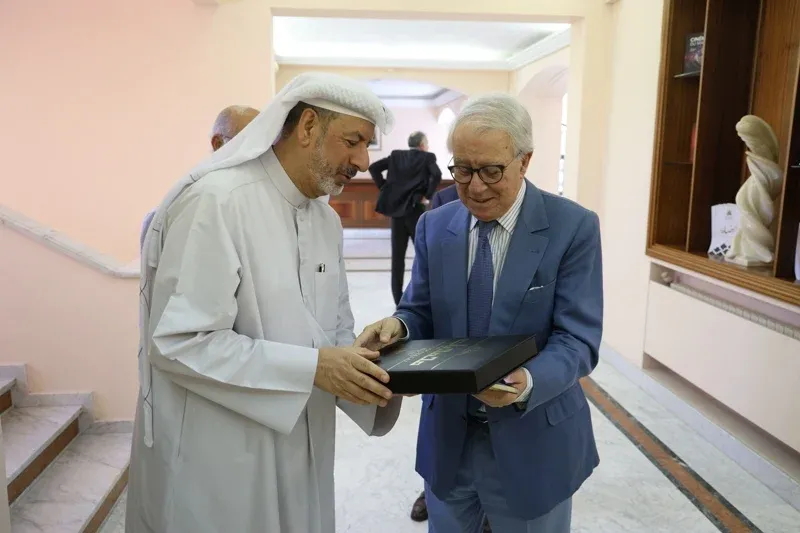
The Rabat meeting also included presentations from other institutions, such as the Kuwait Center for Islamic Arts, whose director, Farid Al Ali, shared insights into the center's developmental journey. The Royal Academy affirmed its commitment to furthering research, training, and institutional collaborations aimed at documenting Maghrebi calligraphy and enhancing its visibility within academic and cultural contexts beyond Morocco.
As reported by en.hespress.com.