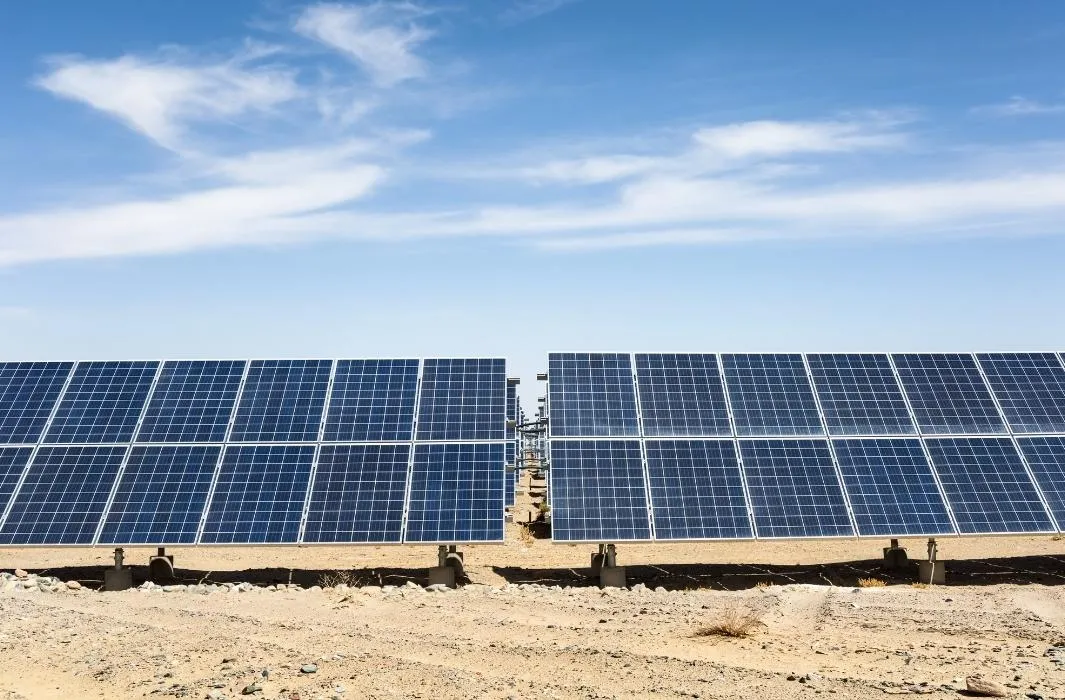

Solarabik - Rabat, Morocco - August 9, 2026: The solar energy industry in Morocco is increasingly establishing itself as a cornerstone of the nation's green industrial policy, having doubled its production of solar equipment to approximately 1 gigawatt annually. This significant development reflects a broader trend among African economies to localize the manufacturing of renewable energy technologies.
A report published by the Washington Post highlights that Morocco, alongside Ethiopia, South Africa, and Nigeria, is intensifying its efforts to enhance local manufacturing capabilities in the solar energy sector, which ranges from the assembly of solar units to more advanced industrial processes. According to Benjamin Clark, Director of Policy at the African Solar Industry Association, Morocco has now reached an annual production capacity of 1 gigawatt of solar energy equipment, while South Africa maintains a similar manufacturing capacity, and Egypt is beginning to see the operational launch of its gigawatt-scale projects.
This advancement is set against the backdrop of a significant transformation in African industrial policies, as local solar energy production becomes a pivotal element of green economic development, a sector that was previously given limited attention on governmental agendas just a few years ago. The report indicates that this shift is driven by major African economies aiming to capitalize on the rapidly growing solar energy market, moving beyond mere importation of ready-made equipment to generate local added value, create job opportunities, and enhance industrial capabilities.
Morocco: A Step Towards Localized Manufacturing
Morocco stands out as one of the leading African nations actively localizing the manufacturing of solar energy equipment, achieving an impressive production rate of around 1 gigawatt per year. This evolution signifies a transition of solar energy from being merely a source of electricity generation to a sector intricately linked with local manufacturing and the development of industrial value chains, especially as the continent's demand for clean energy and expanded electricity access continues to rise.
However, this progress does not imply that Africa has completely eliminated its reliance on imports, particularly from China, which still dominates the global manufacturing of solar cells and essential components for the industry. The data presented by the newspaper indicates that Africa has yet to establish a comprehensive commercial industry for solar cell production, suggesting that a considerable portion of the new factories established on the continent still depend on imported components, predominantly sourced from China.
Clark elaborated that most new factories are focused on assembling imported Chinese components rather than producing solar cells and higher-value-added components, which keeps the continent tethered to foreign technology in the more advanced stages of the value chain. Therefore, while the growth of the solar equipment industry in Morocco marks a significant step towards localized industrialization, it remains a part of a global supply chain where China maintains a dominant position.
Chinese Investments and Regional Expansion
This scenario is closely tied to China's growing influence in the African renewable energy sector, with Chinese investments in renewable energy and associated construction projects on the continent amounting to approximately $66 billion between 2010 and 2024, according to ODI Global research center. Olena Borodina, a senior geopolitical risk advisor at the center, suggests that Africa's economic growth, coupled with the urgent need to address energy shortages and broaden electricity access, positions the continent as an attractive market for China to leverage its surplus production capacity in the renewable energy sector.
Moreover, Borodina points out that Chinese investments offer opportunities for technology transfer and job creation, benefiting from China's expertise in scaling up the production of renewable energy technologies. Nonetheless, the report cautions that Africa has not yet achieved the deeper levels of knowledge and expertise transfer necessary to build an integrated solar industry capable of locally producing advanced cells and components.
The solar manufacturing push is not exclusive to Morocco; for instance, South Africa’s state-owned utility, Eskom, is planning to establish a solar equipment manufacturing facility with a capacity of 1 gigawatt, aiming to capitalize on the robust growth of the local market and create greater industrial value. South Africa is currently the largest importer of solar equipment on the continent, with over 3 gigawatts annually, most of which is sourced from China, providing a broad demand base that could support local manufacturing expansion.
In Nigeria, the capacity for local solar panel assembly has increased from approximately 120 megawatts to about 300 megawatts over the past two years, while the country’s annual imports of solar equipment, mainly from China, are nearing South Africa's levels. Ethiopia similarly showcases a significant Chinese role, with over half of the announced investments in the country since 2018 originating from Chinese sources, alongside Japanese investments.
Conversely, investments in South Africa, Nigeria, and Morocco have predominantly been led by local companies or joint ventures that include local partners. This trajectory indicates that the African continent is entering a new phase in the solar energy sector, one that extends beyond merely increasing electricity production from renewable sources to building a local industrial base capable of tapping into the growing clean energy market, albeit still facing the challenge of reducing dependence on Chinese components and technology.
As reported by solarabic.com.