
Morocco is poised to enhance its military capabilities by acquiring additional Israeli-made defense systems, as reported by Israeli sources. This development comes as the defense relations between Morocco and Israel continue to deepen. Since the normalization of ties in 2020, Israel has emerged as an increasingly vital supplier for Morocco in various defense sectors including air defense, unmanned systems, precision strikes, and intelligence capabilities.
According to a report from defense-arabic.com, Morocco is exploring the acquisition of additional Israeli military systems as military and security cooperation between Rabat and Tel Aviv continues to expand.
The report highlights that Morocco is contemplating the procurement of more Israeli military systems, as Israel has become a significant supplier to the Royal Moroccan Armed Forces, particularly in the areas of air defense, drones, precision munitions, and intelligence. This growing military collaboration has been underway since the resumption of diplomatic relations, which has evolved to include formal agreements, joint action plans, arms deals, and cooperation in the defense industrial sector.
The roots of the current military cooperation can be traced back to the normalization of relations between Morocco and Israel in 2020, part of the Abraham Accords. In November 2021, defense officials from both countries signed a memorandum of understanding that established a formal framework for cooperation in defense and security areas, including intelligence sharing, military training, and defense procurement.
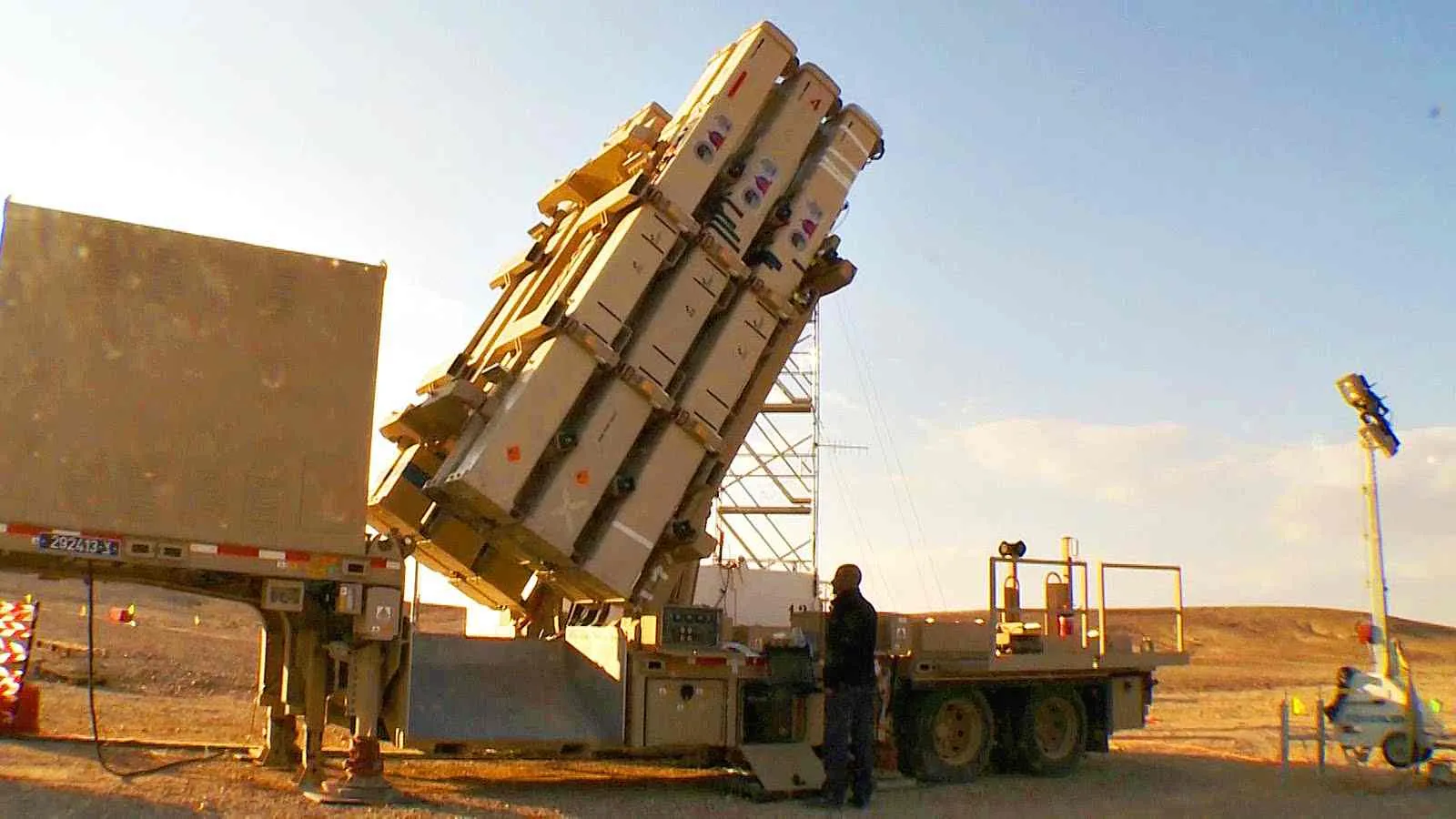
Potential Acquisition of David's Sling by Morocco
In line with Morocco's efforts to bolster its air and missile defense capabilities, recent reports have surfaced regarding the Kingdom's interest in acquiring the Israeli "David's Sling" system. While the information is still preliminary and has not yet reached the stage of an official announcement regarding a deal, the system employs the Stunner interceptor—a two-stage missile designed to counter a wide array of aerial and missile threats, particularly ballistic missiles, cruise missiles, and heavy rockets. Open sources estimate the engagement range of the system to be approximately 40 to 300 kilometers, with the actual interception range varying based on the type and trajectory of the target.
For detection purposes, the system utilizes the EL/M-2084 MMR multi-mission radar produced by IAI, which is an electronically scanned array radar capable of detecting and tracking a broad spectrum of aerial and missile targets. The radar's maximum detection range can reach about 470 kilometers in certain operational modes, with operational range varying based on the nature and altitude of the target as well as surveillance conditions. This architecture allows for the integration of the radar with command and control systems to assess the threat trajectory and guide the Stunner missile for interception.
These discussions come at a time when Morocco is advancing its multi-layered air defense network, alongside expanding defense cooperation with Israel. Previously, Morocco contracted for the "BARAK MX" system from Israel Aerospace Industries (IAI), which serves as a cornerstone of Morocco's air defense framework. Should Morocco translate its interest in "David's Sling" into an actual contract, it would add a more advanced layer to the Kingdom's air and missile defense network, designed to handle a range of threats including ballistic missiles, heavy rockets, cruise missiles, and other aerial targets.
The nature of "David's Sling" differs from traditional short- and medium-range air defense systems, as it is designed to provide interception capabilities against more complex threats at greater distances, complementing systems like "BARAK MX" rather than serving as a replacement. The potential acquisition of this system gains additional significance due to the rapid evolution of Morocco's air and missile defense network. Alongside "BARAK MX," Morocco possesses other air defense systems and is continuously seeking solutions capable of countering drones, missiles, and ballistic threats within a comprehensive system.
Furthermore, the export of "David's Sling" differs from some other Israeli systems due to American involvement in its development and financing, meaning that any export deal to Morocco would require completing U.S. approval processes in addition to Israeli consents. The ongoing discussions around "David's Sling" occur amidst a backdrop of ever-expanding Moroccan-Israeli defense cooperation, which encompasses air defense, drones, precision munitions, intelligence sharing, and industrial collaboration.
BARAK MX: The Forefront of Morocco's Air Defense Systems
The BARAK MX system, produced by Israel Aerospace Industries (IAI), stands out as one of the most significant Israeli systems acquired by Morocco. Previous reports indicated that Morocco finalized a deal for the system in 2022 worth approximately $500 million. The BARAK MX is distinguished by its ability to provide multi-layered air defense against a variety of aerial threats including aircraft, drones, and missiles. According to Israeli sources cited by ESD, Morocco has completed the deployment of the system and its operational entry, making it a key component in the Kingdom's efforts to enhance its air defenses.
Moroccan-Israeli cooperation is not limited to air defense; over the years, Morocco has procured a diverse array of Israeli systems. In counter-drone capabilities, Morocco acquired the Israeli SkyLock system, designed to detect and jam hostile drones. Additionally, it obtained the PULS multi-launch rocket system from Elbit Systems, valued at around $150 million, thereby augmenting the Moroccan ground forces' long-range precision strike capabilities.
In the realm of drones and loitering munitions, Morocco has secured Israeli systems including Heron and Harop drones, among others. Furthermore, cooperation has begun to transcend mere procurement of ready-made systems, with Morocco partnering with BlueBird Aero Systems for the local production of the SpyX loitering munition, reflecting a trend towards increasing Moroccan participation in the manufacturing of Israeli-designed systems.
Cooperation has also extended into space reconnaissance, with reports in 2024 suggesting an agreement worth nearly a billion dollars for Morocco to acquire a sophisticated Israeli reconnaissance satellite from IAI. This capability would significantly enhance Morocco's intelligence-gathering abilities and monitoring of developments in North Africa and surrounding regions, while reducing reliance on information provided by international partners.
Overall, the trajectory of collaboration over the past years signifies a transition of Moroccan-Israeli relations from mere political normalization to a comprehensive defense partnership that includes training, intelligence sharing, air defense, precision strikes, drone operations, space reconnaissance, and industrial cooperation. However, this relationship does not yet rise to the level of a formal military alliance, as there is no mutual defense treaty obligating either party to military intervention on behalf of the other. The partnership primarily relies on shared security interests, bilateral agreements, and the growing military and technological collaboration.
According to ESD, the inclination of Morocco towards acquiring additional Israeli systems indicates that the trajectory of defense cooperation between the two nations is likely to expand further in the upcoming phase.