
Morocco's Military Transformation and Strategic Alliances
Morocco has undergone a remarkable transformation from a nation grappling with poverty to becoming a significant player in international politics. This shift has been propelled by strategic long-term alliances with the United States and Israel, which have begun to train and equip Morocco's armed forces with advanced technologies and state-of-the-art weaponry. Despite its economic growth, which exceeds that of many nations, Morocco faces a challenge of youth emigration, a dilemma that could pose social issues if it were a democracy. However, the Moroccan government appears more focused on carving out its place on the global stage rather than addressing domestic concerns about youth leaving the country.
With significant lobbying efforts in Brussels and Washington, coupled with proactive intelligence services and effective diplomacy, Morocco has positioned itself as a key player in West Africa. The kingdom's geographical advantage, straddling both the Mediterranean and Atlantic coasts, has been further enhanced through the construction of ports and military bases like Ksar Sghir and the Nador West Med and Tangier Med ports. These infrastructures allow Morocco to control critical maritime flows and secure its strategic position as one of the two shores of the Strait of Gibraltar.
Modernization of Military Capabilities and Technology Acquisition
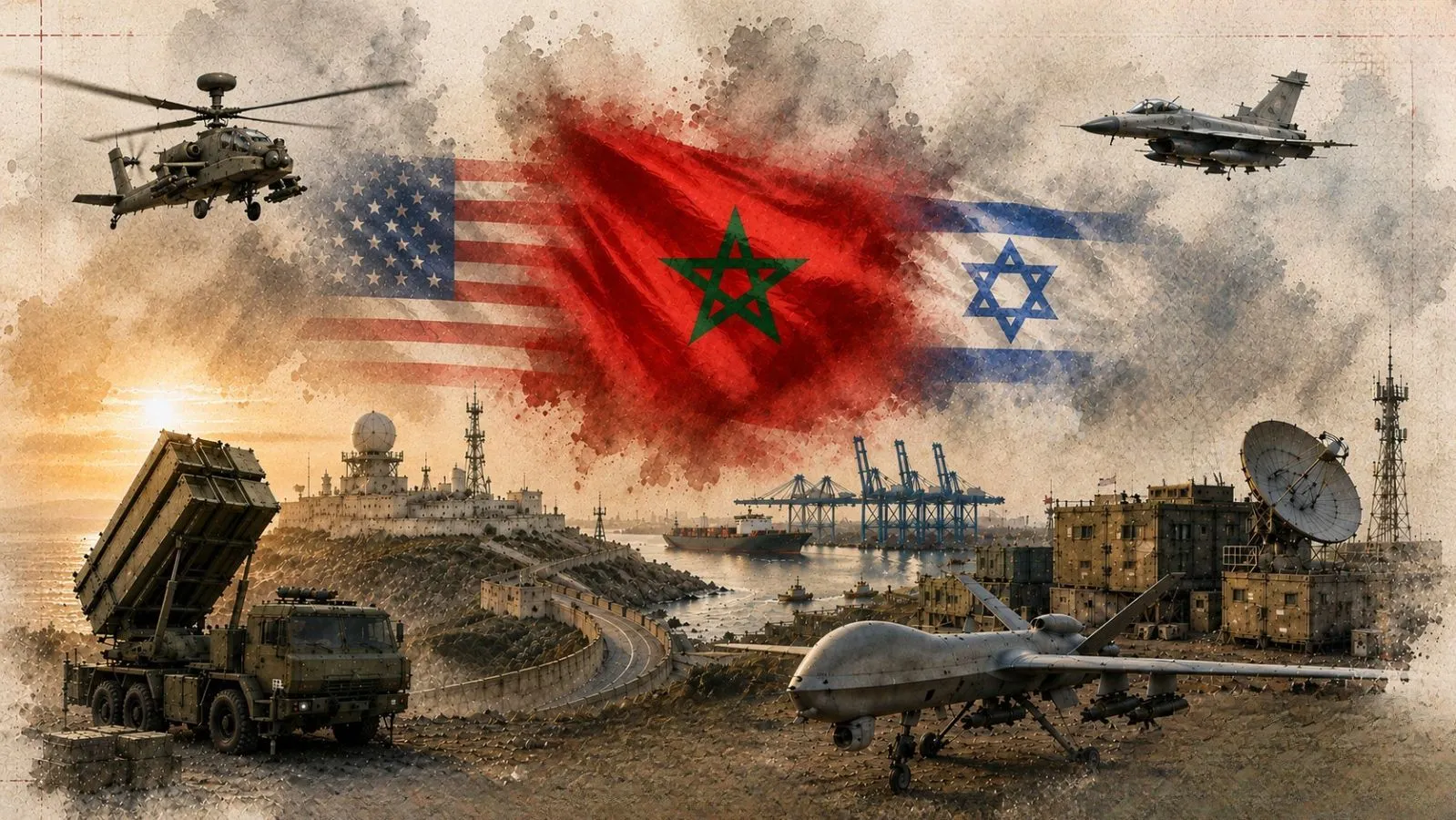
While some countries may distance themselves from the U.S. and Israel, Morocco has embraced partnerships with these nations, acquiring various military technologies. Instead of solely focusing on enhancing its domestic defense industry, Morocco is reinforcing its armed forces with the best offerings from abroad. In recent years, the kingdom has invested in missiles, helicopters, attack drones, armored vehicles, and artillery, even modernizing its tank fleet and acquiring U.S. HIMARS missile systems, which include short-range tactical ballistic missiles.
Since November 2025, Morocco has been manufacturing suicide drones through an Israeli Aerospace Industries (IAI) subsidiary, producing the SpyX drone, which boasts a 50-kilometer range and a 2.5-kilogram warhead. Today, Morocco ranks as the second African nation with the highest number of drones, including Turkish Bayraktar TB2s known for their long surveillance capabilities and precision-guided munitions. The drone fleet also includes Israeli models like the WanderB and ThunderB, as well as Chinese Wing Loong I and II drones and the Turkish Akıncı, which are equipped for bombing and missile payloads.
In proximity to Ceuta and Melilla, Morocco has bolstered surveillance infrastructures and bases for unmanned aerial vehicles (UAVs) aimed at border control and reconnaissance missions. The nation maintains four satellites, which have been utilized extensively in the lead-up to the Ceuta invasion, with two launched from California in 2024.
According to the _Global Fire Power_ report, Morocco boasts over 900 tanks, 17,000 armored vehicles, 544 self-propelled artillery units, 188 towed artillery pieces, 84 fighter jets, 73 helicopters, and a fleet of 24 Apache attack helicopters contracted in 2020. This arsenal showcases Morocco's clear objective of investing in influence, infrastructure, armament, and technology, positioning itself as a first-tier global player.
Recently, Morocco signed a cooperation agreement with the U.S. focused on cyberspace, utilizing the Garda system, similar to the Palantir, which integrates intelligence and command-and-control capabilities in a unified environment—something that is notably absent in other nations despite the evident need. This represents a significant qualitative leap in Morocco's military doctrine and operational capabilities, embracing advancements in artificial intelligence.
While Spain ranks as the 18th military power globally in 2026, Morocco holds the 56th position, reflecting a more aggressive rearmament strategy. The kingdom is working diligently to improve its status and influence in the region through partnerships with the U.S. and Israel, despite ideological differences that have led the current Spanish government to distance itself from these nations.
As reported by elespanol.com.