

Morocco's Energy Landscape and Dependence on Spain
The geopolitical dynamics surrounding energy supply are crucial, especially as nations leverage their energy infrastructures as strategic assets. Currently, Morocco finds itself in a precarious situation regarding its energy dependence on Spain. Approximately 20% of Morocco's electricity supply is reliant on Spanish infrastructure, with all liquefied natural gas (LNG) imports needing to pass through Spanish regasification plants. This dependency poses significant vulnerabilities, particularly in light of the recent diplomatic tensions between the two nations, exacerbated by events in Ceuta in late July 2026.
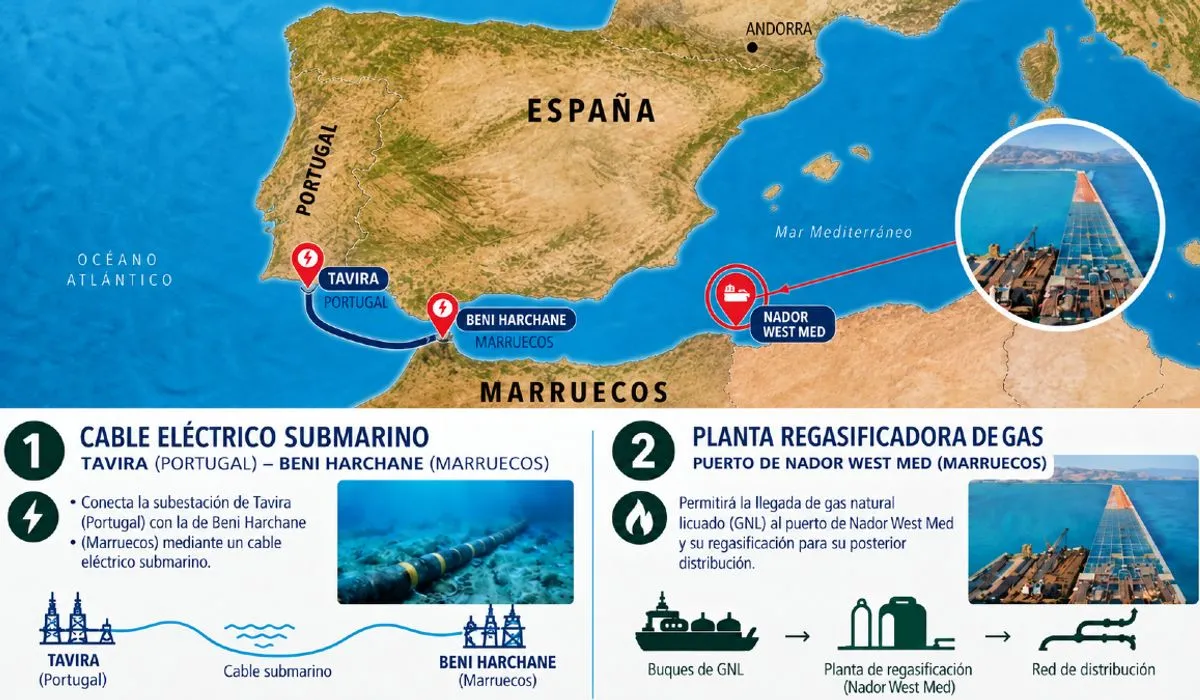
In response to these challenges, Morocco is actively seeking to diversify its energy sources. This strategy involves expanding energy interconnections with alternative partners, thereby reducing reliance on Spain as the sole intermediary between Morocco and the European energy market. One significant initiative is the revival of a long-proposed direct electrical interconnection with Portugal, designed to facilitate an exchange of approximately 1,000 MW of electricity between Morocco and Portugal. This high-voltage direct current submarine cable would not only enhance bilateral energy relations but also provide Morocco with a vital second entry point into the European electricity market.
The Gas Dilemma and Future Prospects
While Morocco is making strides in electricity interconnectivity, the country faces a more pressing issue concerning gas supply. Currently, Morocco imports LNG from international markets but lacks a dedicated terminal for import and regasification. This means that imported LNG must be offloaded at Spanish facilities for regasification before being transported back across the Strait of Gibraltar via the Maghreb-Europe Gas Pipeline, which now operates in reverse to its original direction of gas flow from Algeria to Spain.
To address this challenge, Morocco is investing in the development of the Nador West Med project, which plans to establish an LNG terminal integrated into a new port complex on its Mediterranean coast. This facility aims to receive LNG from various global sources, including the United States and Asia, and regasify it for domestic use, thereby enhancing Morocco's energy independence. However, the timeline for this project faced setbacks earlier in the year when Morocco suspended the bidding process for the terminal and associated gas pipelines.
Recent reports suggest that the Moroccan government is reassessing the regasification project, emphasizing its strategic importance for the country's energy future. The intention is to revise the bidding process and push forward with the project, which will ultimately be executed by the incoming government following the upcoming elections. In essence, Morocco is actively working to establish alternatives to its current energy vulnerabilities, aiming to reduce Spain's influence as a bottleneck in its energy supply chain. As tensions rise between Madrid and Rabat, energy remains a crucial element in the broader geopolitical landscape.
As reported by vozpopuli.com.

