
Understanding Morocco's Multifaceted Strategy towards Spain
Morocco appears to be gradually advancing its interests in relation to Spain by employing a multifaceted approach that intertwines immigration, economic considerations, energy initiatives, and territorial claims, all while avoiding direct conflict. This perspective is articulated by Samuel Morales, a Spanish lieutenant colonel who specializes in so-called 'gray zone' strategies. With a background in marine infantry and operational responsibilities, Morales has also served as a consultant to the Spanish army's operational command and the national security department of Moncloa.
In an interview with La Razón, Morales critiques Spain for analyzing Morocco's various initiatives in isolation. He argues that the economic pressures exerted on Ceuta and Melilla, migratory movements, territorial water delimitation, the Tropic Mountain, and gas projects collectively represent a coherent strategy. This method aligns with the concept of the 'gray zone,' wherein political or territorial objectives are pursued through actions that remain below the threshold of war. Morales draws a parallel to the 'salami technique,' which entails advancing in small, seemingly minor increments that are too limited to provoke significant backlash.
Strategic Implications of the Migration Crisis and Territorial Claims
Morales underscores the hypothetical scenario of a platform being established in disputed waters, suggesting that while Spain would refrain from declaring war to displace it, Morocco would have already altered the situation on the ground and fortified its position for future negotiations. He extends this analysis to the migration crisis impacting Ceuta, expressing skepticism over the plausibility that tens of thousands of people would simultaneously decide to cross the border, only for a significant number to return within 48 hours. He has noted that approximately 85% of the migratory incidents he has studied were preceded by a crisis between Rabat and Madrid within the preceding two months.
According to Morales, Morocco's immediate objective appears to be the cities of Ceuta and Melilla, with a potential future focus on the Canary Islands. However, he acknowledges that a direct territorial confrontation would currently be 'suicidal' for Morocco. A significant element of his reasoning centers around the Tropic Mountain, a submarine mountain located southwest of the Canary Islands, which is rich in tellurium and rare earth elements beneficial for photovoltaic industry applications. Both Morocco and Spain maintain competing interpretations regarding the extension of their continental shelves. Morales posits that Rabat is strategically positioning itself to secure a favorable stance in the future of European energy strategy.
He also introduces a hypothesis concerning the 2030 World Cup, noting Morocco's substantial investments in infrastructure with aspirations of hosting the final in Casablanca. He speculates that Spanish Prime Minister Pedro Sánchez's support for Madrid could have potentially sparked renewed tensions with Rabat. Nonetheless, Morales admits to lacking definitive evidence linking this episode to the crisis in Ceuta.
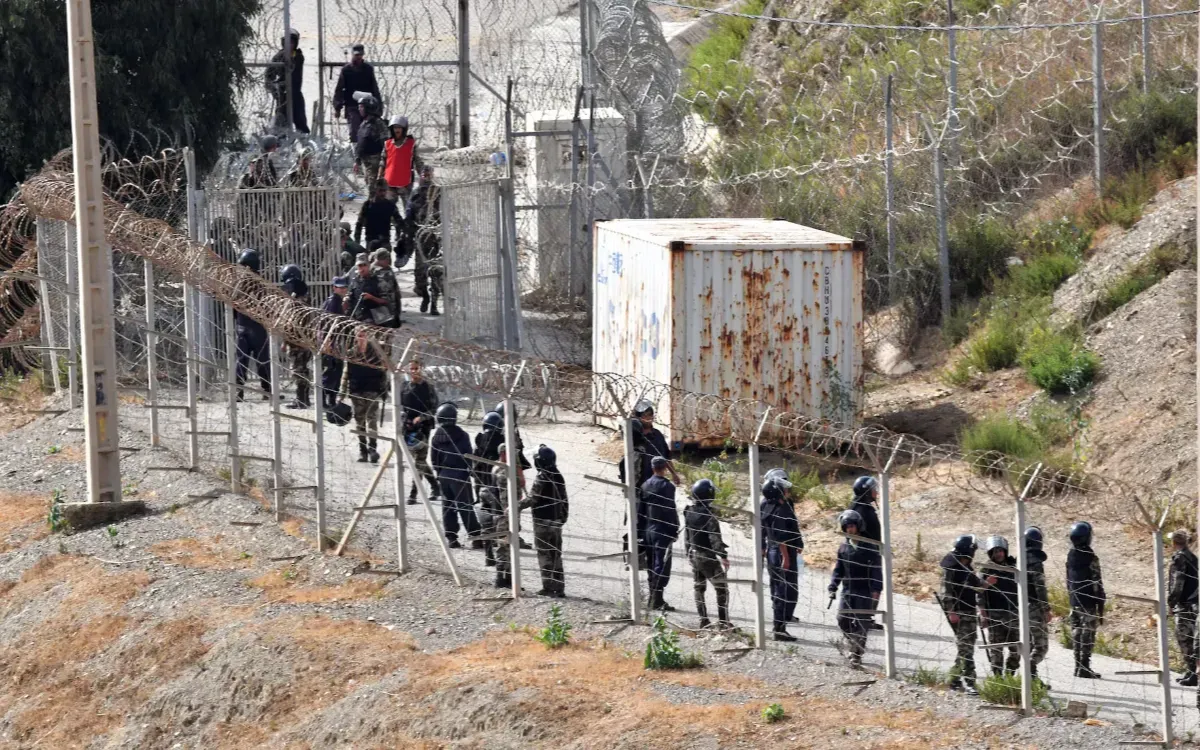
This analysis coincides with renewed discussions regarding the 'occupied cities' in the ongoing dialogue between Morocco and Spain. Morales cautions that Madrid would be making a mistake by militarizing its response, as images of soldiers deployed at the border could backfire against Spain in the ongoing communication battle. Instead, he recommends that the issue of Ceuta and Melilla be Europeanized and that economic leverage be discreetly employed. Energy, in particular, is highlighted as a critical area, especially as Madrid is already examining energy levers that can be activated against Morocco. However, this strategy remains fraught with complexity given the €23 billion in trade that binds the two nations, making a rupture nearly impossible.
As reported by bladi.net.