
Morocco's Ambitious Defense Modernization Efforts
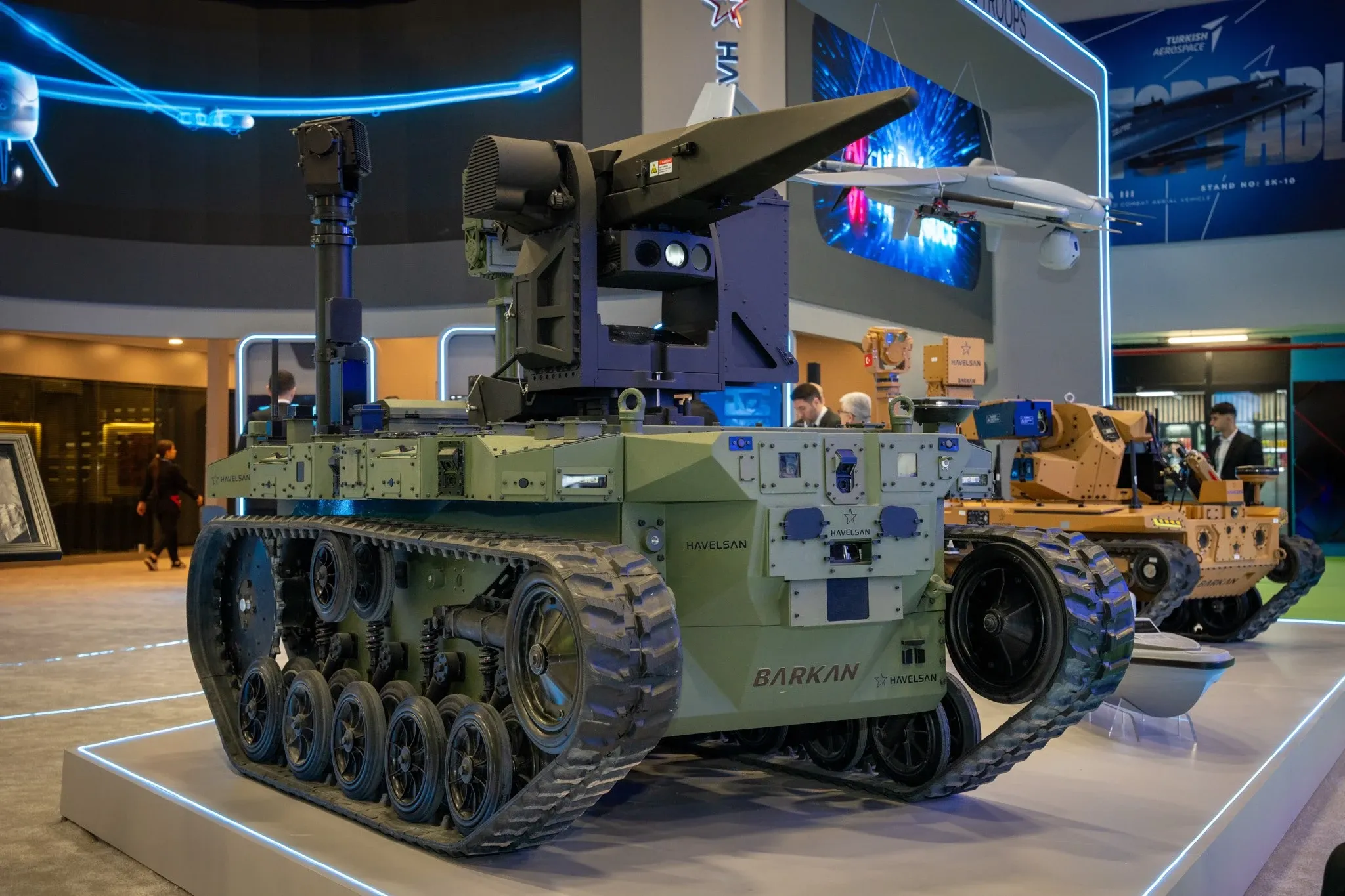
In a strategic initiative aimed at modernizing and enhancing its deterrent capabilities, Morocco is currently engaged in advanced discussions with the Turkish defense company Havelsan for the acquisition of the Barkan 3 unmanned ground vehicle (UGV). This development follows the official unveiling of this third version of the autonomous systems family at the prominent defense industry fair, Saha Expo 2026, held in Istanbul in early May.
The ongoing negotiations to incorporate the Barkan 3 into the arsenal of the Royal Armed Forces are not isolated incidents; rather, they reflect a sustained trend of expanding military cooperation between Morocco and Turkey's defense corporations. This bilateral and technological rapprochement is strongly supported by previous industrial successes, particularly highlighted by the successful establishment of a drone factory in Morocco by the Turkish company Baykar.
Technological Advancements and Tactical Advantages
In this geopolitical context, Havelsan is aggressively seeking to expand its commercial footprint. Sevket Unal, the Vice President of International Business Development and Marketing at the Turkish manufacturer, recently confirmed that the company is actively engaged in discussions not only with Morocco but also with several nations in the Maghreb and the Gulf region, including Egypt, Libya, Algeria, Tunisia, Qatar, and the United Arab Emirates. During these meetings, a new operational doctrine is being presented, focusing on the coordinated use of autonomous platforms.
The Barkan 3 represents a significant qualitative leap in the realm of tactical military robotics. This system has progressively evolved based on direct feedback from the battlefield and the changing demands of missions, building on its predecessors that entered the inventories of Turkish forces in 2023. At the recent defense fair in Istanbul, Havelsan and the Turkish Presidency of Defense Industries signed a contract amendment covering this new configuration.
Weighing in at one ton, this UGV is notable for its exceptional terrain mobility, capable of reaching maximum speeds of 25 kilometers per hour and operating continuously for five hours at full load. The platform is designed with a highly modular architecture, allowing its configuration for a wide array of operational missions, ranging from reconnaissance to direct combat.
Depending on tactical requirements, it can be equipped with heavier armaments than previous versions, offering configurations that include a remote-controlled weapon station (RCWS) of 12.7 millimeters or the integration of powerful anti-tank guided missiles (ATGM) such as the Karaok. Additionally, the platform is available in fully electric or hybrid drive configurations, providing greater ground clearance.
In terms of situational awareness, the vehicle is equipped with cutting-edge technology, featuring front-facing cameras, downward-facing sensors, radar systems, and essential Lidar sensors for autonomous driving. Its electronic robustness is also crucial, as it includes Tualcom anti-jamming antennas, beyond-line-of-sight (NLOS) operational capabilities, and a communication structure designed to maintain data flow under severe electronic warfare conditions.
Moreover, the Barkan 3 is capable of operating in environments where Global Navigation Satellite System (GNSS) signals have been blocked or denied. The most disruptive element of the system that Morocco is considering acquiring lies in its ability to integrate into what Havelsan refers to as the "digital troops" concept. The manufacturer emphasizes that the Barkan 3 is not designed to operate in isolation but is intrinsically built to function in concert with other robotic systems, enabling coordinated operations of autonomous swarms.
Unal explained that field tests have successfully evolved mixed formations, currently operating swarms of up to eight units. The company's goal is to rapidly scale up to deploy dozens of systems operating simultaneously in the field. These "joint swarm" operations allow for unprecedented tactical collaboration between these ground vehicles and the unmanned aerial vehicles (UAVs) developed by the company, such as the Baha and Bozbey models. This level of joint maturity is expected to enable operational deployments starting in 2026.
The core that coordinates this complex network of systems is the newly revealed combat management system known as Advent-AI. This digital architecture acts as a decision-making layer supported by artificial intelligence, merging data from multiple sensors. It processes vast amounts of operational data in real-time, identifying tactical patterns, filtering critical information, and assisting in accelerating decision-making, while always keeping the human operator in the loop for critical resolutions.
The integration of Barkan 3 systems would provide Moroccan forces with a considerable tactical advantage in border control and response to asymmetric threats. The primary operational benefit is the drastic reduction of military personnel exposure in complex and high-risk combat scenarios, allowing for monitoring and neutralizing threats safely from a distance. The core of this technology underscores a paradigm shift in modern warfare. As Havelsan warns, in a dynamic conflict environment, military systems are no longer evaluated solely by the weaponry they can carry but by their speed of response and adaptability. The integration of Barkan 3 shifts the focus from the individual capabilities of a single vehicle to the real impact generated by multiple systems cooperating in complex, multi-layered operational scenarios.
Lastly, the strategic plans of the Turkish manufacturer suggest promising economic prospects. Unal indicated that Havelsan's international expansion model is not limited to exporting weaponry; the opening of offices abroad, such as those planned for Saudi Arabia or Kuwait, entails long-term commitments that include support for local employment, gradual technology transfer, and retention of industrial competencies within partner countries. A similar framework agreement with Morocco could have a profound positive impact on the development of the local defense and technology base in the region.
As reported by infodefensa.com.