
Morocco's Diplomatic and Economic Strategy in a Fragmented Region
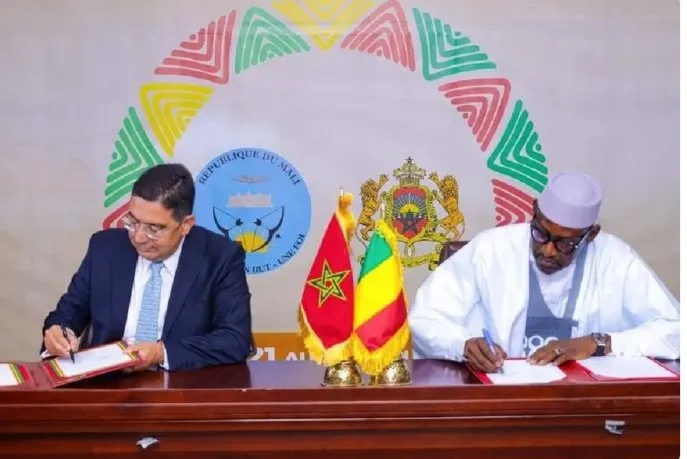
In the Sahel-Maghreb region, characterized by profound geopolitical transformations, Morocco is solidifying a strategy that focuses on economic, security, and diplomatic cooperation. The recent convening of the fourth session of the Morocco-Mali Joint Cooperation Commission in Bamako marks a significant diplomatic and geo-economic milestone. This event was highlighted by the signing of 21 strategic agreements aimed at boosting trade, enhancing security, and establishing a permanent dialogue framework. Such initiatives underscore Morocco's capability to forge operational partnerships in a fragmented regional landscape, where security challenges necessitate robust, structured, and sustainable cooperation among all countries in the Sahel-Maghreb space. A mere bilateral normalization, similar to what has been seen recently between Algiers and Bamako, is no longer sufficient. In the face of hybrid and transnational threats, isolated advancements, however meaningful, must be integrated into a broader collective dynamic that transcends purely bilateral logics.
Within this fragile and uncertain regional context, the current evolution of geopolitical balances in the Sahel takes on significant importance. The rising prominence of the Sahel States Alliance (AES) and the repositioning of external actors are fundamentally reshaping the operational margins and fault lines within the Maghreb. These changes directly influence the dynamics of cooperation—or rivalry—between Algiers, Rabat, Nouakchott, and Tripoli, turning the Sahel into a true laboratory for regional strategic reconfiguration.
Security Interdependencies and the Fragility of Cooperation
This regional restructuring is resulting in an accelerated fragmentation of traditional multilateral cooperation frameworks, an increasing affirmation of sovereignist logics, and a fundamental redefinition of historical relations between the Sahel and the Maghreb. The paradox is striking: while security interdependencies between the Maghreb and the Sahel have never been stronger—amidst transnational terrorism, trans-Saharan criminal networks, and uncontrolled migration flows—the institutional Maghreb cooperation remains nearly paralyzed. To understand this contradiction, it is essential to realize that as the Sahel emerges as the epicenter of a profound geopolitical reconfiguration, it simultaneously exposes the structural weaknesses of the Maghreb. The Sahelian dynamic serves as a revealing lens into the vulnerabilities of the Maghreb system.
However, the paralysis of the Arab Maghreb Union is not a recent phenomenon; the ongoing transformations in the Sahel have merely accentuated it. Each Maghreb country is now developing its own Sahelian strategy. Morocco favors a geo-economic and Atlantic approach, Algeria maintains a strategy of controlled instability to undermine its neighbors, Mauritania plays a cautious and pragmatic buffer state role, Tunisia is relatively marginalized by its internal difficulties, and Libya, remaining fragmented, represents a structural security void rather than a coherent state actor with a deliberate strategy.
Thus, the Sahel does not unify the Maghreb; rather, it heightens regional projection tensions, particularly between Morocco and Algeria. Rabat aims to strengthen its Atlantic corridors, enhance economic integration with West Africa, and promote its initiative for Atlantic access for landlocked Sahelian states. Meanwhile, Algiers attempts to uphold its ambivalent strategy of reconstructing its regional influence and manipulating jihadist groups. This tension between the two major Maghreb countries risks creating a blocking effect characterized by the absence of a common security vision and the inability to construct an integrated Maghreb-Sahel architecture.
As reported by quid.ma.