
Morocco's Climate Vulnerability and Institutional Readiness
According to a comprehensive study released by the OECD, the World Bank, and the Global Green Growth Institute, Morocco stands out as one of Africa's most significant examples of a nation at high risk yet exhibiting substantial readiness to confront the challenges posed by climate change. The report, titled “New Data for Africa’s Changing Climate: Mapping Risks, Readiness and Policy Action,” illustrates that Morocco is not merely anticipating future climate disruptions; rather, it is already grappling with profound ecological transformations that impose considerable macroeconomic constraints on its society and economy. This paradoxical situation reveals Morocco's unique position in the landscape of climate vulnerability across the African continent.
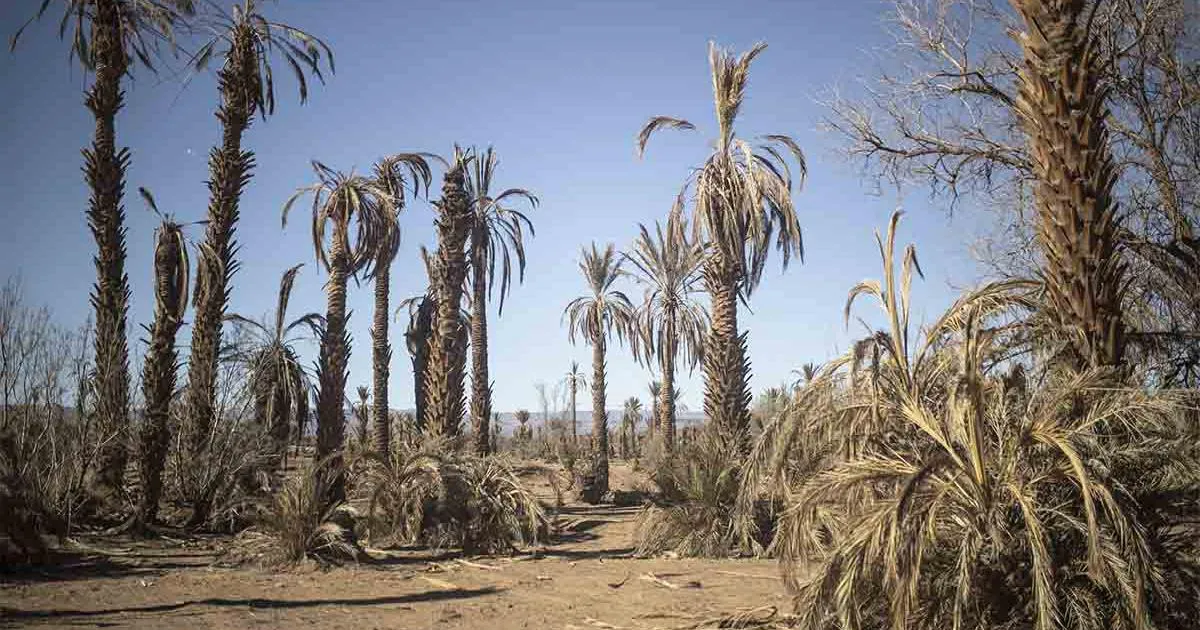
The risk profile for Morocco is starkly characterized by escalating water stress and increasing aridity. Within Northern Africa, temperatures are rising at a rate that outpaces the global average, and Morocco is significantly affected by ongoing multi-year droughts, alongside forecasts suggesting a medium-term decline in precipitation ranging from 10 to 20 percent. The study highlights a crucial correlation between these climatic changes and economic instability, particularly given that rainfed agriculture employs approximately one-third of the country's workforce. Consequently, fluctuations in seasonal rainfall have a cascading effect on national economic dynamics, leading to reduced rural incomes, decreased consumer demand, and heightened food import expenses.
Innovative Strategies for Climate Resilience
One area where Morocco distinctly diverges from many of its continental counterparts is in its readiness and institutional capacity to address climate-related challenges. The metrics employed by the OECD and World Bank place Morocco among the top tier of African nations regarding governance for adaptation to climate change. Notably, climate resilience is not viewed merely as an ancillary environmental issue; it has been meticulously woven into the fabric of national economic strategies, including the New Development Model. The report highlights Morocco's Nationally Determined Contribution (NDC) as one of the most credible and comprehensive within the region, aiming for a more than 51 percent reduction in greenhouse gas emissions by 2030 through a combination of domestic investments and conditional international funding.
Additionally, Morocco serves as a continental benchmark in sovereign disaster risk management, having developed innovative financing mechanisms such as the Solidarity Fund against Catastrophic Events, along with parametric insurance schemes intended to protect the Treasury from the financial impacts of catastrophic droughts and floods. This proactive institutional readiness facilitates large-scale sectoral interventions, primarily driven by a robust shift towards non-conventional water infrastructure. In response to chronically low dam reservoir levels, Morocco is re-engineering its water management system through the establishment of gigawatt-scale desalination plants powered by renewable energy, advanced wastewater reclamation strategies, and strategic inter-basin water transfers designed to safeguard major urban centers from water shortages.
Morocco's leadership in renewable energy is well-established, bolstered by extensive solar and wind farms that are propelling the nation toward its goal of generating over half of its electricity capacity from renewable sources by 2030, with aspirations for decarbonized industrial exports and green hydrogen production. However, the report emphasizes that Morocco’s journey is not without its challenges. A crucial takeaway is the ongoing tension between the urgent need to adapt to escalating climatic shocks and the substantial fiscal demands associated with such adaptations. Large-scale infrastructure projects come with significant capital costs, making their timely implementation heavily dependent on international climate finance, blended capital, and green bond initiatives. On a practical level, managing localized groundwater resources presents complex enforcement challenges, and disparities remain between well-funded commercial agribusinesses and vulnerable smallholder farmers who often lack the necessary resources to implement advanced conservation practices.
Ultimately, the data presented by the OECD and World Bank paints a picture of Morocco not as a nation caught off guard by climate change, but rather as an economy engaged in an urgent race to deploy resilient infrastructure in a timely manner, striving to keep pace with an increasingly challenging climatic landscape.
As reported by middle-east-online.com.