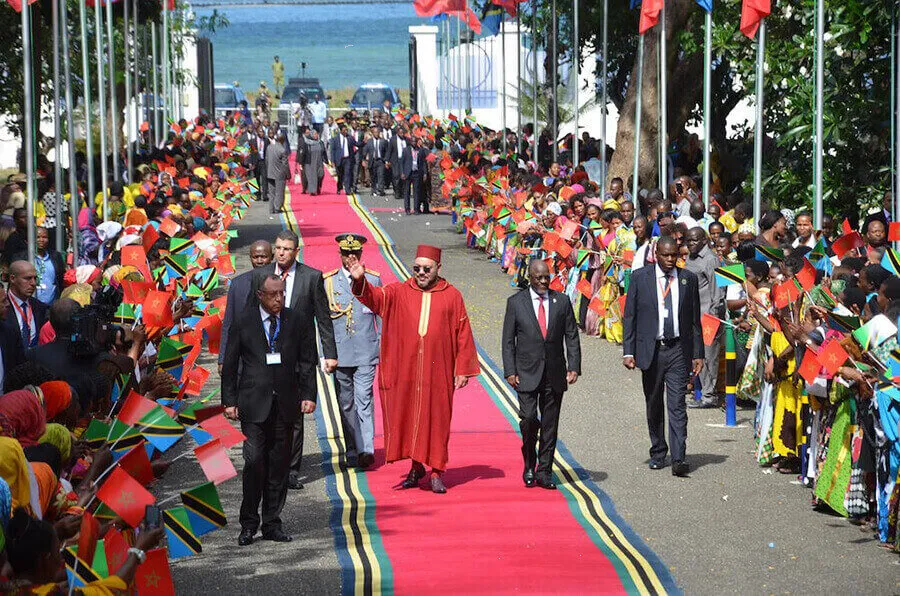

Morocco's reintegration into the African Union marks a significant strategic shift for the kingdom, aiming to deepen its presence within the African continent. This assertion is supported by a report from the American think tank, Stimson Center, which highlights Algeria as the primary obstacle to achieving regional integration in the Maghreb region due to its ongoing opposition to Morocco's autonomy initiative in the Sahara. The report meticulously documents Morocco's policies across various sectors, indicating that the kingdom's African policy has gained substantial momentum since its return to the African Union. This has been manifested through an intensified diplomatic, economic, and religious presence in sub-Saharan African countries, underpinned by a vision to expand partnerships and enhance Morocco's regional influence.
In this context, the report notes that King Mohammed VI has undertaken several official visits to over 30 African nations, resulting in the signing of numerous bilateral agreements across sectors such as trade, investment, infrastructure, agriculture, and religious training. These efforts have significantly bolstered Morocco's position as a key economic and diplomatic partner on the continent. Furthermore, Morocco's accession to the African Continental Free Trade Area and its 2017 application to join the Economic Community of West African States (ECOWAS) underscore its commitment to integrating further into the African economy, although this application remains under review.
Economically, the report emphasizes the notable expansion of Moroccan companies within Africa, particularly in banking, telecommunications, and fertilizers. Moroccan financial institutions have established a presence in several West and Central African countries. For instance, Maroc Telecom operates subsidiaries in Mauritania, Mali, Gabon, and Burkina Faso, while the OCP Group has strengthened its footprint through partnerships and projects aimed at providing fertilizers and technical expertise to enhance agricultural production across various African nations. The Atlantic Gas Pipeline project between Nigeria and Morocco is highlighted as a clear representation of Morocco's strategic ambitions on the continent, as it is one of the largest energy infrastructure projects currently under development in Africa. This initiative aims to connect gas resources from West Africa to European markets via Morocco, thereby enhancing energy integration and security between Africa and Europe, positioning Rabat at the center of regional energy dynamics.
The report also notes Morocco's efforts to strengthen its religious presence in Africa by training imams from Francophone African countries in Moroccan institutions, reflecting the kingdom's use of 'soft power' to bolster its regional influence. Additionally, Moroccan cooperation programs with African nations encompass infrastructure projects, agricultural sector support, and educational exchange programs, all of which align with the kingdom's economic and political goals on the continent, particularly regarding the Sahara issue.
Moreover, the increasing Moroccan presence in Africa has had a positive impact on the Sahara file, benefitting Rabat's interests. Several African countries have withdrawn their recognition of the so-called 'Sahrawi Republic,' while others have opened consulates in Moroccan-administered cities in the Sahara. Conversely, Algeria continues to oppose Morocco's autonomy proposal, a stance that is regarded as one of the main reasons for the stagnation of regional integration efforts in the Maghreb.
As reported by assahifa.com.