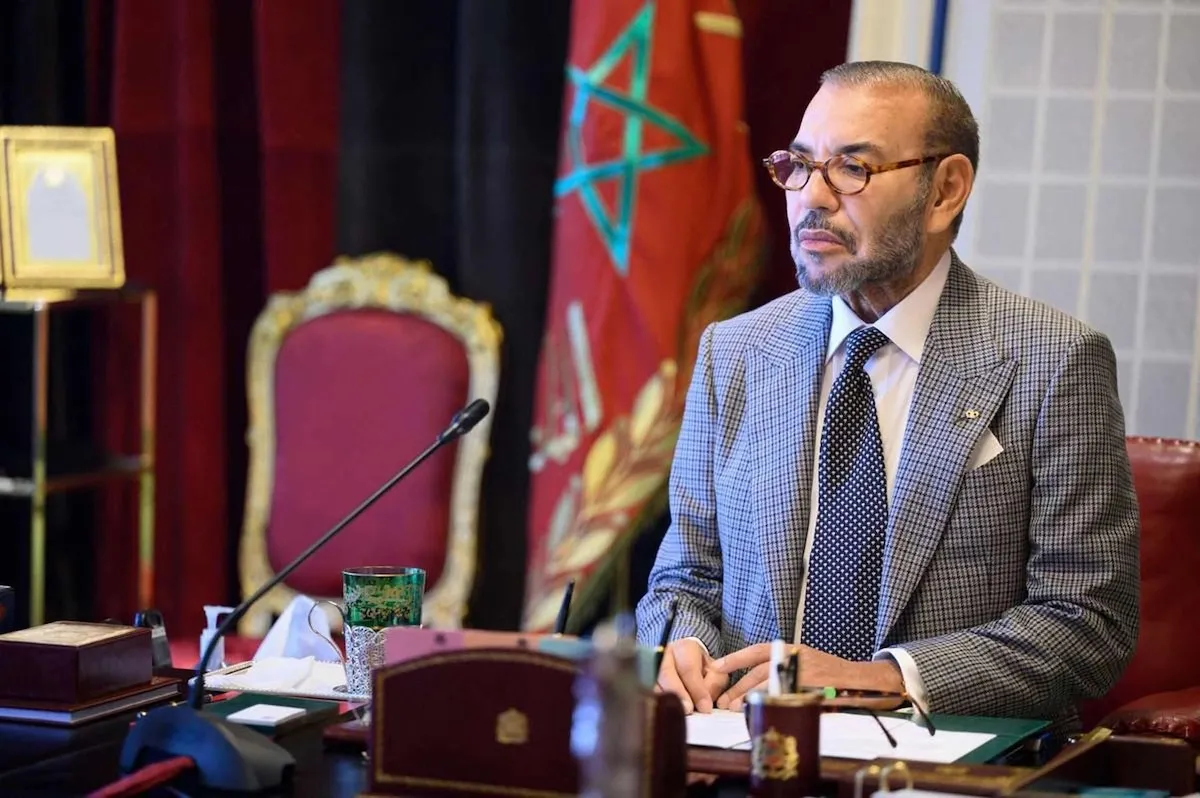

King Mohammed VI Affirms Morocco's Solidarity with Saudi Arabia
In a significant display of diplomatic support, King Mohammed VI of Morocco has unequivocally declared his nation's backing for Saudi Arabia in light of the recent surge in Houthi attacks. In messages conveyed to King Salman bin Abdulaziz Al Saud and Crown Prince Mohammed bin Salman, the Moroccan monarch emphasized that any aggression directed towards the Kingdom of Saudi Arabia would be perceived as an affront to Morocco itself. This declaration highlights the intertwined security interests of Morocco and Saudi Arabia, particularly as tensions escalate in the region, threatening vital infrastructure and maritime routes.
King Mohammed VI articulated that the security and stability of Saudi Arabia, along with other Gulf Cooperation Council (GCC) states, are inherently linked to Morocco's own national security. His statements not only reflect a robust political alignment between Rabat and Riyadh but also underscore the increasing urgency of cooperative security measures in the face of mounting threats. "The security and stability of Saudi Arabia, as well as that of other GCC states, form an inseparable part of Morocco's security," he declared, reinforcing the idea that Morocco views its defense of Saudi interests as aligned with its own strategic goals.
The context of these messages is crucial, as they coincided with a series of missile and drone strikes attributed to the Houthi movement, targeting key Saudi cities such as Riyadh and Khamis Mushait. On September 26, Saudi authorities reported intercepting two ballistic missiles and two drones aimed at the kingdom, with the missiles specifically directed towards Khamis Mushait and the drones targeting the Riyadh area. King Mohammed VI expressed profound concern over attacks on civilian and economic facilities, describing them as a threat that transcends Saudi borders and jeopardizes regional security.
Escalation of Houthi Attacks and Regional Security Implications
The Moroccan king's remarks took on a particularly poignant religious and political dimension as he condemned the Houthi attempts to target the holy cities of Mecca and Medina. He articulated that these assaults were not merely attacks on Saudi Arabia and its people but were also an affront to the sentiments of over 1.8 billion Muslims worldwide. "These despicable attacks and desperate attempts to undermine the security and stability of the proud Saudi people represent a blatant attack on the feelings of Muslims everywhere," he stated, calling for accountability for those responsible under international law.
King Mohammed VI further contextualized the Houthi aggression within the framework of international law, urging for international sanctions against the perpetrators and emphasizing the need for accountability. He cited United Nations Security Council Resolutions 2216 and 2722, which underscore the illegality of such attacks and highlight the necessity of protecting civilian lives and respecting the sanctity of religious sites. The king strongly condemned these assaults as violations of international humanitarian law, insisting that they cannot go unpunished.
This Moroccan stance comes at a time when the Houthi campaign against Saudi Arabia has escalated beyond isolated incidents, increasingly targeting populated areas and critical energy infrastructures, raising alarms about regional stability and the security of vital maritime routes. The Saudi authorities have reported numerous interceptions of missiles and drones throughout September, with recent attacks threatening strategic locations and inciting air raid alerts across various regions.
King Mohammed VI's call for international sanctions goes beyond a mere show of solidarity, framing the Houthi attacks as a serious issue that impacts international law, civilian protection, freedom of navigation, and accountability. As regional coordination increases among countries like Turkey and Egypt in support of Saudi Arabia's right to self-defense, Morocco’s declaration adds another vital voice to the Arab response against these threats, emphasizing the need for unity in safeguarding the sovereignty and security of the region.
As reported by atalayar.com.