
With nearly 20 million visitors expected to arrive in 2025, generating 138 billion dirhams in foreign currency receipts and contributing approximately 7% to the national GDP, the tourism sector has solidified its position as one of the primary engines of Morocco's economy. The objectives outlined in the 2023-2026 roadmap have already been surpassed by two years, confirming the exceptional momentum within the industry. This remarkable growth trajectory is largely attributed to a series of competitive advantages that are difficult to replicate.
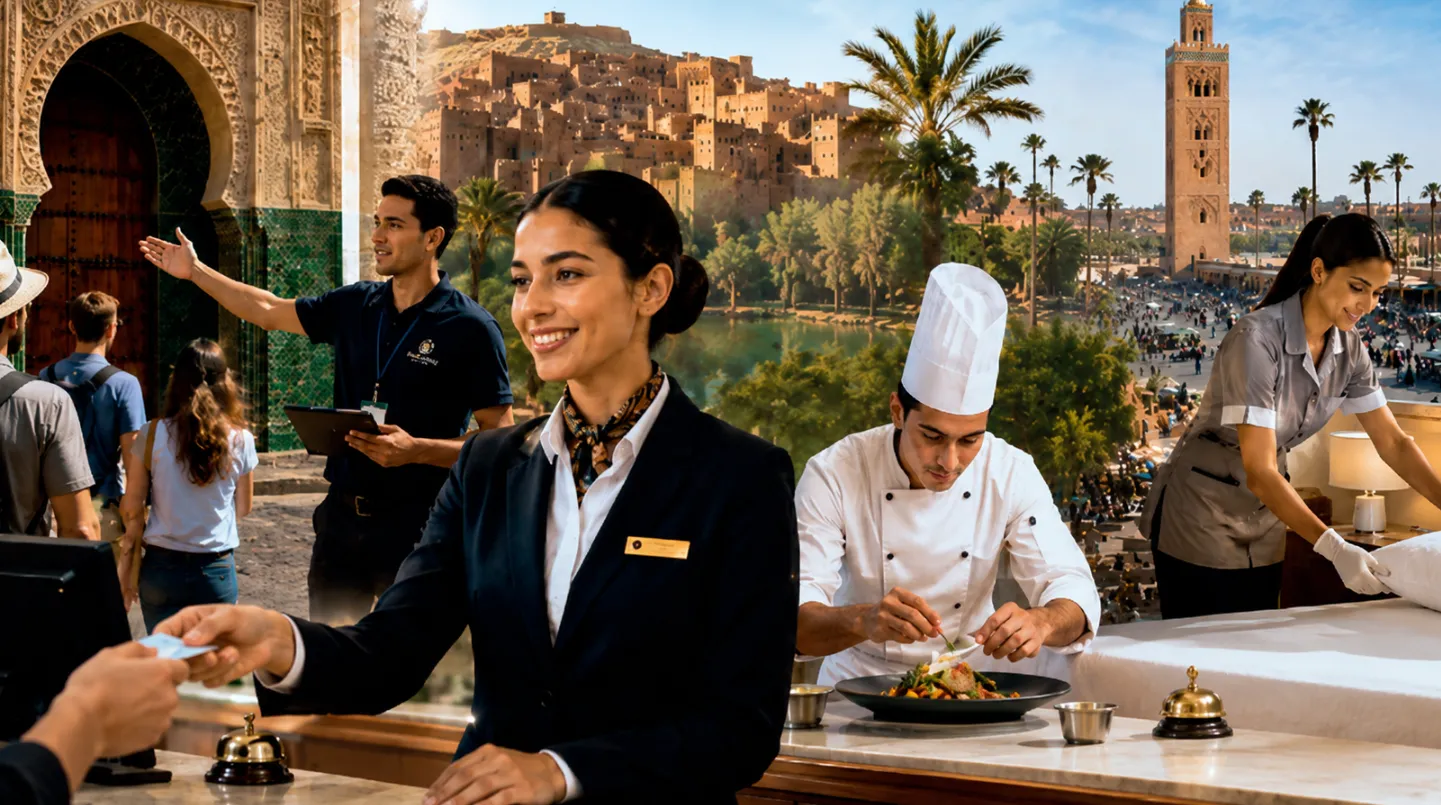
The diversity of Morocco's tourism offerings undoubtedly remains its greatest asset. Few destinations can boast so many attractions within such an easily accessible territory, including beach resorts, mountains, UNESCO-listed medinas, deserts, renowned gastronomy, and a rich cultural heritage. Coupled with its exceptional proximity to the primary source market, Europe, Morocco stands out on the global tourism map.
As highlighted by economist Said Tahiri, the evolution of this sector is underpinned by several strategic factors: geographical proximity to Europe, continuously improving air connectivity, and a diverse tourism offering that encompasses culture, beach, desert, mountains, gastronomy, and business tourism. Furthermore, the Kingdom benefits from a political stability that reassures both investors and visitors, while investments made over the past two decades in highway, rail, port, and airport infrastructures have significantly enhanced its competitiveness.
This strategic approach is further bolstered by major international events that Morocco will host, including the 2030 World Cup, which is expected to elevate its global visibility even more. However, this success is accompanied by several structural imbalances. The first of these concerns the very geography of Moroccan tourism. Today, Marrakech remains the main driver of the sector, followed by Agadir and Casablanca.
This concentration naturally fosters the creation of powerful hubs, but it also limits the economic benefits from reaching regions that possess considerable potential. Said Tahiri succinctly summarizes this reality: "Structural vulnerabilities remain real. More than 70% of tourism activity is still concentrated around Marrakech, Agadir, and Casablanca." Destinations such as Fes, Ouarzazate, Béni Mellal-Khénifra, Saïdia, and the Atlantic South possess significant assets that have yet to be fully leveraged.
Hamid Bentahar, president of the National Confederation of Tourism, argues that the solution lies in a more equitable distribution of investments and tourist flows. "It is crucial to ensure a better distribution of flows so that it is enjoyable for both residents and visitors in terms of experience, and that prosperity is shared across different regions," he states.
Another major weakness of the Moroccan model is its high exposure to European markets. France, Spain, the United Kingdom, and Germany continue to account for the majority of international arrivals. While this proximity provides a substantial competitive advantage, it also exposes the sector to economic slowdowns, health crises, or geopolitical events that could impact these markets. In this regard, Hamid Bentahar believes the time has come to broaden horizons.
"Our dependence on Europe is an opportunity. We have capitalized on our proximity, but we must continue to grow in Europe while also increasing connections to Latin America, North America, and Asia tenfold," he suggests. Thus, geographical diversification emerges as one of the primary levers for the resilience of the sector.
As reported by fnh.ma.