
In a region still grappling with the unhealed wounds of conflict, repression, and enforced disappearances, Morocco stands out as a beacon of hope, having chosen a path of reconciliation instead of denial. The recent accolades from United Nations officials regarding Morocco's experience in transitional justice are not merely symbolic; they signify a growing international recognition of a model that has garnered credibility on the global stage.
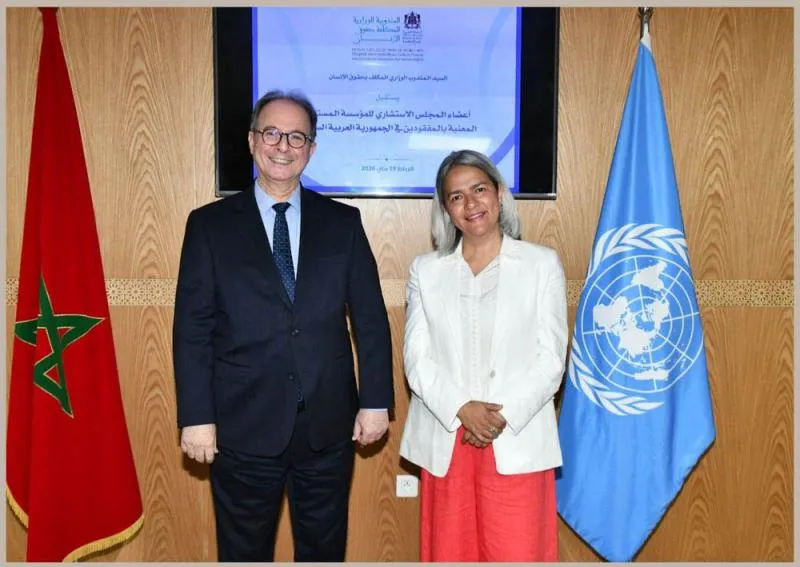
The political and moral implications of the visit by members of the UN Independent Institution on Missing Persons in Syria to Rabat are profound. During this visit, Carla Quintana, the head of the institution, characterized Morocco's approach as “successful” and inspirational. This acknowledgment underscores Morocco’s capacity to confront one of the most formidable challenges faced by post-conflict and post-authoritarian societies: the delicate task of addressing painful historical truths without jeopardizing state stability.
What sets Morocco's model apart is its comprehensive approach that transcends a mere legal framework. Through the establishment of the Equity and Reconciliation Commission, the country has transformed transitional justice into a holistic national endeavor focused on truth-seeking, reparations, institutional accountability, and collective healing. Instead of viewing its past as a potential threat to political stability, Morocco has embraced it as a vital step toward strengthening institutions and rebuilding public trust.
The UN delegation was notably impressed by the fact that Morocco's process was shaped and owned by its own citizens. Unlike many externally imposed frameworks that have been applied in various contexts, the Moroccan experience evolved from an internal political evolution, propelled by royal leadership, state institutions, civil society, political parties, and human rights advocates. This homegrown approach has endowed the process with a degree of legitimacy and resilience that has often eluded transitional justice initiatives in other regions.
The public hearings that were part of this reconciliation journey represent some of the most significant moments in Morocco’s recent political narrative. These hearings provided a rare opportunity for victims to publicly recount their experiences of abuse in the presence of state representatives and political figures, effectively transforming acknowledgment into a powerful tool for national reconciliation. Morocco recognized early on that silence does not erase trauma; rather, only through truth, recognition, and institutional reform can the cycle of violence be broken.
Crucially, the Moroccan experience did not conclude with the end of the commission’s mandate. The recommendations from this commission have continued to influence constitutional reforms, human rights initiatives, reparations programs, and governance discussions for over twenty years. This enduring impact is what gives Morocco's model its relevance on the international stage today.
For Syria, a nation seeking ways to address one of the most severe humanitarian crises of our time, Morocco’s journey offers more than just technical guidance; it provides a vital political lesson. It illustrates how transitional justice can serve as a cornerstone of national unity rather than a catalyst for division or vengeance.
The renewed recognition from the UN ultimately highlights Morocco's emerging role as a regional leader in transitional justice and human rights reform. In a world that is increasingly fragmented, nations are evaluated not solely on their economic performance or geopolitical clout but also on their ability to engage with their past while maintaining institutional stability. Morocco’s experience illustrates that confronting history, when driven by a clear political vision and genuine national ownership, can become a strategic source of legitimacy and soft power.
As reported by thearabweekly.com.