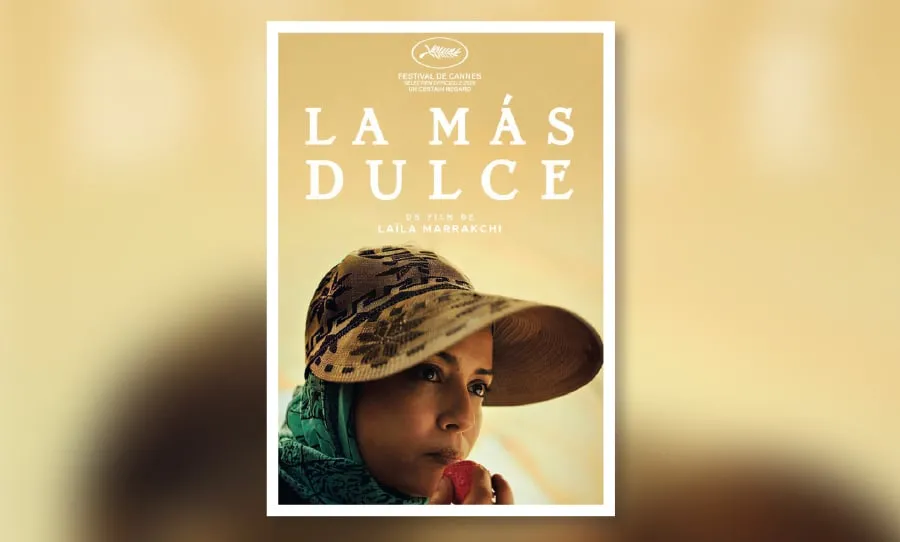

The Moroccan Cinematic Center has officially announced that the film "Tuit Earth," directed by Leila Marrakchi, has been chosen to represent Morocco in the 2027 Oscars race for Best International Feature Film. This unanimous decision was made during the committee's recent meeting, highlighting the artistic and technical excellence of the film, coupled with its relevant subject matter and distribution potential.
The narrative of "Tuit Earth," co-written with French writer Delphine Aguet, is rooted in a journalistic investigation conducted by journalist Aida Alami in 2019. This investigation explored the circumstances faced by Moroccan women who travel to southwestern Spain to work in strawberry farms. The film delves into the administrative and social conditions required for candidates, focusing on their familial and physical circumstances to ensure their return and confirm their ability to endure labor-intensive work.
"Tuit Earth" stands out as one of the most significant cinematic projects in Morocco, addressing both artistic and humanitarian challenges. It does not merely document the hardships of seasonal agricultural labor under the Andalusian sun and the long hours of toil; rather, it penetrates the psychological and social complexities that accompany these women's journeys between two shores, confronting the challenges of alienation, work, integration, and the pursuit of a better life.
The film stars actresses Nisrine Radi, portraying the character Hasna, and Hagar Krikri, who plays Maryam. Additionally, real workers from the fields have been included to enhance the film's authenticity, accurately reflecting aspects of this reality without embellishment. The narrative portrays the struggles of these women with alienation and language barriers, as well as their legal endeavors to claim rights and dignity against mechanisms of exploitation.
Through her latest film, Leila Marrakchi continues her cinematic journey, advocating for women's strength while challenging conventional narratives. Instead of succumbing to a bleak portrayal or merely depicting her protagonists as victims of circumstance, "Tuit Earth" presents a more nuanced and vibrant image of these women, highlighting their high sense of humor and the spirit of solidarity that develops among them in their shared experiences of alienation.
Despite the grim realities discussed in "Tuit Earth (Sweeter)," the screen is filled with vibrant colors and scenes of lively existence. Regarding this visual and psychological equation in the film, Marrakchi emphasizes her intention to present these women as real human beings rather than mere statistics on victim lists.
In her press statements, director Leila Marrakchi explained that "despite their difficult lives, they laugh, talk, wear beautiful colors, and possess energy and life. It was vital to showcase this side; I wanted to tell the world that they are heroines—strong women with character, dignity, and remarkable resilience." The selection committee representing Morocco in this competition was chaired by Tarek Khelami, the assistant director, and included members such as director Leila Triki, cinema hall operator Mounia Al-Ayadi, distributor Sihem Al-Faidi, actress Saida Ladib, film critic Said Mazwari, and producer-director Raouf Al-Sabbahi.
It is worth noting that the films presented to the committee included "Man of Signs" by Zohour Al-Fassi Al-Fihri, "The Wound" by Salwa Al-Koni, and "Heir of Secrets" by Mohamed Nazif.
The official selection of "Tuit Earth" to represent Morocco at the Oscars comes amidst a renewed global discourse on migration issues, bringing the experience of seasonal migration for women into the cinematic spotlight. The film particularly emphasizes the plight of female workers who embark on this arduous journey each year in search of better opportunities, transforming the pain and challenges of alienation into a narrative of resilience, dignity, and solidarity.
Moroccan director and writer Leila Marrakchi, born in Casablanca in 1975, is recognized as one of the most prominent young cinematic voices that has boldly shaped the artistic landscape, addressing social taboos through a contemporary lens.
As reported by alquds.co.uk.