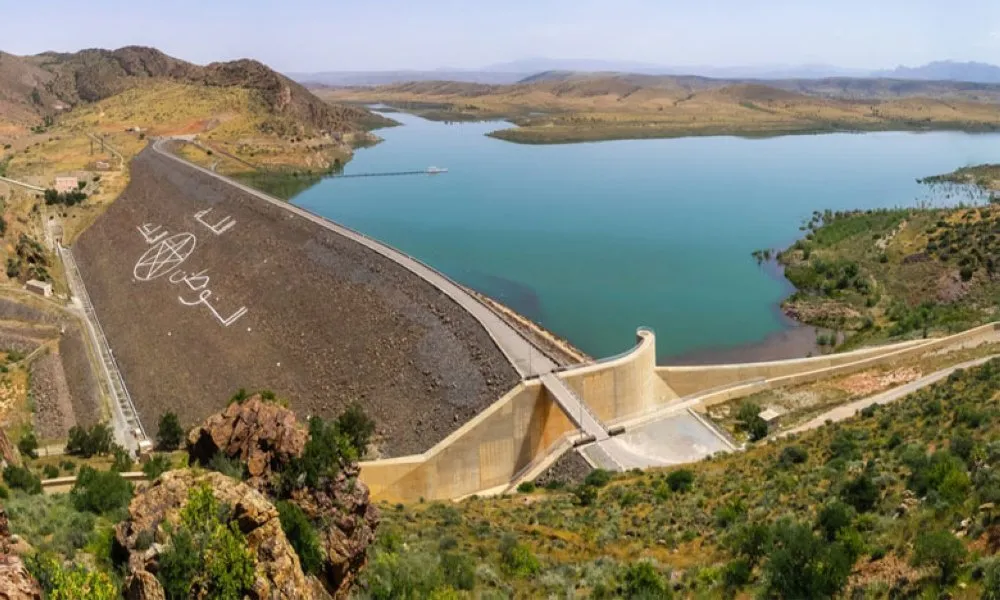

With an annual water allocation of approximately 620 cubic meters per capita, Morocco currently stands as one of the countries experiencing structural water scarcity. The year 2024 marked the seventh consecutive year of drought in the Kingdom, confirming an underlying trend of resource depletion, while water demand continues to grow at an average rate of 3% per year since 2016. This increase is driven by a combination of demographic pressure, economic development, and agricultural needs. The country's groundwater resources, heavily exploited to compensate for surface water deficits, are facing alarming over-extraction: in several aquifers, withdrawals significantly exceed natural recharge, leading to severe consequences, particularly in coastal areas where salinization due to marine intrusion is already evident. In addition to quantitative constraints, there is a qualitative degradation of resources fueled by agricultural, industrial, and domestic pollution.
Moreover, Morocco is confronted with a rising frequency of climatic hazards, including sudden and intense rainfall, flooding, and disruptions to the hydrological cycle. Recent examples include the floods that occurred in the Southeast in September 2024 and in Marrakech in April 2025. Projections within the framework of the program indicate that Morocco could experience an average temperature increase of 2.3 °C by 2060, nearly 30 additional days of extreme heat, a 17% average decline in annual precipitation, and up to 40% in summer. The Intergovernmental Panel on Climate Change (IPCC) categorizes the country among those most exposed to marked reductions in rainfall and intensified extreme events.
Structured Co-financing for Water Resource Management
The program is based on a co-financing scheme involving three sovereign loans of 100 million euros each from the French Development Agency (AFD), Cassa Depositi e Prestiti (CDP), and the German Development Bank (KfW), alongside a grant from the European Union of 46.9 million euros, implemented through delegated management by the AFD, along with an additional AFD grant of 0.4 million euros to cover expenses not eligible for European funding.
This financial architecture is divided into two complementary components. The first component, with a budget of 327 million euros (94.1% of the total), corresponds to budget support tied to a public policy matrix, where disbursements occur as reforms and results defined in collaboration with donors are achieved. The second component, amounting to 20.4 million euros, includes the technical, operational, and organizational means necessary to achieve the program's objectives, through support for studies, monitoring tools, pilot projects, and capacity building for sector institutions.
To facilitate the implementation of the program, technical assistance will be mobilized alongside the Program Coordination Unit (UCP) and thematic working groups. Based at the Ministry of Equipment and Water’s Directorate of Water Research and Planning, this multidisciplinary team will include coordination, thematic expertise covering the four strategic axes, and cross-cutting specialists in procurement, social issues, monitoring and evaluation, communication, and institutional governance. This team will be active throughout the program's duration, which is set to begin around mid-September 2026, and will contribute to achieving four strategic outcomes: improving knowledge of water resources and the impacts of climate change; enhancing integrated management of extreme climatic phenomena, such as droughts and floods, while considering gender and climate change; strengthening climate adaptation through the preservation of water resources and biodiversity; and bolstering climate resilience by protecting groundwater resources.
Specifically, the assistance will focus on six areas: supporting the implementation of program activities and coherence between its two components; monitoring financial and fiduciary execution, including preparing disbursement files for donors; overseeing organizational and procedural aspects, including governance body facilitation and risk management; integrating cross-cutting dimensions—environment, gender equality, communication, and institutional governance; organizing stakeholder capacity building actions; and finally, monitoring and evaluating the program, including conducting a mid-term evaluation and a final capitalization exercise. An environmental and social monitoring system will also be deployed from the start, with particular attention to the vulnerability of populations to climate shocks, while a gender equality approach will accompany the update of the national strategy for gender institutionalization in the water sector, adopted in 2018.
Strategic Objectives for Climate Resilience
The overall goal of the program is to enhance climate adaptation through better knowledge of resources, integrated management of extreme events, and the sustainable protection of groundwater and biodiversity. This translates into seven specific objectives, which include improving knowledge of water resources and the impact of climate change; integrated management of extreme hydrological events that incorporates gender equality; enhancing climate adaptation through the preservation of resources and biodiversity; sustainable protection of groundwater; strengthening resilient, participatory, and inclusive Integrated Water Resource Management (IWRM) tools; reinforcing the integration of gender equality and social inclusion into water policy; and finally, ensuring the sustainable consolidation of institutions and governance frameworks in the sector.
The intervention strategy revolves around four priority axes. The first focuses on enhancing knowledge about water resources through hydrological monitoring, assessing groundwater withdrawals, and tracking the quality of surface and groundwater. The second addresses integrated management of extreme climatic phenomena—droughts and floods—by incorporating nature-based solutions and gender-sensitive approaches. The third axis supports the preservation of resources and biodiversity, particularly by reducing industrial pollution of surface waters and promoting the reuse of treated wastewater in agriculture. Lastly, the fourth axis targets sustainable management of the most exploited groundwater aquifers through artificial recharge, participatory management of aquifers, and strengthening water regulation.
The implementation of the program closely involves the Ministry of Equipment and Water, the Ministry of the Interior, and the Ministry of Agriculture, Maritime Fisheries, Rural Development, and Water and Forests. The institutional architecture is based on a steering committee organized into two distinct formations: a technical formation, chaired by the Ministry of Equipment and Water, responsible for guiding and monitoring reforms, and a financial and disbursement formation, chaired by the Ministry of Economy and Finance, which validates disbursement files and monitors budget execution. Both bodies meet twice a year.
Operational coordination is ensured by a program coordination unit, linked to the Directorate of Water Research and Planning within the Department of Water, working alongside hydraulic basin agencies and all technical and financial partners. Additionally, four thematic working groups, aligned with the four strategic axes, facilitate public policy dialogue and contribute to capitalizing on experiences. The program also plans to regularly organize thematic workshops and an annual seminar involving Moroccan and European water sector stakeholders, fostering experience sharing and the dissemination of best practices. A mid-term evaluation and a final capitalization exercise will also punctuate the program's implementation, which is expected to commence around mid-September 2026.
Beyond the significant financial resources allocated to the two components, the program reserves a budget of 1.1 million euros for organizing cross-cutting activities: 100,000 euros for kickoff, mid-term, closure workshops, and four annual thematic workshops; 200,000 euros for hosting an annual Morocco-European seminar designed as a strategic dialogue space for sharing experiences among Moroccan and European water sector actors; and 800,000 euros dedicated to the logistical support of training and capacity-building actions for the involved institutions: notably the Ministry of Equipment and Water, Ministry of Agriculture, Ministry of the Interior, and Ministry of Economy and Finance.
A computerized monitoring and evaluation system will also provide an integrated view of the entire program, linking the objectives of the public policy supported by the budgetary component to the operational deliverables of the technical component, allowing for regular tracking of disbursement forecasts, physical and financial progress, and identified risks.
As reported by lematin.ma.