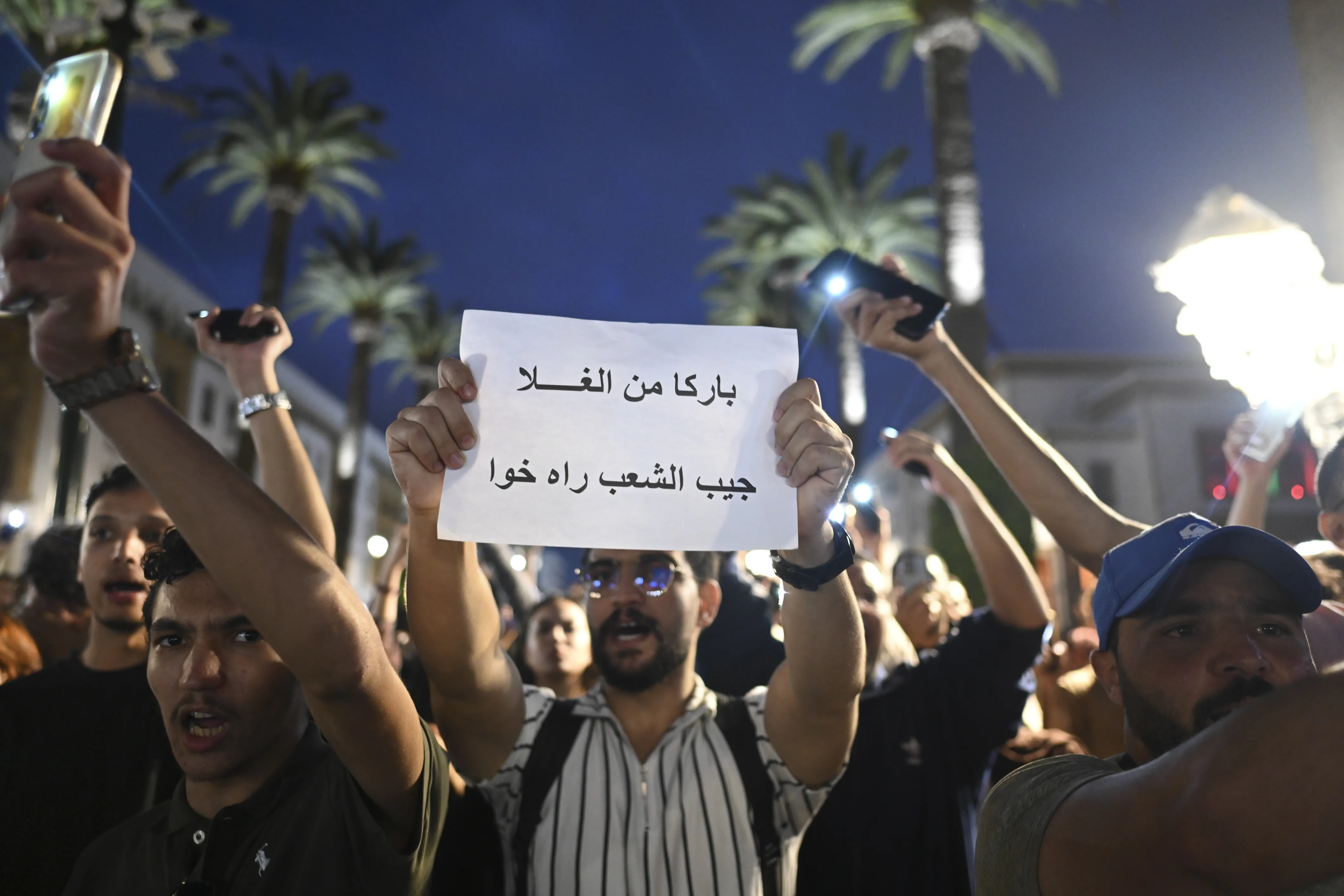

As Morocco approaches its general election scheduled for September 23, the nation is bracing for a pivotal moment that will determine the composition of its next government and the successor to the current prime minister, billionaire businessman Aziz Akhannouch, who was elected in September 2021. Over the past year, Morocco's political landscape has been marked by significant turmoil, highlighted by the Gen Z protests that erupted in September 2025, alongside a burgeoning migrant crisis that witnessed approximately 72,000 Moroccans entering the Spanish enclave of Ceuta by the end of July. These events have underscored a growing sense of urgency among the youth, who are now more politically active yet grappling with deep-seated disillusionment.
The upcoming elections will take place just a year after the Gen Z 212 uprising, a grassroots movement that mobilized young individuals through platforms like Discord in response to the tragic deaths of eight women following routine caesarean sections at a public hospital in Agadir. This tragic incident catalyzed a broader push for systemic reforms, with young Moroccans demanding improved educational infrastructure and a shift in government spending priorities away from extravagant projects, such as the stadiums being constructed for Morocco's role as co-host for the 2030 World Cup.
The Struggle for Authentic Representation
Morocco boasts a remarkably youthful demographic, with over 50 percent of the population under the age of 35. This youthful cohort, many of whom participated in the Gen Z movement and the recent mass migrations to Ceuta, finds themselves entering this election cycle with a heightened sense of political consciousness yet a palpable skepticism about the efficacy of their votes. Jihane, a political coordinator at a local youth center, remarked that this election is particularly noteworthy due to the increased engagement of young voters who are encouraging one another to participate. However, many remain doubtful about whether their votes will translate into meaningful change, with lingering fears of corruption overshadowing their optimism. The recurring question among the youth is: 'Does my vote really count?' Jihane encapsulated this sentiment, describing a climate of 'cautious optimism' where young voters are willing to extend their trust one more time, albeit with palpable hesitation.
For Hassan, a journalist and activist involved in the Gen Z protests, the recent migrant crisis serves as a poignant testament to the frustrations of his generation. He expressed a sentiment of disillusionment, remarking that many young Moroccans have lost faith in political parties and the state to genuinely represent their aspirations. The lack of governmental response during the brutal suppression of protests—where three lives were tragically lost and over 2,400 individuals were arrested—has further fueled this sentiment. Hassan articulated a feeling of abandonment, stating, 'The system has proved that it would rather see us die in the sea than respond to our smallest demands.' This pervasive disillusionment has led many to question the very purpose of participating in elections.
Political Dynamics and the Quest for Change
The political scene in Morocco is rife with accusations of corruption and unethical practices, which are further alienating young voters. The ruling party, the National Rally of Independents (RNI), has accused the liberal Authenticity and Modernity Party (PAM) of undermining democratic processes, creating a climate of distrust among the electorate. RNI's recent allegations stem from a leaked recording of an internal meeting that highlighted concerns about political poaching and corruption within PAM, particularly relating to the recent joining of Fouzi Lekjaa, a prominent figure in Moroccan football, who has been positioned as a potential candidate for the next prime minister. Analysts suggest that this maneuver could be part of a broader strategy to prepare the nation for the upcoming World Cup, raising concerns about the authenticity of democratic processes in Morocco.
Despite the government's attempts to address the concerns of young voters through initiatives designed to financially support youth participation in politics, the effectiveness of these measures remains in question. The stringent conditions tied to these initiatives, such as requiring candidates under 35 to collect numerous notarized signatures from geographically diverse populations, have discouraged genuine youth involvement. Observers argue that these superficial reforms do little to empower young people or address their fundamental concerns, ultimately casting doubt on the likelihood of a truly democratic electoral process.
As the election date approaches, many young Moroccans feel trapped in a political landscape that often feels out of touch with their realities and aspirations. The disconnect between the communication styles of political parties and the preferences of younger voters is stark, with many parties relying on formal rhetoric while young people increasingly consume information through social media platforms. This gap in communication further complicates the decision-making process for young voters, who find themselves navigating a complex electoral landscape with insufficient information to make informed choices.
As reported by middleeasteye.net.