
Moroccan Youth Mobilize for Change in Upcoming Elections
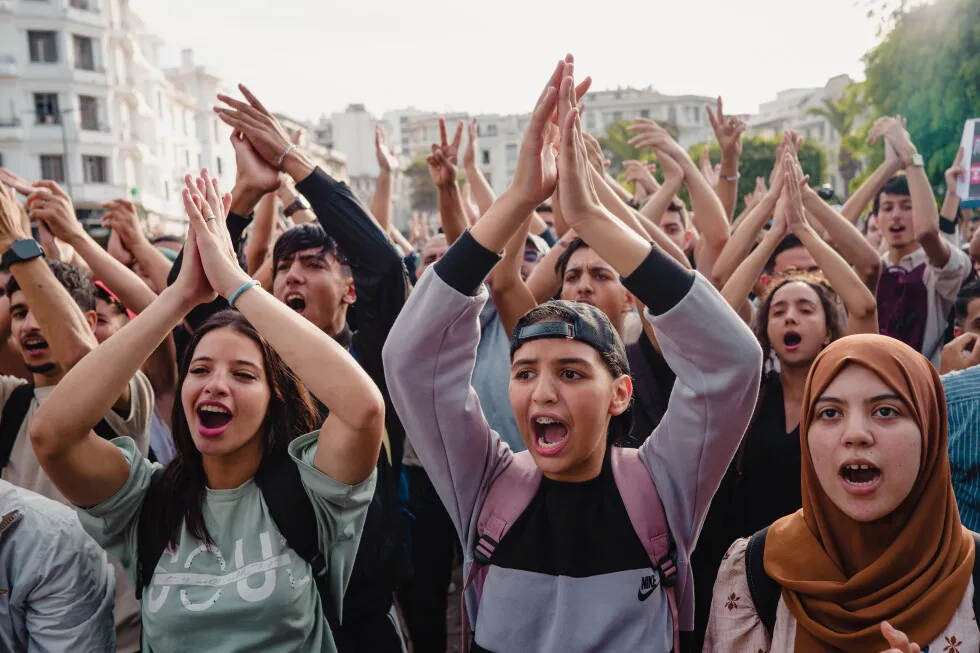
In a notable convergence of sorrow and political ambition, a funeral for an elderly woman in Sidi Moussa El Majdoub transformed into an unexpected campaign stop for candidates eager to galvanize disenchanted young voters ahead of Morocco's parliamentary elections. The backdrop of this event is the frustration felt by many young Moroccans, who continue to grapple with high unemployment rates and limited opportunities. This sentiment has sparked youth-led protests over the past year, alongside a significant rise in attempts to migrate to Spain's Ceuta, particularly as these young individuals seek better prospects for their futures.
Among the candidates hoping to resonate with this demographic is Yassine Moujane, a 28-year-old attorney who is vying for a seat with the Democratic and Social Movement party. Speaking with The Associated Press, Moujane emphasized the importance of youth in the political arena, stating, "I used to plead for my clients in court, and now, the time has come to plead for Moroccans in parliament. Young people can do politics." His visit to Sidi Moussa El Majdoub, a location significant to his campaign, allowed him to connect with potential voters, listening to their grievances while subtly seeking their support.
The upcoming elections will see a staggering 7,288 candidates from 27 political parties competing for 395 seats in the House of Representatives, making this a crucial event in Morocco's political landscape. The outcome will determine not only the next prime minister but also the fate of policies that will impact millions, particularly the youth who have expressed their dissatisfaction with the current political climate. As the nation prepares to cast votes, the echoes of the past year’s protests resonate, highlighting the urgent need for reform in education, healthcare, and economic opportunities.
The Youth Vote: A Catalyst for Change
This election marks a significant moment for Morocco, being the first since the tragic youth-led protests and the mass migration attempts to Ceuta that resulted in numerous fatalities. Young Moroccans, who comprise approximately 12% of the population, are increasingly feeling disillusioned by a political system that they perceive as unresponsive to their needs. Official statistics reveal that while the overall unemployment rate is around 13%, it skyrockets to 37% for individuals aged 15 to 24, with higher-education graduates facing a 19% unemployment rate. Such figures underscore the pressing need for a government that prioritizes job creation and economic revitalization.
Frustration among the youth is palpable, as expressed by Yassine Hasnaoui, a 28-year-old unemployed man from Sidi Moussa El Majdoub, who voiced concerns about politicians who seem disconnected from the realities faced by younger generations. The call for change is echoed by many, including Hassan Challaoui, a 32-year-old boilermaker who advocates for basic amenities such as school transportation for children in rural areas. The desire for political representation and responsiveness to their everyday struggles is a common theme among young voters, making their participation in the upcoming elections critical.
Despite the challenges, some young Moroccans remain optimistic about the potential impact of their vote on issues such as minimum wage, public sector employment, and family law. The protests led by Gen Z in Morocco last year were distinct in their focus on governmental accountability rather than direct criticism of the monarchy. This nuanced approach highlights their desire for reforms while recognizing the monarchy as a stabilizing force in the country. Moujane himself has a history of advocating for these very issues, having defended arrested protesters during the demonstrations. His campaign, despite being low-budget and challenging, aims to bridge the generational gap in a parliament dominated by older lawmakers.
As reported by apnews.com.