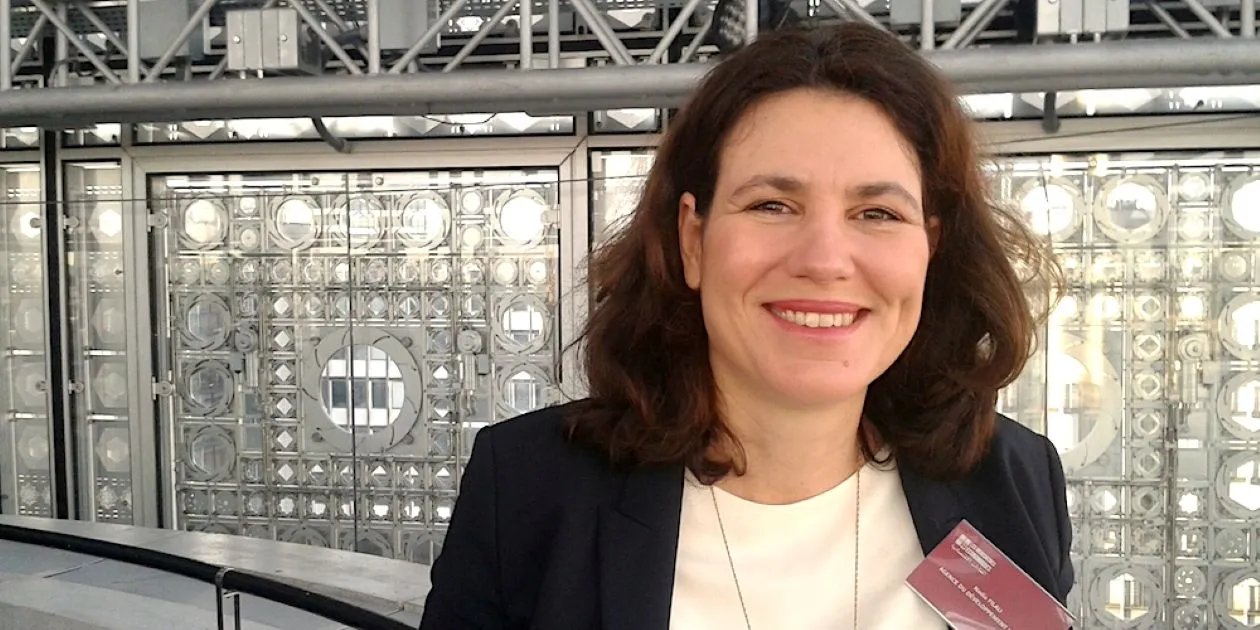

Nadia Filali, a dual national with Moroccan roots from her father and French heritage from her mother, embodies a unique blend of cultural influences. Residing in France, she does not feel torn between her two identities; instead, she devotes her skills to both nations, emphasizing her commitment to her Moroccan heritage while excelling in her professional role in France.
As the Director of Innovation and Development at the French Caisse des Dépôts et Consignations, Nadia Filali plays a vital role in shaping the strategic landscape of digital assets in France. While managing significant responsibilities, she remains acutely aware of the ongoing transformations in Morocco. Her dual nationality not only enriches her perspective but also fuels her passion for contributing her expertise to the digital evolution in her homeland.
Nadia holds a position as an independent administrator at the National Agency for Digital Development (ADD) and is an active participant in forums for Moroccans living abroad (MRE) organized in France. "I take pride in contributing to the development of digital technology and innovation in my country of origin," she asserts, highlighting Morocco's remarkable talent pool in computer science and data science. She notes that the Morocco Digital 2030 strategy is a crucial element in accelerating this dynamic.
Her academic journey began in Morocco, where she studied until the age of 16 before pursuing higher education in economics and finance in Bordeaux and Toulouse. Professionally, Nadia commenced her career in financial project publishing before moving to CDC IXIS, and later to the Caisse des Dépôts et Consignations, where she has spearheaded modernization projects, led mandates, and initiated one of France's largest blockchain programs.
The Impact of Digital Transformation on Finance
Discussing the digital transformation of finance and digital assets—a subject she is passionate about—Nadia identifies it as a major challenge. "For instance, the euro-denominated short-term debt securities market (NUCP), valued at €350 billion, is set to transition entirely by 2028," she claims. This upheaval, in her view, will have profound implications for financial and monetary markets.
When addressing the situation in Morocco, Nadia Filali closely monitors the ongoing regulatory developments related to crypto-assets, as well as the studies conducted by the central bank. She acknowledges the maturity of the European regulatory framework, which provides a level of security for crypto-asset clients. Although Morocco has yet to establish a similar protective structure, the specific nature of its foreign exchange controls acts as a safeguard in its own right.
However, she believes that the Kingdom could benefit from resolving regulatory constraints to fully leverage the advantages associated with digital currencies. "The complete liberalization of cryptocurrencies presents significant challenges. Nevertheless, blockchain technology opens new opportunities, particularly in creating a digital dirham regulated by the central bank, which would offer innovative services to citizens," Nadia argues. She further emphasizes that blockchain could facilitate over-the-counter transactions and improve access to financing for small and medium-sized enterprises (SMEs).
Support for Moroccans Abroad
Regarding the policies implemented by the Moroccan state in favor of its expatriates, Nadia Filali finds them promising and positively evolving. "It is essential for every Moroccan abroad to have the opportunity to invest in their region of origin, thereby strengthening the local economic fabric," she stresses. It is in this spirit that she actively engages with the collective of Moroccans living abroad. "We work collaboratively, sharing our experiences and creating connections that foster development," she concludes.
As reported by h24info.ma.