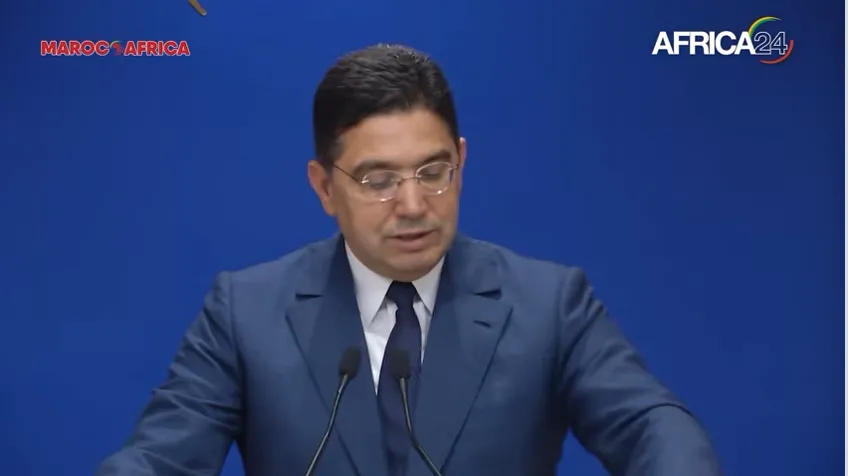

Nasser Bourita stands out as a pivotal figure in shaping Morocco's international stature since assuming the role of the country’s foreign minister. His approach to diplomacy is characterized by discretion, methodical planning, and a resolute commitment to enhancing Morocco's global influence. Under the guidance of King Mohammed VI, Bourita has spearheaded a vigorous diplomatic strategy that emphasizes partnerships within Africa, active mediation in regional conflicts, and a strategic repositioning of Morocco in the geopolitical landscape. This detailed profile reveals how Bourita, a seasoned diplomat, has emerged as a key player in the delicate balance of international relations, not just within Africa but on a global scale.
Since his appointment in 2017, Nasser Bourita has become synonymous with a dynamic and proactive approach to Moroccan foreign policy, specifically targeting Africa and the world’s major powers. He is widely recognized for his instrumental role in the historic normalization of relations between Morocco and Israel in 2020, an agreement that was notably coupled with the United States' recognition of Morocco's sovereignty over the Sahara region. Bourita's vision is clear: “Africa cannot remain merely the subject of conferences. Africa must be an actor.” He emphasizes that Africa should not merely be a spectator in the global arena but a key player in the multilateral system. His commitment to ensuring that Africa plays a central role in international discussions is encapsulated in the royal message that champions the Marrakech Compact as a fundamental framework for African engagement.
At the heart of Moroccan diplomacy lies the contentious Sahara issue, which Bourita has consistently prioritized. He has ardently defended Morocco’s autonomy plan, introduced in 2007, as the “most realistic” solution to this complex dispute, while firmly upholding national sovereignty. His concept of “active solidarity” aims to cultivate a new vision for Africa, a goal that has significantly enhanced Morocco's standing in global geopolitics. Bourita’s assertion that “Morocco has always been a demanding partner when it comes to its expectations” underscores the Kingdom's commitment to its partners and its reliability in fulfilling international obligations.
While he is often associated with advocating for the Moroccan Sahara, Bourita's diplomatic efforts extend well beyond this issue. He is actively involved in addressing migration, which remains a critical aspect of Morocco's foreign policy agenda. Through a combination of diplomatic engagement, strategic alliances, and a commitment to political solutions, Bourita has firmly established himself as a key architect of Morocco's international strategy, advocating for multilateralism as a cornerstone of peace. He believes that negotiation is the only viable means to resolve disputes peacefully, a principle that resonates deeply within Morocco's foreign relations.
Since Morocco's reintegration into the African Union in 2017, Nasser Bourita has tirelessly worked to elevate the nation's influence across the continent. His diplomatic endeavors transcend national borders, positioning him as a significant contributor to both African and international dynamics. As he continues to navigate the complexities of global diplomacy, Bourita embodies Morocco's aspirations and its strategic vision in a rapidly changing world.
As reported by africa24tv.com.