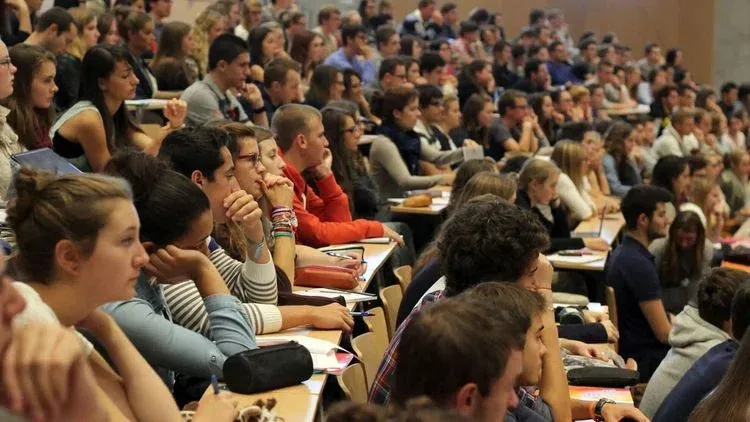

In the pursuit of higher education, Moroccan students in France face a myriad of challenges that often extend beyond the academic realm. Lara, a 21-year-old student from Montpellier who relocated from Marrakech, poignantly articulates this notion by stating, "We often forget that there are two very different student realities." Gaining admission to a French institution might be the initial milestone, but it is merely the beginning of a complex journey filled with financial pressures, bureaucratic obstacles, feelings of isolation, and, for some, the necessity to juggle work alongside their studies.
While all these students may share the label of "Moroccan students in France," their individual experiences can vary significantly. Lara’s transition to France was facilitated by her advantageous background as a French-Moroccan graduate from a French high school in Marrakech, which she believes helped her navigate the admission process with relative ease. Despite these advantages, Lara soon encountered the daunting task of securing accommodation in Montpellier, which proved to be one of her initial hurdles. The complexities of finding a suitable apartment remotely were compounded by stringent landlord requirements, ultimately necessitating her family's reliance on a specialized agency—an effective yet costly solution that she admits would have been unmanageable without their support.
Similarly, Aymen, also 21, who is studying economics and management in Angers, acknowledges the critical role that family support has played in his academic journey. "Without my parents’ financial help and the experience of my older brothers, who had already navigated the process in France, it would have been complicated," he reflects. This familial backing allows him to dedicate himself fully to his studies without the added burden of employment, yet it also instills a sense of obligation to excel in his academic pursuits as a way to honor the sacrifices made by his family on his behalf. For both Lara and Aymen, the support from their families serves as a crucial safety net, providing emotional and financial stability that is often lacking for many other students.
However, before the intricate issues of housing, integration, or academic success even surface, many Moroccan students encounter a significant financial barrier that looms large. When applying for a student visa, applicants are typically required to demonstrate access to approximately 85,000 dirhams, or nearly €8,500. This monetary stipulation not only serves as an administrative prerequisite but also acts as a social filter that can determine who gets to pursue their studies abroad. Anas, a 21-year-old from Guercif studying finance in Angers, quickly realized the weight of this reality. After gaining admission to a third-year bachelor’s program following his studies at an engineering school in Tangier and the ENCG in Fez, he was acutely aware that the real challenges lay ahead. He articulates, "I was fortunate to be accepted, but the difficulties come afterward," emphasizing that securing the necessary funds for his visa was the most formidable obstacle he faced.
For Anas, the support of his family was indispensable in overcoming this financial hurdle, as he acknowledges, "Without my parents at the start, without that blocked amount of money, I would never have been able to get my visa, and therefore never would have been able to come to France." Once settled in Angers, he took on a job in the restaurant industry to sustain himself and gain financial independence, acknowledging the tough balance between work and study that many students like him must navigate.
Amine, now 28 years old and residing in Montpellier, has a more demanding story that underscores the harsh realities faced by students pursuing education abroad. With five years of study under his belt and a background in audiovisual media and cinema from ISMAC in Morocco, he is currently embarking on a second master's degree in France. While his journey might appear to be one of steady progression, the underlying challenges are profound. Financial constraints initially delayed his departure, as he struggled to gather the necessary funds for his visa, ultimately incurring debt early on in his academic career. For Amine, working has transcended the realm of choice; it has become an essential aspect of survival. He states, "Today, I don’t work to live, I work to survive," highlighting the relentless cycle of juggling classes, internships, and night shifts that often leave him with little to no time for rest.
Amine’s schedule is grueling, frequently requiring him to work from 10:45 p.m. to 6 a.m. before attending classes at 8 a.m., excluding the hour-long commute. He candidly shares that there are nights when he is lucky to obtain even 30 minutes of sleep, illustrating the toll that this lifestyle takes on his well-being. Behind the romanticized image of studying abroad lies the stark reality of his daily existence, which he describes as a "battle that will only end once I have a salaried job." For Amine, achieving stability hinges on securing employment, irrespective of the toll it takes on his health.
Collectively, while these students share the common aspiration of achieving success in their academic endeavors, it is evident that they do not commence their journeys from the same starting point. Beneath the allure of opportunities associated with studying abroad, significant inequalities continue to shape the experiences of Moroccan students in France, revealing that the path to education is fraught with challenges that demand resilience and support.
As reported by en.yabiladi.com.