
The Significance of Ceuta in Morocco-Spain Relations
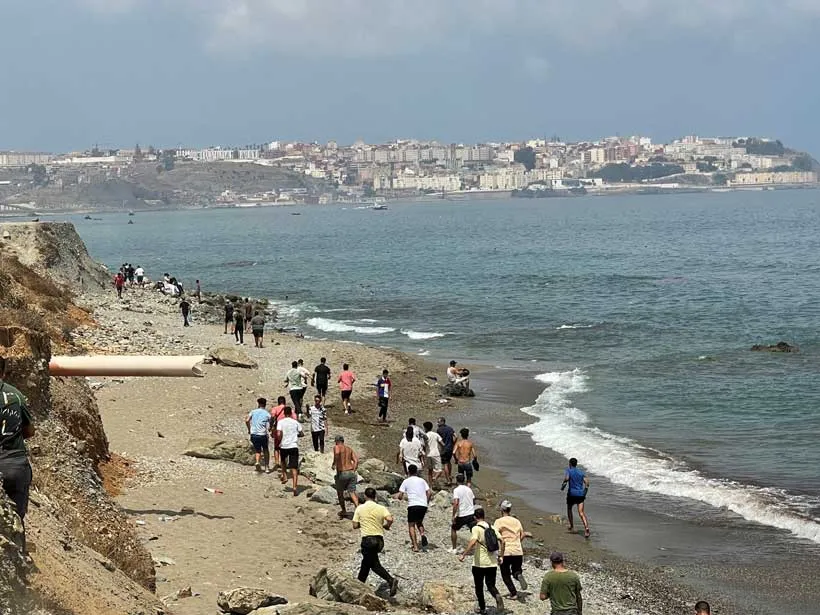
The recent surge of irregular migration in Ceuta should not be merely regarded as an issue of border security; rather, it serves as a pivotal moment that tests the intricate relationship between Morocco and Spain. These two neighboring nations find their interests deeply intertwined across various domains, including migration management, trade agreements, security collaborations, energy sourcing, investment opportunities, and broader regional geopolitics. Ceuta, as a Spanish territory, stands out not only as an external boundary of the European Union but also as an area geographically situated within Moroccan territory. This unique positioning transforms Ceuta into a vital geopolitical nexus, where European immigration policies, Moroccan sovereignty, African migration trends, and bilateral diplomatic engagements converge. The recent migration incident underscores a critical impasse, revealing the underlying political dynamics between Morocco and Spain. It illustrates how swiftly cooperative relations can devolve into a security crisis, signifying that both Madrid and Rabat are acutely aware of the potential fallout from such tensions, and therefore, neither party desires a prolonged rift in their ties.
Understanding Migration Beyond a Crisis Perspective
The essential takeaway from the Ceuta incident is the paradox of strategic interdependence that exists between Morocco and Spain. As these two nations deepen their economic and diplomatic relations, the stakes associated with instability rise for both sides. This interdependence creates a scenario where migration may be perceived as a bargaining tool rather than simply a crisis to be managed. It is a common misstep to view the Ceuta incident solely through the lens of immigration challenges. While irregular migration is undoubtedly a significant element, it is crucial to consider this situation within the broader scope of border security and infrastructure. Morocco has emerged as a pivotal hub for transit, destination, and asylum seekers within the Western Mediterranean and Atlantic migration routes. Data from the UNHCR indicates that as of March 2026, Morocco had registered over 23,000 refugees and asylum seekers, highlighting its evolution from a primarily transit country to a central player in migration management.
In parallel, Spain has ramped up its cooperation with Morocco to address migration concerns before individuals reach Spanish territory. In 2025, Spain recorded 36,775 arrivals via land and sea, marking a notable 43% decrease compared to the previous year. However, the UNHCR cautions that a reduction in arrivals does not equate to diminished protection needs; on the contrary, the routes may be becoming increasingly perilous. This complexity underscores the evolving nature of migration in the region and emphasizes the necessity of understanding these trends beyond simplistic crisis narratives. From a humanitarian perspective, while stringent border control measures may limit visible migrants, they fail to address the deeper, systemic factors propelling migration, such as economic disparities, youth unemployment, regional instability, conflicts in the Sahel, and the allure of better opportunities in Europe.
The situation in Ceuta highlights the volatility that can arise at a crucial juncture between Europe and Africa. Instead of viewing this incident as a spontaneous action by individuals, it is more productive to analyze it through the lens of three interconnected factors: the strong desire of individuals to migrate, the impact of information networks, and a transient or possibly enduring weakening of border controls. Nonetheless, it is important to clarify that this does not imply that the Moroccan government facilitated the crossings intentionally. To substantiate such a claim, one would need to differentiate between official policies, administrative actions, local conditions, organized smuggling operations, and the perceptions held by migrants. This nuanced understanding is critical for grasping the dynamics at play within Morocco.
Morocco's strategic position has catalyzed a transformation in its relationship with Spain over the past decade. What once was a landscape of frequent disputes is now evolving into a more substantive and strategic partnership. In April 2025, Spain characterized their bilateral ties as “excellent,” highlighting progress on the bilateral roadmap that encompasses migration management, circular migration initiatives, and collaborative efforts to combat irregular migration networks. The relationship gained further strength during a high-level meeting in December 2025, where 14 cooperation agreements were established, addressing sectors such as digitalization, cybersecurity, climate change, and energy transition. This evolution indicates a burgeoning mutual trust and a shared interest in fostering cooperation that transcends traditional diplomatic frameworks.
This evolving dynamic presents a strategic dilemma for both nations. Spain relies on Morocco as a key conduit between Africa and Europe, while Morocco, in turn, has diversified its international relationships beyond Spain, engaging with the European Union, the United States, China, Gulf nations, and various African states. This diversification grants Morocco a more robust bargaining position compared to a nation solely dependent on a single European partner. Perceiving migration cooperation as part of a broader web of strategic interdependence elucidates the situation's complexities. It is not merely a case of Spain compensating Morocco to curb migration; rather, recognizing this distinction is crucial, particularly during crises. If Madrid interprets every surge in migration as coercion from Morocco, it risks escalating a manageable bilateral challenge into a geopolitical conflict. Conversely, if Rabat politicizes border management excessively, it may jeopardize one of its most significant partnerships with Europe.
The European migration crisis underscores a fundamental flaw in the continent's migration management strategy, which increasingly relies on neighboring countries to control migration before individuals arrive in Europe. Morocco has transitioned from being merely Spain's neighbor to a vital partner in the EU's external migration control framework. This strategy effectively extends Europe’s border enforcement beyond its physical boundaries, rendering European security reliant on the political stability and cooperation of adjacent nations. As demonstrated by the Ceuta incident, it is evident that the lessons for the EU extend beyond erecting higher barriers; it necessitates an understanding that physical obstacles alone cannot resolve a political relationship steeped in mutual dependence. A more astute and sustainable approach would intertwine border security with legal mobility channels, development assistance, labor migration opportunities, and coordinated asylum processes. Initiatives such as the WAFIRA II program—backed by the EU and launched by Morocco, Spain, and France in 2025—aim to facilitate safer, more organized seasonal migration for approximately 3,000 Moroccan workers. Such programs are essential as they help delineate between controlling movement and combating illegal migration.
In conclusion, the incident in Ceuta underscores the intricate and sensitive relationship between Morocco and Spain, demonstrating how migration, territorial dynamics, and diplomacy are inextricably linked. Ceuta transcends the role of a mere border; it emerges as a strategic hotspot reflective of broader regional tensions. The challenge lies in managing migration in a manner that averts escalating conflicts by establishing legal pathways, combating smuggling, and decoupling migration issues from political disputes. Morocco aspires to be perceived as a reliable partner to Europe without relinquishing its autonomy, while Spain recognizes the political ramifications of relying solely on neighboring states for border security. The future of cooperation between these two countries will hinge on their interpretations of incidents like those at Ceuta. Viewing Ceuta as a security threat may incite conflict, whereas understanding it as a manifestation of mutual dependence could pave the way for enhanced border management and strategic partnerships. Ultimately, the key takeaway is that Morocco and Spain are becoming more interconnected, and transforming this interdependence into formal cooperation is vital for fostering stability and progress.
As reported by moderndiplomacy.eu.